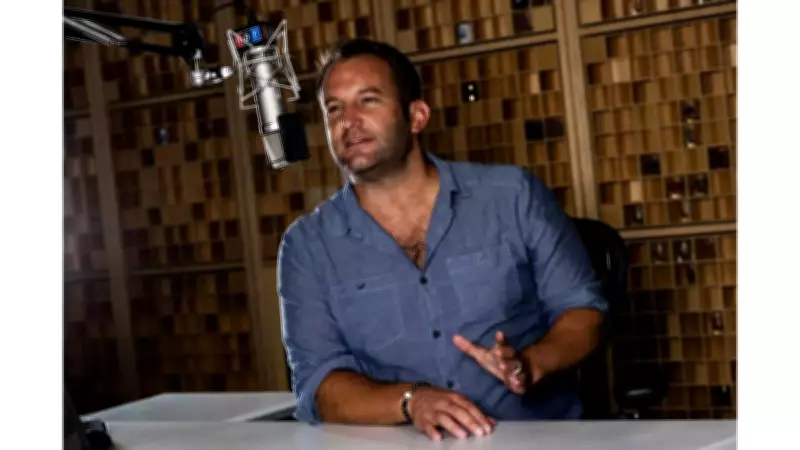
Radio Host David Greene Files Lawsuit Against Google Over AI Voice 'Theft'
Prominent radio show host David Greene has initiated legal action against technology behemoth Google, accusing the company of effectively 'stealing' his distinctive voice for utilization in its artificial intelligence-powered NotebookLM application. The legal complaint, formally submitted in Santa Clara County, California, contends that Google systematically cloned Greene's recognizable vocal patterns and unique broadcasting methodology without securing any form of authorization or providing financial compensation.
The Core of the Allegation: An Unauthorized Digital Doppelgänger
Greene asserts that the synthetic voice generated by Google's NotebookLM tool replicates his vocal signature with unsettling precision. He claims the AI mimics his specific rhythm, intonation, and even his habitual verbal quirks so accurately that it has caused significant confusion among his personal and professional circles. According to the lawsuit, numerous friends, former colleagues, and dedicated listeners reached out to Greene under the mistaken assumption that he had formally licensed his voice to the tech giant.
A telling example cited in the Washington Post's report involves a fall 2024 email from a former co-worker, which read: "So... I’m probably the 148th person to ask this, but did you license your voice to Google? It sounds very much like you!" This incident underscores the perceived fidelity of the AI replication.

David Greene's Personal Reaction and Legal Stance
"I was, like, completely freaked out," Greene revealed in an interview, describing the experience as "this eerie moment where you feel like you’re listening to yourself." He emphasized that the issue extends far beyond a mere lost commercial opportunity. For Greene, his voice is an intrinsic part of his identity and professional brand. "My voice is, like, the most important part of who I am," he stated, highlighting the personal violation he feels.
Joshua Michelangelo Stein, a partner at the law firm Boies Schiller Flexner representing Greene, expressed confidence in their case. "We have faith in the court and encourage people to listen to the example audio themselves," Stein said, suggesting that the alleged resemblance is evident upon direct comparison.
Google's Firm Denial and Counter-Argument
Google has responded to the allegations with a firm and unequivocal denial. Company spokesperson José Castañeda told the Washington Post, "These allegations are baseless. The sound of the male voice in NotebookLM’s Audio Overviews is based on a paid professional actor Google hired." This statement positions Google's defense on the claim that the voice in question is an original creation based on a legally contracted performer, not a digital copy of Greene's vocals.
Broader Implications for AI and Creator Rights
This lawsuit is situated within a rapidly expanding legal and ethical battlefield. It represents the latest high-profile clash between the rights of individual human creators and the practices of the burgeoning artificial intelligence industry. AI tools like NotebookLM promise to revolutionize content creation by generating stunningly lifelike speech, text, images, and video on demand.
However, as noted in reports, these capabilities are built upon language models trained on enormous, often indiscriminately collected libraries of real human text and speech. A critical and unresolved question is the use of this data without the explicit knowledge or consent of the individuals whose creative output is being utilized, raising profound issues concerning copyright, ownership, and fair compensation in the digital age.
The outcome of David Greene's case against Google could set a significant precedent for how intellectual property and personal likeness are protected as AI technology continues its advance into creative domains traditionally reserved for human talent.