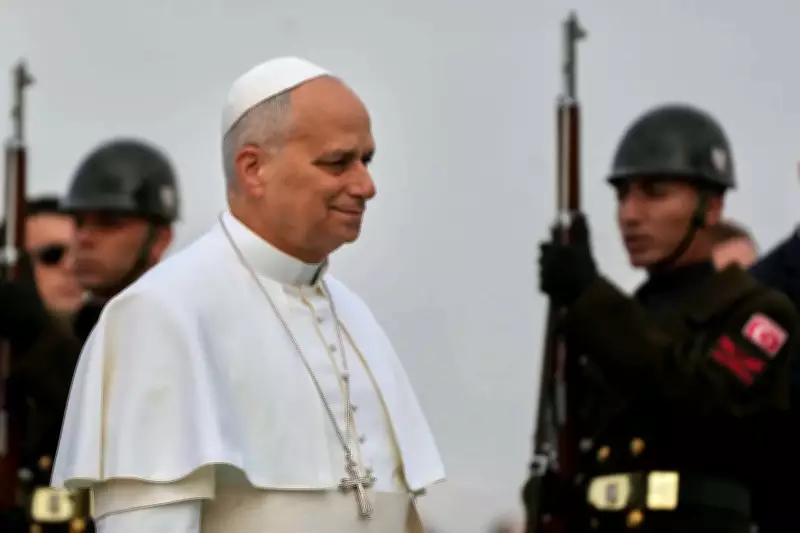
Pope Leo XIV has issued the first major teaching document of his papacy, focusing on artificial intelligence. The 42,300-word encyclical, titled 'Magnifica Humanitas' ('Magnificent Humanity'), was released on May 25 and is addressed to all people of goodwill. The first US-born pope warns that AI, left to private companies chasing profit and power, could deepen inequality, hollow out human work, and make war easier to wage. He signed it on May 15, exactly 135 years after Pope Leo XIII's 'Rerum Novarum' on workers' rights, drawing a parallel to the Industrial Revolution.
A Pivotal Choice: Tower of Babel or City of God
Leo frames the encyclical around a single decision: 'Humanity, created by God in all its grandeur, is today facing a pivotal choice: either to construct a new Tower of Babel or to build the city in which God and humanity dwell together.' He warns against the 'Babel syndrome,' the idolatry of profit that sacrifices the weak and reduces human mystery to data. While not a technophobe, he argues that technology is never neutral, shaped by those who devise, finance, and regulate it.
Concentration of Power and the Need for Regulation
A major concern is the concentration of AI power among a few private players whose resources outstrip many governments. Leo warns that this widens the gap between those who can join the digital revolution and those left behind. He calls for robust legal frameworks, independent oversight, and a political system that does not abdicate responsibility. 'A more moral AI is not enough if that morality is determined by a few,' he writes, rejecting reliance on the 'invisible hand' of the market.

Work and Human Dignity
Echoing 'Rerum Novarum,' Leo emphasizes that work is more than a paycheck—it expresses human dignity. He warns employers that 'the pursuit of greater profits cannot justify choices that systematically sacrifice jobs.' Skeptical of automation's benefits, he notes that AI often forces workers to adapt to machines rather than vice versa, leading to de-skilling and surveillance. He calls for continuous retraining, social criteria for automation, and treating dignified work as a measure of success.
Children and Vulnerability
Leo dedicates focus to children, citing psychological literature on how early, unsupervised device use harms sleep, attention, and emotional control. He urges age limits, platform accountability, and protections against online exploitation.
War and the Moral Line
His toughest language is reserved for war. He argues that AI changes the nature of conflict, with cyberattacks and autonomous weapons blurring defense and aggression. He declares it 'not permissible to entrust lethal or otherwise irreversible decisions to artificial systems.' He states, 'No algorithm can make war morally acceptable,' and argues that the 'just war' theory is now outdated given advanced weapons technology. Instead, he urges dialogue and an international framework to curb the AI arms race.
Leo introduces the concept of 'disarming' AI—not rejecting technology but preventing it from dominating humanity. This means freeing technology from monopolistic control and restoring it to human cultures.
Apology for Slavery and Call to Developers
Leo offers one of the strongest Vatican apologies for the Church's role in legitimizing slavery, drawing a line to modern 'digital slaveries' like data labeling and mineral mining. He appeals directly to developers, saying they bear ethical responsibility for their design choices.
Ultimately, Leo emphasizes that machines cannot replace human conscience. He calls for slowing down and more active political involvement to protect communities.