

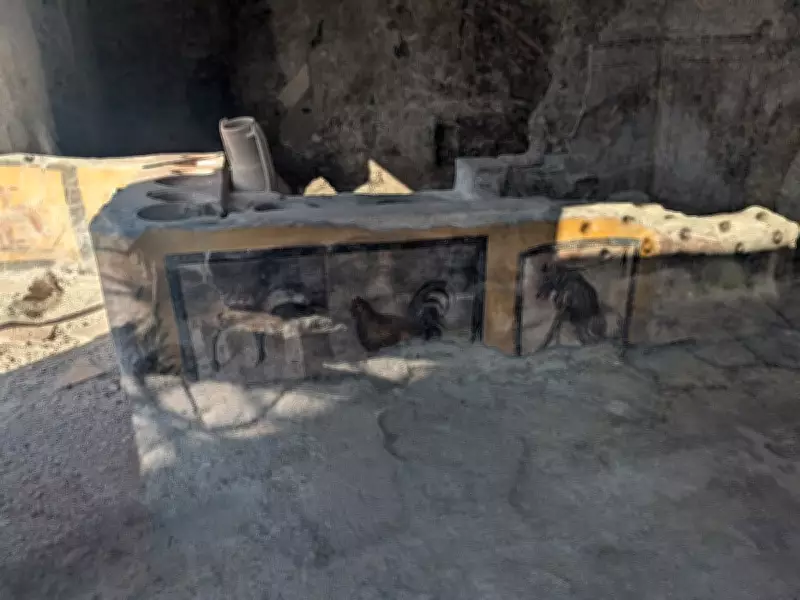
The tragic Pompeii disaster of 79 CE is often remembered for its grand temples, opulent villas, and the luxury dining rooms of the Roman elite. However, an incredible find in the city's Regio V quarter is shifting focus from the rare luxuries of the upper class to the everyday lives of ordinary people. A beautifully preserved thermopolium, a painted street-level food counter, has offered a rare look at the fast-paced, routine habits of the common folk who crowded the working streets of the ancient city.
A Painted Counter That Caught the Eye
The Regio V thermopolium was impressive from the moment it emerged from the volcanic ash. This was no ordinary or hidden food stall. It featured a brightly painted counter front, making the shop a very visible part of the street scene. Public food stalls were an integral part of daily life in Roman cities such as Pompeii. This thermopolium was much more than a place to grab a quick lunch; it served as an important social space for the daily business of the working class, offering a quick bite to eat and facilitating daily contact. The moment the volcanic ash sealed up the shop, it preserved more than just the walls. It captured a vibrant form of urban life, giving shape to the very sort of public space that everyday Romans used constantly, even if they rarely left a written record of it.
What Remains of the Food
What made this food counter truly special was that it was not merely a scenic ruin. It contained the actual ingredients that were handled and sold in the city on the last day. Food remains found at the site reveal that the shop offered a varied and very practical menu, including duck, fish, goat, and snails. This mix is highly significant because it dispels the popular misconception that the food world of Pompeii consisted only of lavish banquets or refined dining rituals. Instead, it provides a realistic snapshot of a quotidian meal economy based on what could be bought and eaten on the run.

Wider scientific research supports these findings. A review published in the journal Animals highlights how animal bones with distinctive cut marks and burn marks provide direct evidence of systematic food preparation, butchery, and disposal across the region. The contents of the thermopolium were not unusual in isolation; the study points out that they fit perfectly into a much broader archaeological pattern of daily animal-human interactions and meat consumption in the area.
Street Food Was Not a Footnote in Pompeii
The working texture of thermopolia pervaded Roman cities. These establishments catered directly to the urban population that had neither the time, the money, nor the kitchen space to cook formal meals at home. The survival of the Regio V counter allows modern historians to study a common and practical habit that structured the rhythm of Roman life. Rather than viewing the shop as a free-standing curiosity, scientists study it as part of a huge citywide network of supply and consumption that is visible through archaeological evidence. A new diet study published in Scientific Reports suggests that evidence for food is widely distributed across the urban landscape, based on stable isotope and faunal analysis from multiple excavation contexts across Pompeii, including the Regio V area. This vast data set shows how the city's food system functioned continuously through a series of homes, public spaces, and street-level shops alike.
What a City Ate, Archaeology Can Read
The destruction wrought by the eruption of Mount Vesuvius was not only destructive but also preservative, preserving the more unruly aspects of everyday life, such as discarded bones and organic matter, long enough for modern science to retrieve them. It is only when we see the animal remains, architectural features, and painted surfaces together that Pompeii begins to feel less like a frozen postcard and more like a real, working neighborhood. One lunch counter cannot represent the whole of a civilization, but when backed by hard scientific data, it becomes a powerful entry point into history. Archaeology most clearly shows us the past when it examines what ordinary people really cooked, handled, and threw away. This discovery reminds us of that enduring truth.






