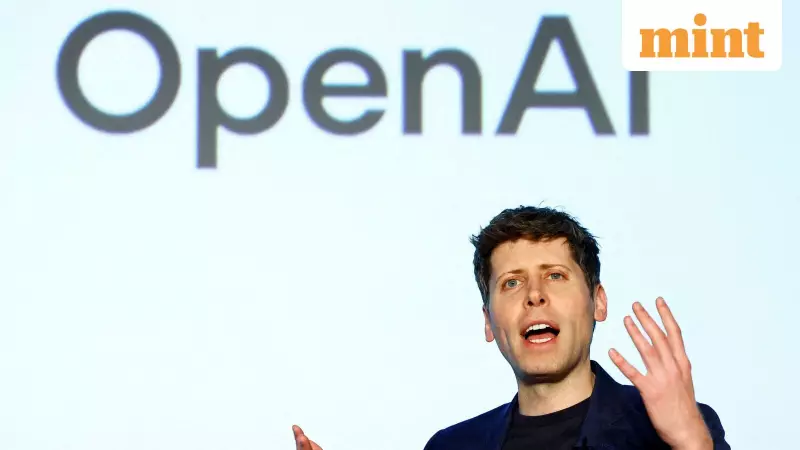
The dazzling rise of generative AI companies like OpenAI and Anthropic is shadowed by a burning question for 2026: when will the profits finally arrive? Despite stunning growth, these San Francisco-based labs are incinerating cash at an unprecedented rate, setting the stage for a year of intense scrutiny from private investors.
The Staggering Scale of Spending and Ambition
While public market investors grew wary of bubbly AI valuations, private venture capital told a different story in 2025. A whopping $150 billion flowed into major AI startups, surpassing the peak of the 2021 VC boom. Leading the charge, OpenAI—the creator of ChatGPT—reportedly believes it can single-handedly raise a staggering $100 billion from private investors in 2026. This sum is nearly four times the largest stock market listing in history.
However, this parallel universe of private funding is about to collide with hard economic realities. Both OpenAI and Anthropic, despite demonstrating some of the fastest revenue growth ever seen, are burning through cash at rates compared to a 'Towering Inferno'. The enormous costs for advanced chips and cloud computing to train and run their models are the primary fuel for this fire. As both firms consider going public in 2026 or shortly after, they will face mounting pressure to clearly articulate their roadmaps to profitability.

Three Major Hurdles on the Path to Profit
Several critical factors are converging to spotlight the AI industry's lack of profits. First is the formidable competition from cash-rich tech giants. Companies like Google, with their own chip designs and cloud infrastructure, can train and run large language models more efficiently. While Google's Gemini initially lagged, it has now caught up in capability, eroding the standalone labs' technical edge.
The second problem is the elusive productivity payoff. More than three years after ChatGPT's launch, the transformative boost to business productivity remains largely unrealized. In promising areas like coding and customer service, the field is crowded with offerings from OpenAI, Anthropic, Microsoft, and countless tailored applications. No AI lab has built a durable competitive moat, making their revenue streams highly vulnerable.
A third, structural issue is that costs are scaling as fast as revenues. Unlike traditional software firms that become more profitable with scale, AI companies face rising expenses as they grow. Training frontier models requires immense computational power, and the 'inference' cost of running models for users—especially non-paying ones—is also steep. This forces difficult choices: reducing costs by limiting answer length or adding ads risks degrading the user experience, while raising prices could stifle adoption.
Investor Patience and the Hubris Challenge
History shows that cash-guzzling startups like Netflix and Uber eventually became profitable powerhouses. The potential payoff from generative AI, especially if it leads to superintelligence, could be even larger. But investors' patience is not infinite.
OpenAI, in particular, exhibits signs of hubris. Reports suggest discussions of cash burn are taboo within the company, even as leaked figures indicate it could burn through over $115 billion by 2030. CEO Sam Altman recently stated one reason for pursuing an IPO is to see doubters bet against the company and 'get burned on that.' Yet, the markets are already showing skepticism; both public equity and debt markets have penalized companies with significant exposure to OpenAI.
The year 2026 is poised to be a bracing, revealing experience for the AI industry. The star firms must move beyond breathtaking demos and start fleshing out sustainable, profitable business models. The era of writing blank checks based on potential is closing, and the age of accountability is dawning.