In a landmark move that is set to reshape the global artificial intelligence hardware landscape, chipmaking behemoth Nvidia has entered into a massive $20 billion licensing agreement with AI chip startup Groq. The deal, announced on Wednesday, December 24, 2025, represents Nvidia's single largest technology purchase to date and underscores the intensifying battle for supremacy in the AI inference space.
The Anatomy of a Blockbuster Deal
The non-exclusive licensing pact will grant Nvidia expanded access to Groq's high-performance, low-cost inference technology. In a significant acqui-hire component, Groq's founder and CEO Jonathan Ross, president Sunny Madra, and several other key team members will be joining Nvidia to help advance and scale the licensed tech. Despite this brain gain, Groq will continue to operate independently under its new CEO, Simon Edwards.
While full financial terms remain confidential, the reported $20 billion valuation of the deal is staggering. It dwarfs Groq's previous valuation of $6.9 billion, established just months ago after a $750 million financing round. This premium highlights the immense strategic value Nvidia places on Groq's specialized technology.

Why This Deal Matters for the AI Industry
This agreement arrives at a pivotal moment. The AI industry's initial phase was dominated by the need for powerful chips to train large models, a domain where Nvidia's GPUs reigned supreme. However, the focus is now rapidly shifting towards AI inference—the process where trained models generate outputs and answers in real-world applications. Optimizing this stage is crucial for improving response times, reducing costs, and scaling AI services globally.
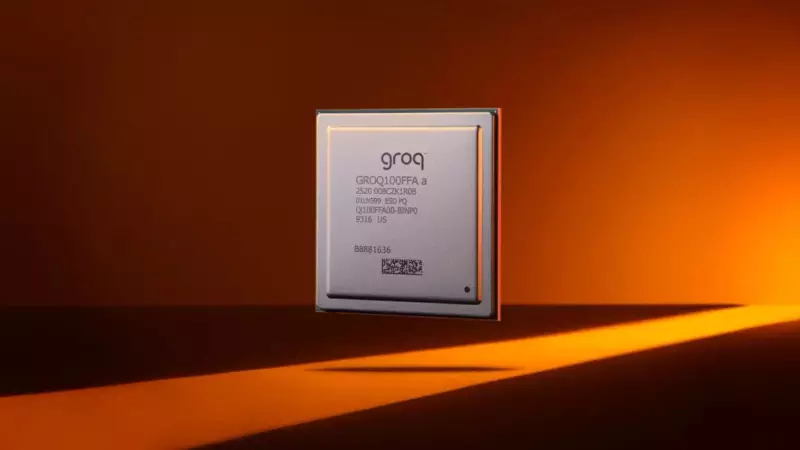
Groq's core innovation lies in its purpose-built Language Processing Units (LPUs), designed specifically for efficient AI inferencing. Founded in 2016 by ex-Google engineer Jonathan Ross (a co-creator of Google's TPU chips), Groq has positioned its LPUs as a faster, more cost-effective alternative for running pre-trained models from giants like Meta, Google, and OpenAI.
Strategic Moves in a Competitive Arena
Nvidia's decision to license rather than outright acquire a rival's technology is telling. It suggests that even the market leader, which saw quarterly revenue skyrocket from $7 billion to $57 billion post-ChatGPT, recognizes the need to bolster its portfolio against a growing wave of competition.
Tech titans like Google, Amazon, and Microsoft are developing in-house AI chips to reduce dependence on Nvidia. Meanwhile, rivals like AMD and well-funded startups like Cerebras are vying for market share. Google's Gemini 3 AI models, reportedly developed entirely on its custom Tensor Processing Units (TPUs), exemplify this competitive threat.
Nvidia is countering with a multi-pronged strategy. Sitting on a war chest of $60.6 billion in cash and short-term investments (as of October 2025), the company is aggressively investing in the ecosystem. This Groq deal follows a similar, smaller $900 million licensing agreement with AI hardware startup Enfabrica in September 2025. Nvidia has also backed companies like CoreWeave and Cohere, invested $5 billion in Intel, and struck a monumental $100 billion deal with OpenAI.
For the broader tech and startup ecosystem, particularly in innovation hubs, this deal reinforces two major trends: the critical importance of specialized inference hardware and the high value placed on top-tier AI talent. As Nvidia CEO Jensen Huang stated, integrating Groq's low-latency processors will extend the "NVIDIA AI factory" to serve a wider range of real-time AI workloads. This $20 billion bet is not just a transaction; it's a strategic declaration for the next era of artificial intelligence.