Nvidia Takes Center Stage in America's AI-Driven Reindustrialization
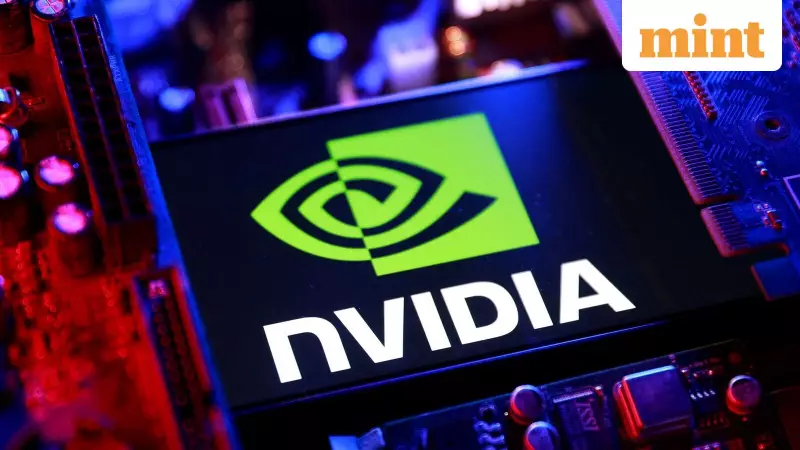
In a significant shift for the technology industry, Nvidia has emerged as a key player in President Donald Trump's ambitious plan to reindustrialize America. The artificial intelligence chip pioneer, led by CEO Jensen Huang, is committing substantial resources to bring advanced manufacturing back to American soil, marking a notable convergence of Silicon Valley innovation and Washington's industrial policy.
From Busboy to Billionaire: Huang's Political Alignment
Jensen Huang's journey from working as a busboy at Denny's to leading the world's most valuable company has taken a distinctly political turn. During Nvidia's first major Washington event on October 28th, Huang playfully referenced his humble beginnings while serving water to panelists. More significantly, he delivered a keynote speech filled with tributes to President Trump before accompanying him to South Korea for trade talks with China.
"I'm incredibly proud that Nvidia is contributing to Mr. Trump's new White House ballroom," Huang declared, signaling a departure from his previously apolitical stance. This alignment has raised eyebrows among observers who question the tech elite's growing closeness to the administration, but Huang appears undeterred in his commitment to the president's industrial vision.

Chipmaking Reshoring: From Taiwan to Arizona
The reindustrialization effort begins with semiconductor manufacturing. Just nine months after President Trump expressed his desire to reshore production to Jensen Huang, Taiwan Semiconductor Manufacturing Company produced a wafer for Nvidia's most advanced Blackwell GPU at its Arizona facility in mid-October.
Huang has pledged that Blackwell's processors, memory, and packaging will soon be entirely American-made, though he acknowledges that achieving production at scale will require considerable time. This move represents both a strategic rebranding of existing plans and a calculated effort to secure presidential support for reopening China's market to Nvidia's graphics processing units.
Robotics and AI-Powered Factories
Nvidia's vision extends beyond chipmaking to encompass advanced robotics. Huang revealed that AI technology is enabling manufacturers like Foxconn—once heavily dependent on Chinese production—to establish fully robotic factories in the United States. These facilities will operate through AI-created simulations or "digital twins" powered by Nvidia technology.
To address persistent labor shortages, some factories will eventually produce AI-powered robots, including humanoid models. This represents a comprehensive approach to manufacturing that leverages artificial intelligence at every stage of production.
Broader Industry Support for High-Tech Renaissance
Nvidia is not alone in championing America's high-tech manufacturing revival. Venture capitalist Peter Thiel is placing significant bets on this sector through investments like Substrate, a company founded by London-born entrepreneur James Proud. On October 28th, Substrate unveiled plans to develop chipmaking machines in America using advanced X-ray lithography technology.
"Most believe we will fail. But this is important enough to do," Proud stated regarding his company's ambitious goal of challenging ASML, the Dutch firm that currently dominates extreme ultraviolet lithography for advanced semiconductor manufacturing. With $100 million in funding at a $1 billion valuation from investors including Thiel's Founders Fund, Substrate aims to support chipmaking foundries across America and reduce vulnerability to geopolitical tensions involving Taiwan.
Challenges and Political Considerations
Despite the enthusiasm, full-scale reshoring faces substantial obstacles. The economics remain questionable, and the president's influence over corporate decision-making raises concerns about market distortions. Practical bottlenecks also persist, including immigration policies affecting both skilled and unskilled labor, and energy policies that favor traditional sources over clean alternatives like wind power—though Huang praised Trump's "pro-energy" approach.

As artificial intelligence increasingly depends on physical infrastructure like chips, data centers, and power grids rather than just digital technology, political considerations have become unavoidable. Silicon Valley's traditional distance from Washington is shrinking, whether by choice or necessity.
Huang appears to have embraced this reality. Concluding his keynote address, he thanked the audience for their "service in making America great again," echoing the president's signature slogan. The timing proved fortuitous, as Nvidia achieved a $5 trillion valuation on October 29th, becoming the world's first company to reach this milestone.
The convergence of artificial intelligence leadership and industrial policy represents a new chapter in America's economic development, with Nvidia positioned at the intersection of technological innovation and political ambition.