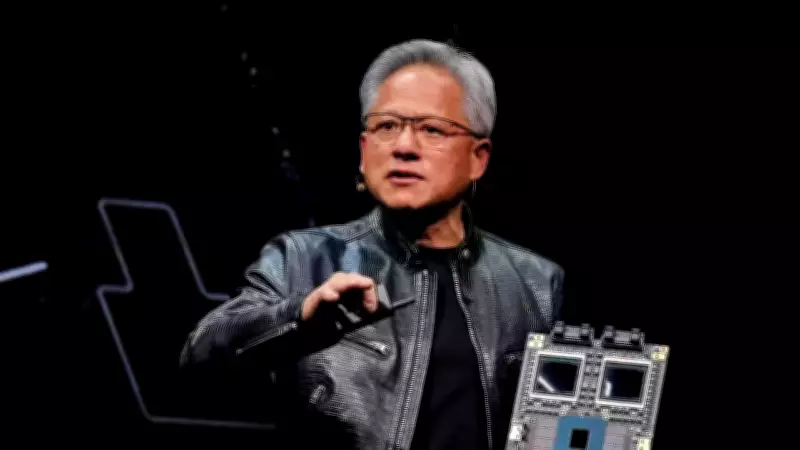
Nvidia Makes Strategic $2 Billion Investment in Marvell Technology
In a major move to strengthen its position in the artificial intelligence infrastructure market, Nvidia has announced a substantial $2 billion strategic investment in Marvell Technology. This significant financial commitment forms the cornerstone of an expanded partnership between the two chip industry leaders, designed to create more seamless integration solutions for customers building advanced AI systems.
Enhancing AI Infrastructure Integration
The partnership centers on Nvidia's innovative NVLink Fusion platform, which represents a rack-scale system that enables customers to construct semi-custom AI infrastructure within the comprehensive Nvidia ecosystem. Under this strategic arrangement, Marvell will contribute its specialized custom accelerators, known as XPUs, along with NVLink Fusion-compatible scale-up networking solutions.
Nvidia will supply complementary supporting technologies, including its powerful Vera central processing units, ConnectX network interface cards, BlueField data processing units, NVLink interconnects, and Spectrum-X switches. This collaborative approach aims to provide customers with a more integrated and efficient pathway to building specialized AI computing environments.

Silicon Photonics and Telecommunications Focus
The two technology giants will also collaborate extensively on silicon photonics technology, which enables high-speed, energy-efficient data transmission through advanced optical interconnects. This technology represents a crucial advancement for handling the massive data flows required by modern AI systems while maintaining energy efficiency.
Additionally, the companies will work together to bring sophisticated AI capabilities to telecommunications networks through Nvidia's Aerial AI-RAN platform, specifically designed for 5G and 6G infrastructure development. This aspect of the partnership addresses the growing demand for AI integration in next-generation telecommunications systems.
Executive Perspectives on the Partnership
Nvidia founder and CEO Jensen Huang emphasized the timing and importance of this collaboration, stating, "The inference inflection has arrived. Token generation demand is surging, and the world is racing to build AI factories. Together with Marvell, we are enabling customers to leverage NVIDIA's AI infrastructure ecosystem and scale to build specialized AI compute."
Marvell chairman and CEO Matt Murphy highlighted the strategic significance of the expanded partnership, noting that it reflects "the growing importance of high-speed connectivity, optical interconnect and accelerated infrastructure in scaling AI." Murphy added that connecting Marvell's capabilities in analogue, optical DSP, silicon photonics, and custom silicon to Nvidia's ecosystem through NVLink Fusion would allow customers "to build scalable, efficient AI infrastructure."
Market Context and Financial Implications
This strategic partnership emerges as Nvidia works to maintain its central position in the rapidly evolving AI infrastructure market, even as companies increasingly explore custom processor alternatives to standard chips. The timing coincides with massive anticipated investments in AI infrastructure from major technology companies, including Google-parent Alphabet and Facebook-parent Meta, which are expected to collectively spend at least $630 billion on AI infrastructure this year alone.
This substantial investment is driving unprecedented demand for chips used in servers and networking equipment across the industry. Marvell has projected significant growth from this partnership, expecting its revenue to increase by nearly 40% and approach $15 billion in fiscal year 2028, reflecting the substantial market opportunity presented by advanced AI infrastructure development.
The collaboration represents a strategic response to the evolving AI computing landscape, where specialized, integrated solutions are becoming increasingly important for organizations seeking to build efficient, scalable AI infrastructure capable of handling the growing demands of artificial intelligence applications across multiple sectors.