Nvidia CEO Jensen Huang has issued a forceful rebuttal to suggestions that the company's latest $2 billion investment in cloud infrastructure provider CoreWeave represents a pattern of 'circular financing' between artificial intelligence chipmakers and technology firms. In a recent statement, Huang categorically dismissed these allegations as "ridiculous," emphasizing that Nvidia's financial commitments reflect genuine confidence in what he termed "generational companies" rather than financial engineering maneuvers.
Defending Strategic Investments in AI Infrastructure
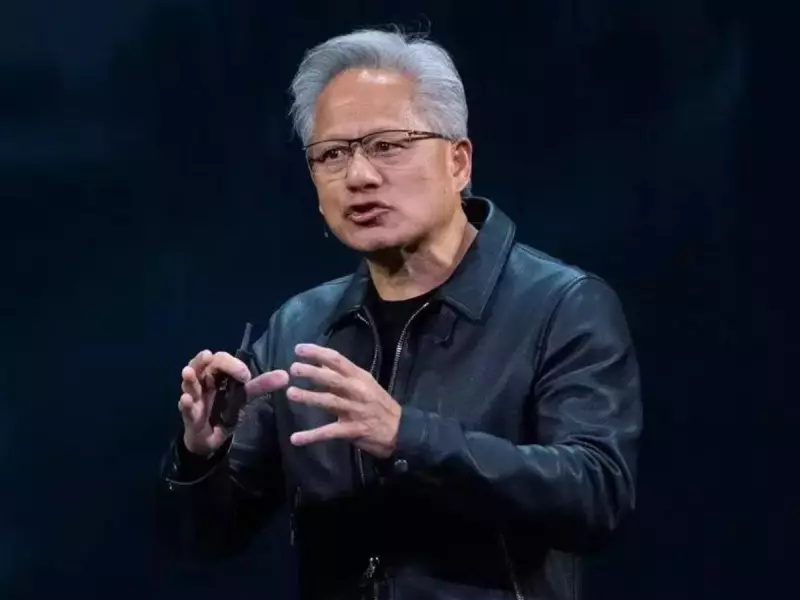
As reported by Bloomberg News, Huang articulated his position clearly, stating: "These are generational companies — the investments that we make is confidence in them. But it's a small percentage of the amount of money that they ultimately have to go raise, and so the idea that it is circular is — it's ridiculous." The Nvidia chief executive stressed that his company's contributions to various AI ventures, including CoreWeave, OpenAI, Anthropic, and Elon Musk's xAI, constitute only a minor fraction of the substantial capital these organizations must secure for their ambitious expansion plans.
CoreWeave Expansion and AI Factories Development
The recent $2 billion investment represents an expansion of Nvidia's existing stake in CoreWeave, with the allocated funds specifically designated for acquiring land, securing power resources, and developing infrastructure to establish advanced AI factories. These specialized facilities will be powered by Nvidia's cutting-edge chips, further cementing the semiconductor giant's central position within the rapidly evolving artificial intelligence ecosystem.

Huang provided context regarding the scale of investment required in the AI sector, noting that OpenAI alone has committed to spending approximately $1.4 trillion over the next eight years, with a significant portion allocated to data center development. This perspective underscores the relative magnitude of Nvidia's investments compared to the overall capital requirements of AI companies.
Reiterating the Minor Scale of Nvidia's Contributions
In a separate interview with CNBC, Huang reiterated his position, explaining: "Whatever we decide to invest is a small percentage, very small percentage of the overall amount of infrastructure, capital they're going to have to raise." This consistent messaging highlights Nvidia's view that its financial participation represents strategic support rather than the primary funding mechanism for AI infrastructure development.
Nvidia's Long-Term Investment Strategy with CoreWeave
Nvidia's relationship with CoreWeave has developed over an extended period, with the semiconductor company playing a pivotal role in anchoring CoreWeave's initial public offering. During a period of cautious investor sentiment in a challenging IPO market, Nvidia placed a substantial $250 million order at $40 per share, providing crucial support that ultimately helped CoreWeave raise $1.5 billion during its public offering.
A Symbiotic Partnership in AI Development
The strategic nature of this partnership extends beyond financial investment. CoreWeave operates by renting out Nvidia's high-performance graphics processing units to clients developing artificial intelligence models. This arrangement effectively extends Nvidia's market reach deeper into the booming AI development space without requiring the chipmaker to establish its own cloud service infrastructure.
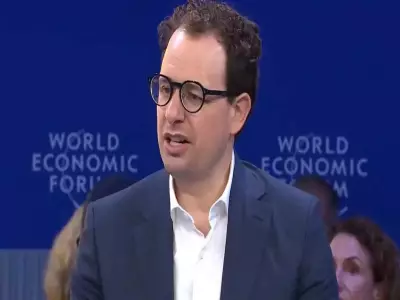
CoreWeave CEO Mike Intrator has characterized Nvidia as a "wonderful partner" and described their collaborative relationship as "symbiotic" during post-IPO interviews. This mutual benefit underscores the strategic rationale behind Nvidia's investment approach, which focuses on fostering partnerships that accelerate AI innovation while expanding market opportunities for Nvidia's technology.
The ongoing debate about financing patterns in the AI sector highlights the complex financial relationships developing as companies race to build the infrastructure necessary to support artificial intelligence advancement. Nvidia's position, as articulated by CEO Jensen Huang, emphasizes strategic partnership over financial engineering, with investments representing confidence in what he believes will be transformative companies shaping the technological landscape for generations to come.