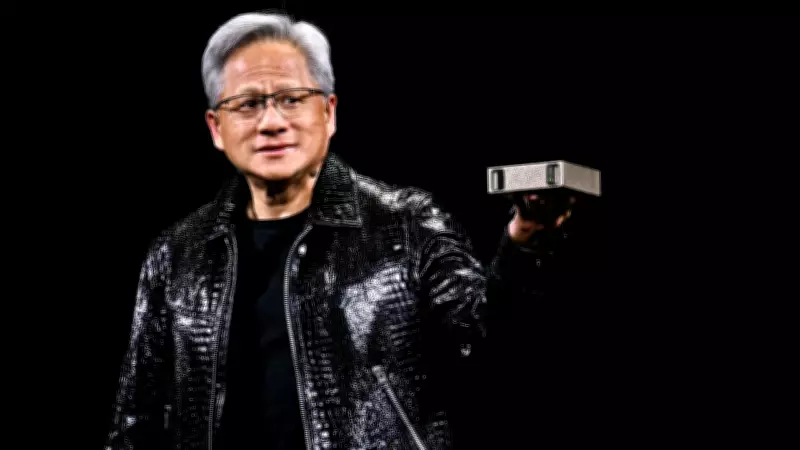
Nvidia CEO Jensen Huang has shared a bold vision for the future of artificial intelligence (AI) innovation, suggesting that the next great frontier for computing isn't just on our screens, but in the physical world around us. During a keynote at the recently-held Adobe Summit, sitting down with Adobe CEO Shantanu Narayen, Huang discussed how Nvidia is pivoting toward "Physical AI," technology that allows computers to understand and interact with the tangible world.
The Shift to Physical AI
When Narayen asked what excites the Nvidia founder about what's happening with physical AI innovation and robotics, Huang said that while AI has mastered digital data, the biggest industries remain largely physical. To revolutionize these sectors, computers must first learn the laws of the physical world.
"The vast majority of the world is physical, and if we want to be able to apply computing for the first time to some of the largest industries in the world – whether it's life sciences or logistics and manufacturing or transportation – unless the computer can understand the physical world, there is no chance of enhancing it, no chance of automating again," he told Narayen.

The Role of Digital Twins
Huang emphasized the need for precise digital representations of physical objects. "Many of the people in this room are producing products, and they're marketing those products, but those products are very specific. That product needs to be precise… the brand identity has to be precise… the design is precise. It's not an approximate representation of the product, and so many of the things that we do need to have a perfect digital twin. That starting point cannot be negotiable," Huang explained.
"We need a high fidelity, truthful, in its most precise representation, which is 3D graphics, digital representation of the artifact," he added. "It could be a car, it could be, you know, perfume bottle, it could be a person… whatever it is. From there, we can then integrate it with generative AI and express our creativity through that," Huang noted, emphasizing that these "digital twins" serve as a bridge, allowing generative AI to interact with the real world.
Why It Matters
By creating these precise 3D models, companies can test robots in a virtual space before putting them on a factory floor, simulate transport systems to find efficiencies without real-world risks, and even merge creativity with AI by using digital artifacts as a canvas for new designs.
This approach has the potential to transform industries by enabling safer, more efficient automation and innovation. As Huang's vision suggests, the future of AI lies not just in processing data but in interacting with and enhancing the physical world around us.