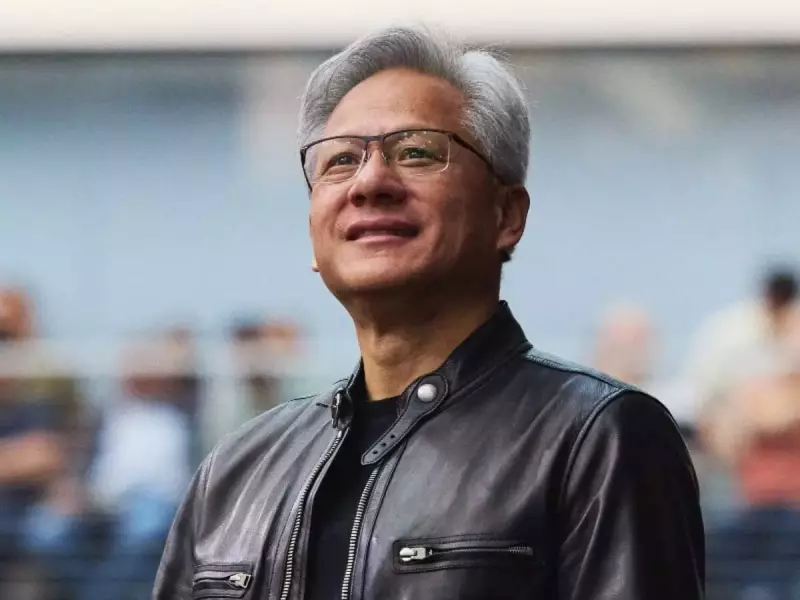
Nvidia CEO Jensen Huang Challenges Traditional Career Models at Davos Forum
At the prestigious World Economic Forum in Davos, Switzerland, Jensen Huang, the visionary CEO of Nvidia, delivered a thought-provoking statement that is reshaping labor market discussions worldwide. Huang asserted that artificial intelligence is more likely to enhance the value of blue-collar work rather than diminish it, a perspective that directly confronts long-standing assumptions about professional advancement and success.
Revisiting Decades of Career Progression Assumptions
For generations, career trajectories followed a predictable pattern where advancement meant moving away from hands-on, physical roles into office-based positions, management layers, and abstract decision-making. Status and seniority were often measured by distance from the shop floor, with leadership roles becoming increasingly detached from operational realities. This traditional arc defined success as abstraction from practical work.
How Early AI Debates Overlooked Critical Workforce Segments
Initial discussions about artificial intelligence's impact on employment largely reinforced this established pattern, focusing predominantly on office roles, knowledge work, and desk-based tasks. Meanwhile, jobs connected to factories, warehouses, power grids, and data centers received considerably less attention, despite these systems forming the essential backbone of our increasingly digital economy. This oversight created a significant gap in understanding AI's true transformative potential across all workforce sectors.

The Emergence of the 'New Blue-Collar' Workforce
Jensen Huang's perspective at Davos points toward a fundamentally different direction, centering on what industry experts now describe as the new blue-collar workforce. These emerging roles represent a sophisticated blend of physical work with advanced digital and AI tools. They encompass:
- Technicians maintaining and optimizing data center operations
- Workers operating advanced manufacturing equipment with AI integration
- Teams managing energy and infrastructure systems that artificial intelligence critically depends upon
These positions exist at the crucial intersection of software capabilities and physical reality. They prove remarkably difficult to fully automate and represent substantial investments that organizations cannot easily replace when systems experience failures or require maintenance.
Implications for Future Leadership Development
This shifting paradigm does not necessarily mean that future chief executives will emerge exclusively from technical or trade backgrounds. However, it strongly suggests that practical, hands-on understanding is regaining significant importance in leadership evaluation. Executives who comprehend how power is delivered to facilities, how industrial equipment fails under stress, how safety risks manifest in real-world environments, and why complex systems break down are often better positioned to assess whether expansion plans are genuinely feasible or fundamentally fragile.
Strategic Career Considerations for the AI Era
For professionals contemplating their career trajectories in this evolving landscape, the crucial insight is not necessarily about radically changing paths. Instead, it involves developing awareness about where genuine value is accumulating within organizations and industries. If Jensen Huang's perspective proves accurate, career success in the artificial intelligence age may depend less on maintaining distance from operational work and more on cultivating proximity to how the physical world actually functions and integrates with digital systems.
The Davos discussion highlights a significant revaluation of skills and roles that combine technical knowledge with practical implementation capabilities, suggesting that the future workforce will increasingly reward those who can bridge the gap between digital innovation and physical execution.