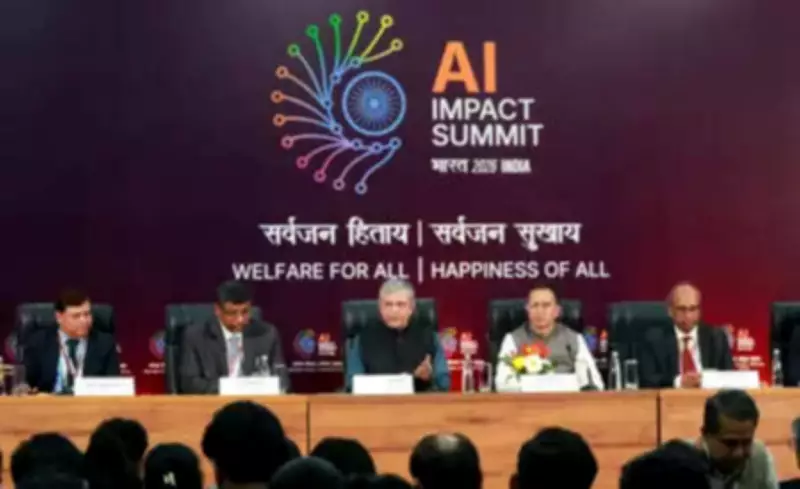
AI Impact Summit 2026 Concludes with Landmark New Delhi Declaration
The AI Impact Summit 2026 wrapped up in New Delhi on December 20, marking a significant milestone in global artificial intelligence governance. A total of 88 countries and international organizations came together to sign the New Delhi Declaration on AI Impact, establishing a comprehensive, though non-binding, agreement. This declaration outlines a shared roadmap designed to ensure that AI benefits everyone globally, rather than being dominated by a few technological superpowers.
Summit Structure and India's Vision
The two-day event, held from February 18 to 19, was organized around seven core pillars, referred to as "Chakras" by the Indian government. These pillars encompassed a wide range of critical areas, including democratizing access to AI resources, reskilling the workforce for an AI-driven economy, developing energy-efficient AI systems, and leveraging AI to accelerate scientific research breakthroughs. As the host nation, India vigorously promoted its "AI for All" vision, which is deeply rooted in the Sanskrit principle of "Sarvajan Hitaya, Sarvajan Sukhaya," meaning welfare and happiness for all people.
Key Deliverables of the New Delhi Declaration
The declaration includes several concrete initiatives aimed at fostering global collaboration and equity in AI development. Among the most notable deliverables are:

- Charter for Democratic Diffusion of AI: This charter focuses on making foundational AI resources more affordable and accessible to nations worldwide, reducing barriers to entry.
- Global AI Impact Commons Platform: A dedicated platform where countries can share and replicate successful AI use cases, promoting best practices and innovation across borders.
- Trusted AI Commons: Essentially a shared repository of tools, benchmarks, and best practices for building secure and reliable AI systems, enhancing global cybersecurity standards.
- International Network of AI for Science Institutions: This network aims to pool research capabilities internationally, facilitating collaborative scientific advancements through AI.
- AI Workforce Development Playbook: A comprehensive guide to help nations prepare their citizens for the evolving demands of an AI-driven economy, focusing on education and skill development.
Geopolitical Diversity and Signatory Nations
The signatory list for the New Delhi Declaration is remarkably diverse, resembling a United Nations General Assembly roll call. It includes major global players such as the United States, China, and the European Union, as well as smaller nations like Bhutan, Fiji, and Suriname. Notably, countries like Russia, Iran, and Cuba also participated, making this one of the most geopolitically inclusive AI agreements to date. This broad participation underscores a collective commitment to addressing AI challenges on a global scale.
Bridging the Gap Between AI Haves and Have-Nots
A recurring theme throughout the summit was the significant gap between countries that develop AI technologies and those that primarily consume them. The declaration explicitly calls for measures to bridge this divide, including affordable connectivity solutions, the promotion of open-source AI ecosystems, and support for locally relevant innovation. The clear message is that developing nations should not merely be passive consumers of AI but active builders and contributors to the global AI landscape.
Focus on Energy Efficiency and Sustainability
Energy efficiency emerged as a critical focus area during the discussions. The summit acknowledged the growing energy demands and resource consumption associated with AI systems, highlighting the need for sustainable practices. By addressing these environmental concerns, the declaration aims to ensure that AI development progresses in an eco-friendly manner, minimizing its carbon footprint and resource usage.

India's Leadership in Global AI Governance
With 88 signatories, including influential nations like the United States, China, Russia, and the European Union, the New Delhi Declaration stands as one of the most geopolitically diverse AI agreements ever established. This achievement sends a clear signal that India is positioning itself not just as a participant but as a leader in the global conversation on AI governance. By hosting this summit and championing inclusive policies, India aims to shape the future of AI in a way that prioritizes equity, collaboration, and sustainable development for all nations.