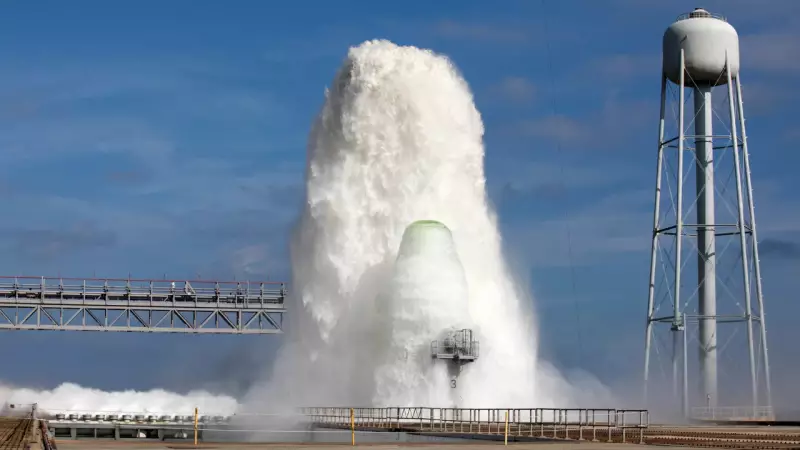
NASA's Water Deluge System: The Unsung Hero of Rocket Launches
While a rocket launch appears as a dramatic contest between immense power and precise engineering, the most critical moments often occur before the vehicle even leaves the ground. In the final seconds on the launchpad, forces build rapidly as engines ignite while the rocket remains restrained. To an outside observer, some systems activated at this stage might seem excessive or puzzling. However, they represent decades of hard-earned lessons from failed tests, damaged hardware, and perilous close calls.
The Critical Role of Water in Launchpad Safety
One of these vital mechanisms activates mere seconds before ignition, when NASA releases nearly 450,000 gallons of water beneath the launchpad. This massive deluge serves a specific and indispensable purpose: to control the extreme sound, vibration, and heat generated at ignition.
When rocket engines ignite, sound pressure levels near the launchpad can exceed 200 decibels, making liftoff one of the loudest events humans can produce. This is not merely noise. According to NASA engineers, sound at this intensity transforms into a physical force capable of damaging critical hardware. Acoustic waves slam into concrete flame trenches and steel structures, then reflect back toward the rocket. These reflected waves can:

- Shake sensitive avionics systems
- Loosen essential fasteners
- Crack vital insulation materials
- Interfere with precision guidance systems
NASA has described uncontrolled acoustic energy as a "mission-ending hazard." The water deluge system works by absorbing and scattering these dangerous sound waves. When hundreds of thousands of gallons flood the launchpad, much of that acoustic energy converts into heat and steam rather than rebounding into the vehicle. NASA estimates this system can reduce effective sound levels by up to 20 decibels, providing a crucial margin that protects both the rocket and its precious payload.
Managing Extreme Heat and Structural Integrity
The water also plays a key role in managing intense heat. Rocket exhaust can exceed 3,000 degrees Celsius, hot enough to crack concrete and warp steel. The deluge cools the flame trench and launch structures, preventing fires and stopping concrete spalling—a violent cracking process caused by trapped moisture rapidly expanding under extreme heat.
As one NASA launchpad engineer has explained, the system prevents "the rocket from destroying the pad, and the pad from destroying the rocket." This delicate balance ensures both vehicle and infrastructure survive the launch's most violent moments.
How the Water Deluge System Operates
Seconds before ignition, enormous storage tanks positioned near the launchpad release water at extraordinary flow rates, flooding the flame trench and the base of the launch structure. As engines ignite, the water instantly flashes into steam, forming a dense cloud that cushions the rocket from reflected sound and intense heat.
This process occurs with incredible precision. During full-scale tests, NASA has released hundreds of thousands of gallons in under a minute, perfectly timed to coincide with ignition. The system is fully automated and synchronized with engine start, making it one of the most carefully choreographed moments in the entire launch sequence.
Evolution from Apollo to Artemis
NASA's reliance on water deluge systems dates back to the Apollo program, when early acoustic studies revealed that rockets without proper sound suppression risked catastrophic damage before liftoff. Those lessons are now deeply embedded in the Artemis program, featuring:
- Reinforced flame trenches
- Larger water storage tanks
- Faster water delivery systems
- Infrastructure designed for repeated heavy launches
In Artemis program documentation, NASA notes that as rockets become larger and more powerful, the margin for error during ignition shrinks. Managing sound and vibration on the ground has become just as critical as guidance and propulsion during flight.

The Most Demanding Launches
The more powerful the rocket, the greater the need for sound suppression. During launches of NASA's Space Launch System, the agency has released up to 450,000 gallons of water in under 60 seconds—one of the largest water deluge events in spaceflight history. NASA significantly upgraded the system for SLS after determining that Apollo-era infrastructure was insufficient for the rocket's immense thrust and acoustic output.
The Saturn V, which carried astronauts to the Moon, also relied on a water suppression system. However, modern engines produce different sound profiles and vibration patterns. According to NASA engineers, newer rockets demand higher flow rates and stronger infrastructure to survive ignition safely.
Essential Protection, Not Mere Spectacle
To spectators, the torrent of water beneath a rocket may appear excessive or wasteful. To NASA engineers, it is absolutely non-negotiable. The release of half a million gallons of water isn't about spectacle or excessive caution—it's about surviving the most violent seconds of launch, when sound, heat, and vibration peak simultaneously.
Without this sophisticated system, many modern rockets would damage themselves before leaving the ground, making one of spaceflight's most dramatic sights also one of its most necessary safeguards.