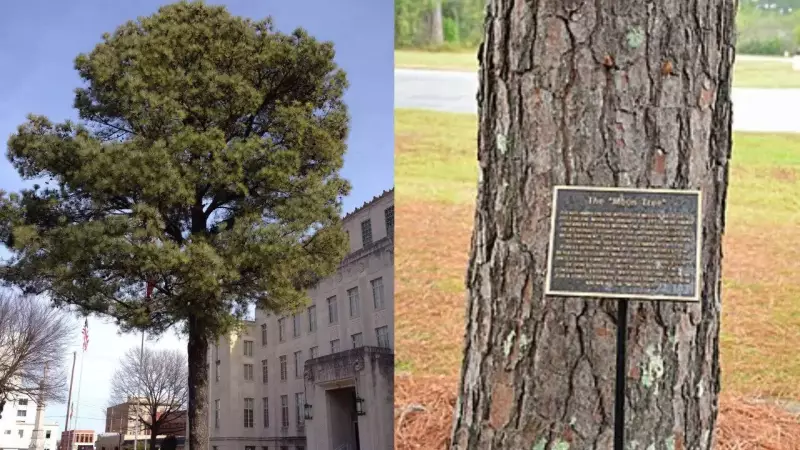
NASA achieved something remarkable in the early 1970s that few people remember today. The space agency did not launch rockets or robots alone. They sent tree seeds into space. This little-known experiment created what we now call the Moon Trees.
The Apollo 14 Seed Mission
In 1971, astronaut Stuart Roosa carried seeds with him on the Apollo 14 mission. Roosa had worked as a smokejumper for the U.S. Forest Service before joining NASA. He brought seeds from different tree species in his personal kit. Scientists wanted to see if space travel would change how these seeds grew back on Earth.
What Happened to the Seeds in Space
The seeds never touched the Moon's surface. They orbited the Moon about thirty-four times inside the spacecraft. After the mission ended, workers cleaned the equipment. A sudden pressure change caused some seed pods to burst open. Everyone thought the seeds were ruined. But they were wrong.

NASA planted the seeds anyway. To everyone's surprise, many of them sprouted. They grew into healthy seedlings against all expectations. This success amazed the scientific community.
Creating a Bicentennial Forest
By 1975, America prepared to celebrate its two hundredth birthday. NASA had nearly four hundred Moon Tree seedlings ready for planting. The space agency worked with the U.S. Forest Service to distribute these special trees.
They sent Moon Trees to every state in America. Other countries received them too. Brazil and Japan planted Moon Trees in their soil. One Loblolly Pine Moon Tree even found a home at the White House.
Schools, parks, and arboretums across the nation received these living souvenirs. Each planting included an honorary plaque. NASA sometimes sent a telegram calling the tree "a living symbol of our spectacular human and scientific achievements."
The Legacy of Moon Trees Today
Decades have passed since those plantings. Many Moon Trees still stand tall across the world. Their plaques may have faded with time, but their story remains fresh. NASA continues to track these special trees today.
The agency values them both for their uniqueness and their historical significance. Moon Trees represent a bold era of space exploration. They remind us that exploration can take root in unexpected ways. These trees connect space science with life on Earth in a very tangible way.
Few scientific experiments have achieved such lasting impact. The Moon Trees continue to grow, silently telling their story to new generations.