NASA Wraps Up Antarctic Balloon Campaign with Major Scientific Flights
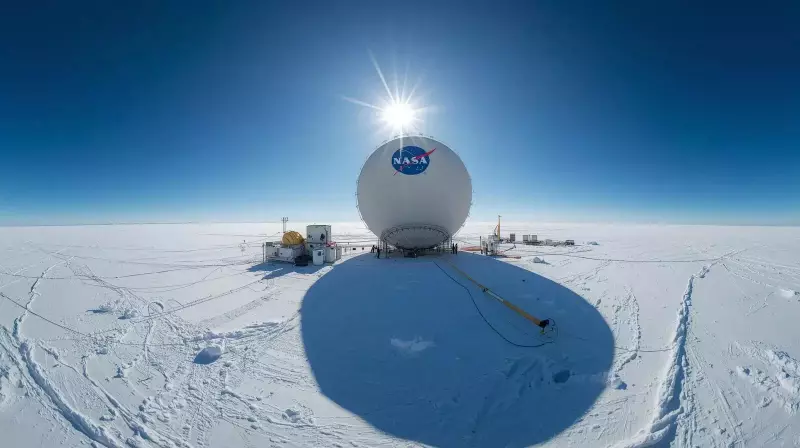
NASA has successfully concluded a series of scientific balloon flights over Antarctica. The campaign began in early December and involved multiple launches from a site near McMurdo Station on the Ross Ice Shelf. Four balloons took to the skies, remaining airborne for several weeks each. This effort forms part of NASA's ongoing Scientific Balloon Program, which utilizes high-altitude balloons as a cost-effective alternative to satellites for various research missions.
GAPS Mission Hunts for Antimatter Clues
The first major launch occurred on December 15 with the General AntiParticle Spectrometer, known as GAPS. This balloon carried a sophisticated instrument designed to detect rare antimatter particles entering Earth's atmosphere. Scientists are particularly interested in these particles because they might provide valuable insights into dark matter. Dark matter is believed to constitute most of the universe's mass, yet it remains invisible to direct observation.
The GAPS balloon stayed aloft for just over 25 days before landing safely on the ice on January 9. During its flight, it followed a circular path around Antarctica, benefiting from steady winds and nearly continuous sunlight. This extended duration allowed the instrument to gather comprehensive data sets under stable environmental conditions.

PUEO Focuses on High-Energy Neutrinos
A second significant payload, the Payload for Ultrahigh Energy Observations or PUEO, launched on December 19. This mission aims to detect neutrinos, which are extremely energetic particles that travel across the universe with minimal interference. Neutrinos are notoriously difficult to observe, requiring sensitive instruments and prolonged observation periods.
PUEO remained airborne for more than 23 days, touching down on January 12. This flight also marked the inaugural launch under NASA's Astrophysics Pioneers program. This initiative supports focused science missions at a lower cost compared to traditional space missions.
Supporting Balloons Enhance Core Research
In addition to the two primary missions, NASA launched two smaller balloons by hand on December 21. These secondary balloons carried radio beacons called HiCal and stayed in flight until December 25. For a brief period, all four balloons were airborne simultaneously.
The HiCal beacons emitted radio signals similar to those expected from neutrino interactions. This allowed the PUEO team to test and verify the sensitivity of their detection systems using known signal sources, thereby enhancing the reliability of their data.
Antarctica's Unique Advantages for Balloon Flights
Antarctica offers exceptional conditions that are hard to replicate elsewhere on Earth. During the summer months, constant sunlight helps maintain stable balloon altitudes. Predictable circular wind patterns around the continent enable balloons to remain aloft for extended periods, often weeks at a time.
The campaign employed zero pressure balloons, which are engineered to balance with the surrounding atmosphere. As these balloons ascend, excess gas vents out to prevent internal pressure buildup. This design supports long-duration flights without stressing the balloon structure.
Program Management and Technical Backing
NASA's Wallops Flight Facility in Virginia oversees the Scientific Balloon Program. Peraton provides mission planning, engineering support, and field operations through the Columbia Scientific Balloon Facility in Texas. Aerostar International manufactures the balloons themselves.
Funding for the program comes from NASA's Science Mission Directorate via its Astrophysics Division. These collaborative teams support a regular schedule of balloon launches annually, often flying instruments that later inform satellite mission designs.
The Niche Role of Balloon Science
Scientific balloons do not replace satellites but occupy a unique niche between ground-based observatories and orbital missions. They enable researchers to test new instruments, collect long-duration data, and respond swiftly to emerging scientific questions.

The Antarctica campaign exemplifies this role. The flights proceeded quietly and methodically, largely away from public attention. Their true value lies in the data now under analysis and in the potential for future missions to build upon these findings.