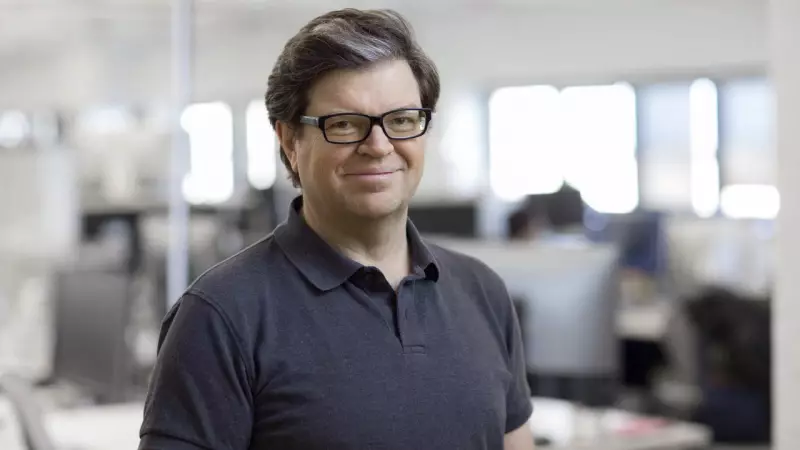
The tech world is witnessing another fiery exchange between two of its most prominent figures as Elon Musk and former Meta AI chief scientist Yann LeCun have reignited their ongoing online feud. This latest confrontation centers on the fundamental capabilities and future of humanoid robotics, a field where both men hold significant influence and competing visions.
The Spark: LeCun's Critique of Humanoid Robotics
Yann LeCun, widely recognized as one of the three 'Godfathers of Artificial Intelligence', made provocative statements in a recent interview that directly challenged the current state of robotics development. He asserted that companies building humanoid robots fundamentally lack the understanding required to make these machines truly intelligent and useful.
"None of those companies, absolutely none of them, has any idea how to make those robots smart enough to be useful," LeCun declared, describing this limitation as "a big secret of the robotics industry."

The Self-Driving Car Parallel
LeCun drew a compelling comparison between today's robotics challenges and the ongoing struggles with autonomous vehicles. He pointed out that despite access to millions of hours of training data, machine learning systems still cannot match the intuitive capabilities that humans develop with minimal practice.
"How is it that a 17-year-old can learn to drive in 10 to 20 hours of practice and we have millions of hours of training data that we could, in principle, train a machine learning system by imitation to imitate human drivers, but that doesn't work," LeCun questioned during the interview.
He emphasized that current robotic demonstrations, including impressive martial arts performances, are largely precomputed rather than representing genuine artificial intelligence. According to LeCun, these systems lack the common sense capabilities that even household pets possess naturally.
Musk's Response and the Escalating Exchange
The comments appeared to strike a nerve with Elon Musk, whose company Tesla is actively developing Optimus humanoid robots. When an X user shared LeCun's interview clip with the caption "Why is Yann such a Negative Nancy all the time?", Musk responded with a characteristically dismissive retort.
"He thinks if he can't do it, no one can," Musk wrote, suggesting that LeCun's criticism stemmed from his own limitations rather than genuine technical assessment.
LeCun's Technical Counterargument
Rather than backing down, LeCun turned the exchange into a platform to advocate for his preferred approach to artificial intelligence development. He pointed specifically to his research into Joint-Embedding Predictive Architecture (JEPA) and World Models as the path forward.
"Actually, quite the opposite. I know I can do it and I know how to do it. Just not with the techniques everyone is currently betting on," LeCun responded confidently. "My bet is (famously) on JEPA, world models, and planning. At some point, you'll realize I'm right."
This technical rebuttal highlights the fundamental philosophical divide between these AI leaders. While many companies focus on large language models and imitation learning, LeCun advocates for architectures that can develop genuine understanding and planning capabilities.
Broader Context and Industry Implications
This latest skirmish occurs against a backdrop of LeCun's previous warnings about the direction of AI development. He has cautioned that tech giants are becoming "LLM-piled"—overly focused on large language models while stealing each other's talent, creating what he sees as an innovation blockade.
The debate raises critical questions about:

- The realistic timeline for truly intelligent humanoid robots
- The most promising architectural approaches for artificial intelligence
- Whether current demonstrations represent genuine progress or technological theater
- The role of common sense reasoning in machine intelligence
As Tesla continues its Optimus development and LeCun advances his research into alternative AI architectures, this public disagreement between two of technology's most influential voices provides a fascinating window into the competing visions that will shape our robotic future. The outcome of this technical debate could determine whether humanoid robots remain impressive but limited demonstrations or evolve into genuinely useful companions in our daily lives.