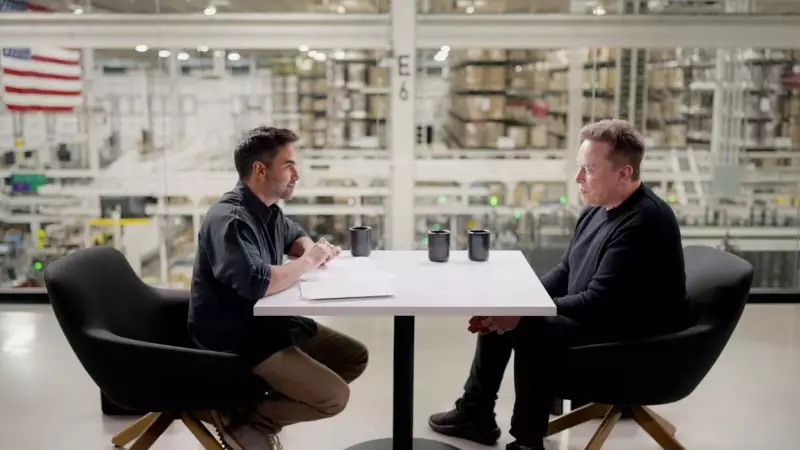
In a groundbreaking conversation that has captured global attention, Tesla CEO Elon Musk sat down with Zerodha co-founder Nikhil Kamath for his highly anticipated WTF Podcast. The nearly two-hour-long discussion covered numerous pressing topics, but one particular exchange about the United States' mounting debt crisis has generated significant buzz.
The Critical Question About America's Debt
During their extensive dialogue, Kamath directly addressed the elephant in the room - the ever-increasing US national debt. "Is that the way forward for US by the virtue of how much debt they have today? Do they deflate away from the currency and transition into this new form and lead that push, because it would make more sense to them," Kamath questioned the tech billionaire.
This thoughtful inquiry prompted Musk to share his visionary perspective on what could potentially rescue the world's largest economy from its debt burden.

Musk's Revolutionary Solution
The Tesla and SpaceX leader didn't hesitate to provide a clear, technology-focused answer to this complex economic challenge. "So long as civilisation keeps advancing, we will have AI and robotics at very large scale. That's the only thing that's gonna solve for the US debt crisis," Elon Musk declared with conviction.
Rather than suggesting traditional economic measures or policy changes, Musk pointed to technological advancement as the fundamental solution. His response emphasizes that artificial intelligence and automation, when implemented extensively, could generate the unprecedented productivity and economic growth needed to overcome America's financial challenges.
Broader Implications of Musk's Vision
This perspective aligns with Musk's long-standing advocacy for technological acceleration. The podcast episode, which broke the internet after weeks of anticipation, marks one of Musk's most explicit connections between technological progress and solving macroeconomic problems.
Musk's argument suggests that as AI and robotics transform industries and boost efficiency, the resulting economic expansion could provide the necessary resources to manage and eventually reduce the massive US debt. This technological optimism offers an alternative to conventional approaches to national debt management.
This is a developing story. Check back for updates.