Moss Proves Its Mettle in the Vacuum of Space
Scientists have made a startling discovery that could reshape humanity's future in space. A simple moss plant survived for 283 days attached to the International Space Station's exterior. This experiment demonstrated remarkable resilience against extreme conditions.
The Space Odyssey of Physcomitrium Patens
Japanese researchers initiated this groundbreaking test in March 2022. They attached samples of spreading earthmoss to the ISS outside surface. The moss endured what scientists describe as the most hostile environment humans have encountered.
For over nine months, the moss faced multiple threats. It withstood intense radiation, complete vacuum, wild temperature swings, and microgravity. When researchers retrieved the samples in January 2023, they found the moss remained biologically viable. It even retained its ability to regrow.

"Parts of this simple bryophyte plant not only survived open space, they retained the ability to grow again," explained Sudha Rajamani. She serves as a biology professor at the Indian Institute of Science Education and Research in Pune.
Why Moss Spores Showed Exceptional Hardiness
Before the space mission, scientists conducted rigorous Earth-based tests. They exposed three moss structures to extreme conditions:
- Protonemata or juvenile moss
- Brood cells, which are stress-activated stem cells
- Sporophytes containing reproductive spores
The first two structures suffered damage during testing. However, the spores within sporophytes displayed incredible tolerance. They even survived exposure to -195°C temperatures for an entire week.
Encouraged by these results, researchers sent sporophytes to the International Space Station. Data published in November revealed that eighty percent of the spores survived the space journey. The protective structure surrounding the spores likely absorbed harmful UV radiation, according to Professor Rajamani.
From Space Survival to Martian Agriculture
Researchers now believe moss could become a crucial resource for space exploration. Troy Miller from the University of Western Australia called the experiment "remarkable." He emphasized its implications for future space missions.
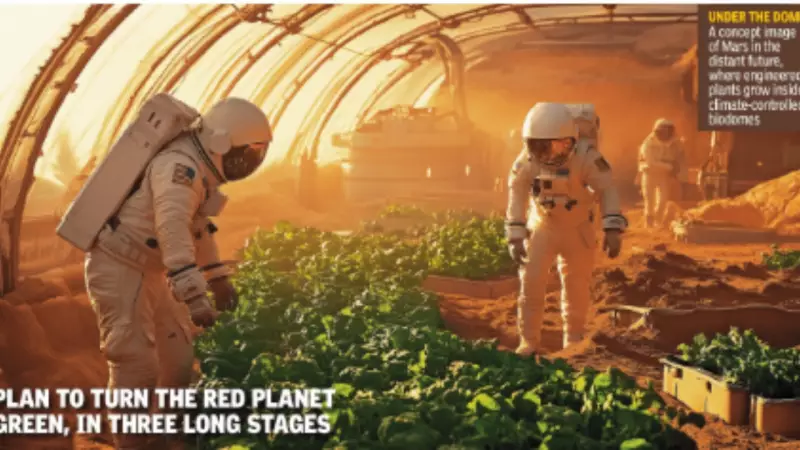
"This told us that moss could support development of food crops that can survive in space," Miller stated. "If we ever want to set up a colony on Mars or conduct manned missions into deep space, these experiments and findings are a huge deal."
Moss offers multiple benefits for space habitats. Despite its small size, it helps create proto-soil and retains water. The plant also contributes oxygen through respiration. These qualities make it promising for life-support systems during long space journeys.
Scientists have identified moss as a "pioneer plant" that colonizes devastated areas first. Its ability to survive extreme cold suggests it could tolerate Martian conditions. Mars experiences temperatures ranging from -150°C to 21°C at its warmest.
A 2024 Chinese research paper proposed an intriguing possibility. It theorized that humanity might revive Mars's dead soil using nutrients from moss. This could pave the way for agriculture on the Red Planet.
The Road Ahead: More Tests and Lunar Experiments
Professor Rajamani outlined three crucial next steps for research:
- Test moss for extended periods with higher radiation doses and various shielding materials
- Expose other hardy organisms to space conditions
- Develop and test mini-ecosystems on ISS, Moon, or Mars missions
NASA's upcoming Artemis 3 mission may include relevant experiments next year. The mission will feature astronauts cultivating plants in a lunar growth chamber. This forms part of the Lunar Effects on Agricultural Flora experiment.
"I'm very excited to see how the experiment goes," Miller commented. "Perhaps we should grow a garden of moss too." His research center will analyze plants during these lunar tests.
The humble moss plant has demonstrated extraordinary capabilities. Its space survival suggests new possibilities for human expansion beyond Earth. As research continues, this resilient organism may help humanity establish footholds on distant worlds.