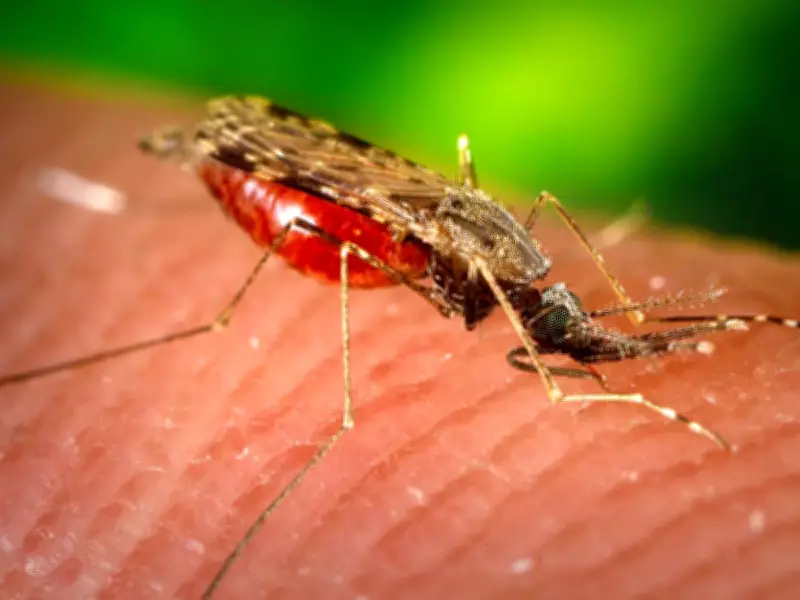
In the past, planning trips to Iceland required heavy layers, waterproof boots, and cameras. One thing that was never needed? Bug spray. The subarctic island was famously free of mosquitoes, the summer irritant that plagues much of the world. While neighboring Nordic countries suffer massive swarms each season, Iceland remained a pristine haven for bite-free people. That biological immunity has now been shattered.
Discovery of Mosquitoes in Iceland
At the end of 2025, an informal citizen science experiment on a farm in Iceland's western Kjos region produced unexpected results. Bjorn Hjaltason was inspecting a wine rope designed to attract moths when he noticed an unusual fly stuck to it. He removed the fly, which turned out to be a female mosquito. A few days later, two more were detected. Samples were sent to the Natural Science Institute of Iceland, where entomologist Matthias Alfredsson confirmed the discovery—a moment scientists had anticipated for years. The species is Culiseta annulata, a large, cold-hardy mosquito common throughout Europe. With this discovery, Antarctica remains the only landmass on Earth that is mosquito-free.
The Cracks in Iceland's Winter Defense System
To understand this change, one must know why Iceland was a no-fly zone for mosquitoes for so long. It wasn't just the cold. Greenland, which is significantly colder, hosts Aedes aegypti mosquitoes that survive by freezing their pupae solid under ice and reviving when melting begins. Iceland's weather employs a different defense: enormous, unpredictable winter fluctuations. Temperatures rise abruptly, triggering an unintentional thaw, only to plunge back into deep freeze days later. According to a study of subarctic insect distributions by scientist Gisli Mar Gislason, this irregular freeze-thaw pattern acts as an ecological killing switch. Mosquito larvae detect warmth, start to grow, then die when freezing returns.

Culiseta annulata found a biological loophole. Instead of spending winter in outdoor pools, these mosquitoes go indoors. They seek human-made shelters like barns, basements, and warehouses. These structures buffer against temperature extremes, allowing the insects to avoid the freeze-thaw trap. Research on hibernation dynamics in insects, including studies on overwintering conditions in mosquitoes, describes how adult Culiseta females conserve energy within sheltered microclimates, emerging fully active and hungry in spring.
Shipping Lanes and a Warming Arctic
The timing is no coincidence. The Arctic is warming four times faster than the global average. Iceland experienced record heatwaves in 2025, with some regions seeing temperatures 10 degrees Celsius above historical norms. While a warmer climate creates a more hospitable ecosystem, it doesn't fully explain how a small insect traveled hundreds of miles across the Atlantic. Experts point to global supply chains. Large freight vessels, cargo containers, and international flights continuously bring merchandise to Icelandic ports. Mosquitoes hitchhiking in temperature-controlled shipping containers can easily cross the ocean. Iceland's abundant marshes, shallow ponds, and wetlands provide ample breeding grounds for arriving insects.
Impact on Travel and Public Health
For those planning an Icelandic camping trip, there is no need to panic. The emergence of Culiseta annulata is an ecological event, but not a public health emergency. Unlike Aedes aegypti and Asian tiger mosquitoes spreading in the United Kingdom, Culiseta annulata is not a primary vector for deadly tropical diseases like dengue, Zika, or chikungunya. In mainland Europe, it is classified as a nuisance biter. While it may cause an itchy ankle, it does not require medical treatment.
The Natural Science Institute of Iceland is investigating whether these three samples are an isolated fluke or the start of a breeding population. The institute urges locals and tourists to photograph or collect any buzzing insects they encounter. For young travelers and millennials who see Iceland as an ideal wilderness escape, this announcement serves as a reminder of our interconnected world. Human travel, global trade, and shifting temperatures ensure that even the most isolated regions eventually connect with all of humanity.

About the Author: TOI Science Desk. The TOI Science Desk is an inquisitive team of journalists dedicated to curating captivating news, features, and articles from the ever-evolving world of science for readers of The Times of India. They aim to be your scientific companion, delivering daily doses of wonder and enlightenment on topics from genetic engineering to space exploration and artificial intelligence.