Scientists Discover New Way to Read Earth's Radiation from the Moon
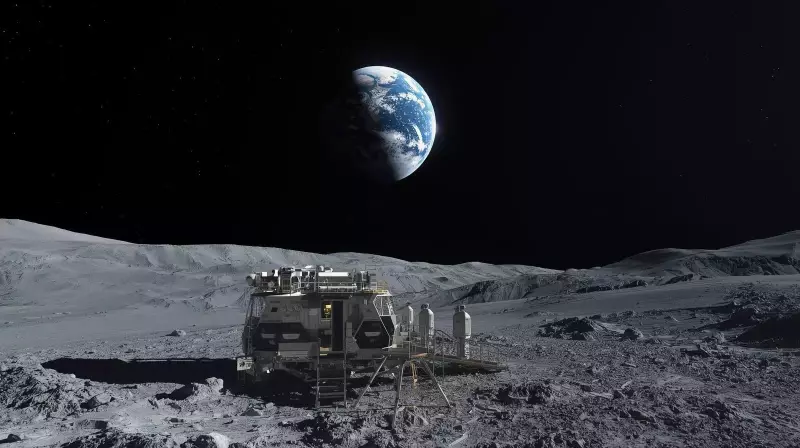
In a groundbreaking shift in planetary observation, researchers are now studying Earth not from orbiting satellites but from the surface of the Moon. A recent study titled "Spherical Harmonic Fingerprints Characterize Moon-Based Disk-Integrated Earth's Emitted Radiation Signatures" outlines how this innovative approach captures a comprehensive view of the radiation our planet emits into space.
Earth as a Single Glowing Disc
Unlike traditional methods that track weather systems or regional changes, this new technique examines Earth as a complete glowing disc. This perspective reveals repeating radiation patterns influenced by:
- Earth's rotational movement
- Its dynamic relationship with the Moon
- The presence and distribution of clouds
The research relies on sophisticated simulations rather than direct measurements, establishing a framework that could significantly impact future climate monitoring and space science initiatives. It fundamentally reframes Earth as a reference object, observed much like astronomers study distant worlds.

Overcoming Limitations of Traditional Satellite Observations
Traditional Earth-observing satellites move rapidly across the planet, collecting detailed but fragmented data. Weather patterns, cloud cover variations, and short-lived atmospheric events often overwhelm long-term radiation signals. Viewing Earth from the Moon's distance changes this dynamic completely.
From this remote vantage point, local variations blend together, creating a smoother signal that reflects planetary-scale behavior rather than daily weather fluctuations. The study suggests this makes it substantially easier to track underlying radiation trends that have previously been difficult to isolate.
Repeating Geometric Patterns in Earth's Radiation
Using outputs from NASA's advanced GEOS 5 climate model, researchers simulated how Earth's radiation would appear to a fixed instrument positioned on the Moon. Their analysis revealed that most radiation variation could be explained by remarkably simple spatial patterns known as first- and second-degree spherical harmonics.
These geometric patterns are directly linked to:
- How Earth rotates on its axis
- How our planet presents itself to the Moon over extended periods
The resulting radiation signal follows regular cycles tied to the lunar month and the complex geometry of the Earth-Moon system.
Clouds' Role in Radiation Patterns
Clouds play a complex and crucial role in Earth's energy balance, and this study confirms they reduce the overall strength of emitted radiation. However, when viewed at the planetary scale from lunar distance, clouds do not disrupt the repeating cycles caused by orbital motion.
Their effects average out across hemispheres, meaning the main periodic signals remain intact despite constantly shifting cloud cover. This represents a subtle but significant finding for interpreting future observational data.
A New Validation Method for Climate Models
Because the simulated lunar view captures large-scale planetary behavior, it could serve as an important reality check for global climate models. Instead of comparing models against detailed local data, scientists could test whether these models reproduce the same broad radiation fingerprints observed from afar.
This approach doesn't replace existing validation methods but adds another crucial layer of verification that operates at the whole-planet scale.
Earth as a Proxy for Distant Worlds
The implications of this research extend far beyond climate science. By treating Earth as a disk-integrated light source, researchers are using our planet as a stand-in for exoplanets that cannot be resolved in detail through current astronomical methods.
Understanding how Earth's radiation appears from an external vantage point helps astronomers interpret faint signals from far-off worlds. In this context, the Moon becomes a uniquely quiet observatory for planetary science.

The study doesn't present final answers but establishes essential groundwork for future research. What truly matters is the fundamental shift in viewpoint it represents. Sometimes, stepping back far enough allows planetary patterns to emerge with unprecedented clarity.