Mira Murati's Rise at OpenAI
Mira Murati became one of the most influential figures at OpenAI as artificial intelligence transitioned from research labs to daily life. She joined the company in 2018 and spent more than six years guiding its technical direction. Murati eventually rose to the position of chief technology officer.
In that crucial role, she supervised the development and launch of OpenAI's most significant products. These included ChatGPT, DALL·E, and Codex. Murati successfully transformed cutting-edge research into systems that hundreds of millions of people now use regularly.
Bridging Disciplines and Leading Through Crisis
With an engineering background, Murati earned a strong reputation for connecting different fields that often struggle to work together. She bridged advanced research, product engineering, safety protocols, and public accountability. Colleagues described her as someone who could effectively link researchers, company leadership, and external partners.

As OpenAI's public profile expanded, Murati became one of its most recognizable representatives. She appeared at major product launches, including the GPT-4o introduction in 2024.
Her influence became particularly evident during OpenAI's governance crisis in November 2023. When CEO Sam Altman faced sudden removal, Murati stepped in as interim CEO during the chaotic period. This placed her at the center of one of the technology industry's most significant power struggles.
Although Altman returned to his position within days, the episode revealed deep internal divisions about governance, safety, and control of advanced artificial intelligence.
Departure and New Ventures
Murati formally left OpenAI in 2024. She described her departure as a desire for personal exploration amid broader structural changes at the company. These changes included OpenAI's shift toward a hybrid, profit-driven business model.
Her exit coincided with a wider departure of senior talent from OpenAI. Greg Brockman stepped back from his role, Ilya Sutskever pursued independent research, and John Schulman joined Anthropic. By late 2024, Sam Altman remained the only original co-founder still leading the company, raising questions about OpenAI's internal cohesion and governance structure.
Launching Thinking Machines Lab
In February 2025, Murati returned to the public spotlight by launching a new public benefit corporation called Thinking Machines Lab. She positioned this venture as addressing gaps she identified in the current artificial intelligence ecosystem.
The company stated its mission involves making AI systems more widely understood, customizable, and generally capable. This signaled an emphasis on interpretability, user control, and foundational research rather than immediate consumer scale.
Investor enthusiasm emerged quickly and substantially. By July 2025, Thinking Machines Lab closed a $2 billion seed funding round led by Andreessen Horowitz. Other participants included Accel, Nvidia, AMD, and Jane Street.
This funding valued the company at $12 billion despite having no revenue yet. Murati became one of the most highly capitalized first-time founders in Silicon Valley history. Industry observers widely viewed her startup as a potential rival or philosophical counterweight to OpenAI itself.
Public Scrutiny and Personal Details
Murati's career trajectory has made her one of the most closely examined figures in global technology. As a woman operating at the highest levels of an industry still dominated by male founders and executives, her background, personal life, and influence have attracted intense public curiosity.
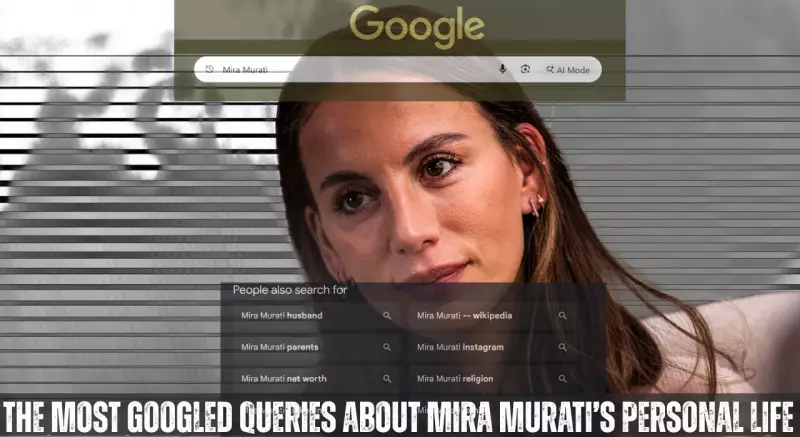
This attention has translated into numerous online searches about her personal and professional life. Below are answers to some of the most frequently searched questions about Mira Murati.
Frequently Asked Questions
Who are Mira Murati's parents? Murati was born on December 16, 1988, in Vlorë, Albania, during the final years of the country's totalitarian regime. Both her parents worked as high school literature teachers. She has spoken about growing up during political and economic uncertainty and acknowledged her parents' role in encouraging her academic ambitions.

Is Mira Murati Indian? No. Murati is Albanian-American. She was born and raised in Albania before moving to Canada and later the United States for education and career development. While her name has occasionally prompted speculation about Indian heritage, these claims have been repeatedly fact-checked and dismissed. Murati is a common Albanian surname.
What is Mira Murati's educational background? Murati attended Pearson United World College of the Pacific in Canada on a scholarship after growing up in Albania. She later completed a dual-degree program in the United States, earning a Bachelor of Engineering in Mechanical Engineering from Dartmouth College's Thayer School of Engineering and a Bachelor of Arts in Mathematics from Colby College. In 2024, Dartmouth awarded her an honorary Doctor of Science recognizing her contributions to technology and artificial intelligence.
Is Mira Murati married? Who is her husband? Murati married in June 2025 during a highly private ceremony in Tuscany, Italy. Her husband's identity has not been publicly disclosed. The wedding incorporated Albanian traditions, including traditional dress from the Vlora region. Guests reportedly signed strict confidentiality agreements prohibiting photographs or public disclosure. Murati has spoken only once publicly about marriage, recalling a lighthearted anecdote where her mother used ChatGPT for the first time and asked in Albanian, When will Mira get married?
What is Mira Murati's net worth? Murati's exact net worth remains unconfirmed publicly. However, as founder and CEO of Thinking Machines Lab, she holds a significant equity stake in a company valued at $12 billion as of mid-2025. Reports estimate her founder stake at approximately $1.4 billion at that valuation, effectively placing her among the world's newest tech billionaires, though such figures fluctuate with market conditions and future funding rounds.
What religion does Mira Murati follow? No verified public information exists about Murati's religious beliefs. While Albania has a diverse religious landscape, Murati has never publicly discussed her faith. Reliable sources focus exclusively on her professional life and advocacy work rather than personal belief systems.
Is Mira Murati active on social media? Murati maintains a deliberately low public profile online. Her confirmed X account (@miramurati), created in 2010, has hundreds of thousands of followers but sees sparse use for professional updates, including her resignation from OpenAI and announcements related to Thinking Machines Lab. She does not maintain a verified, active LinkedIn profile. An Instagram account attributed to her exists but shows minimal activity without regular posting history.
Recent Developments and Industry Impact
Attention returned to Mira Murati recently following an unusual reversal in Silicon Valley's artificial intelligence talent competition. Three senior figures from the founding team of Thinking Machines Lab announced they were leaving to rejoin OpenAI, where all had worked previously.
In a post on X, Murati stated that Thinking Machines Lab had parted ways with co-founder and chief technology officer Barret Zoph. She announced Soumith Chintala as the startup's new CTO. Zoph had been one of the most senior figures in the company Murati founded after leaving OpenAI. His departure immediately raised questions about stability within the young laboratory.
Less than an hour later, Fidji Simo, OpenAI's CEO of Applications, publicly welcomed Brett Zoph back to OpenAI in a post on X. She welcomed him alongside Luke Metz and Sam Schoenholz. Zoph and Metz were co-founders of Thinking Machines Lab, while Schoenholz was part of its original founding team of researchers and engineers.
Simo noted that all three had previously worked at OpenAI. She wrote that their returns had been in the works for weeks, reframing the exits not as sudden defections but as a deliberate re-consolidation of talent by OpenAI.
Simo later added that Zoph would report directly to her, with Metz and Schoenholz reporting to Zoph. This leadership structure underscored how methodically OpenAI is now rebuilding senior technical capacity after a period of high-profile departures.
The speed and public nature of these announcements drew significant attention. This occurred not only because of the individuals involved but because such reversals remain rare at this level. Founders and early leaders typically move from dominant firms to build challengers rather than returning within a year.
That three members of Murati's founding cohort chose to return to OpenAI has been widely interpreted as evidence of how fiercely the company is now re-consolidating talent following its earlier wave of departures. It also demonstrates how gravitational OpenAI's resources and scale remain in the industry.
For Murati, this episode has placed her back at the center of industry conversation. This time, she appears not as OpenAI's former CTO but as the founder of a heavily funded rival navigating its first major test of cohesion, leadership continuity, and credibility under pressure.