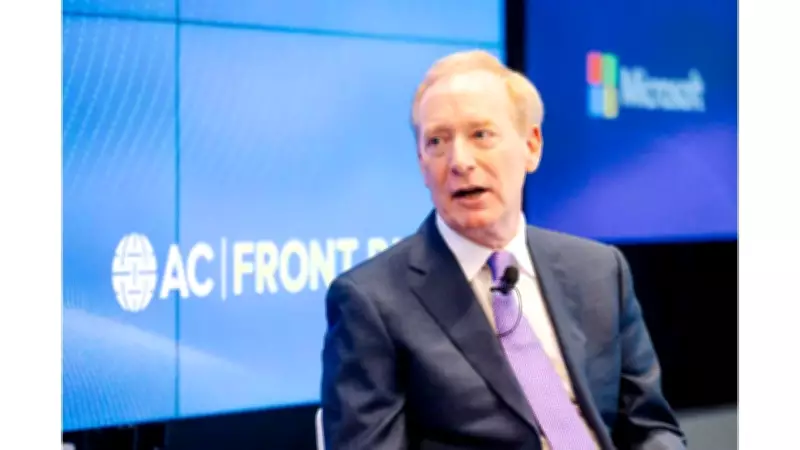
Microsoft President Brad Smith: AI to Elevate Software Engineering Profession
Microsoft President Brad Smith has made a clear statement that artificial intelligence will not replace software engineers. Instead, AI will serve as a supportive tool to enhance their skills and boost creativity. Speaking in an interview with news agency PTI, Smith directly addressed widespread concerns about potential job losses in the technology sector due to AI advancements.
Focus on Building Tools for Skill Enhancement
Smith emphasized that Microsoft's primary focus is on developing tools that help people improve their skills and work more efficiently. According to him, AI can effectively handle repetitive coding tasks, which will free up engineers to concentrate on higher-level work such as design, system architecture, and security. He firmly stated that the goal should always be to create better jobs, not to eliminate them.
"We're not talking about using AI to replace software engineers," Smith said, adding that the aim is fundamentally to improve how software is created and developed.

Context of Microsoft's 2025 Job Cuts and AI Vision
Brad Smith's comments come in the wake of Microsoft's decision to slash thousands of jobs in 2025. In a blog post at that time, CEO Satya Nadella articulated the company's need to "reimagine our mission for a new era." Nadella questioned what empowerment looks like in the era of AI, explaining that it is not just about building tools for specific roles or tasks.
"It's about building tools that empower everyone to create their own tools. That's the shift we are driving—from a software factory to an intelligence engine empowering every person and organization to build whatever they need to achieve," Nadella wrote, highlighting a transformative vision for AI's role.
AI as a Catalyst for "Upleveling" the Profession
Smith told PTI that AI can take over routine parts of coding, which gives developers more valuable time to focus on planning products, managing projects, and improving security. He described this shift as "upleveling" the profession of software engineering rather than reducing its importance or relevance.
He also pointed out that when technology improves productivity, companies often require more skilled workers and may even offer higher salaries as a result. This economic perspective supports the idea that AI can lead to better job opportunities and enhanced compensation in the tech industry.
Frustration with Tech Leaders' Narrow Focus on Machine Intelligence
During the interaction, Smith expressed frustration with technology leaders who talk only about building machines that are smarter than humans. "The first thing we should always ask ourselves is, what's our goal? I do get frustrated at times when I hear technology leaders talk about how they want to build machines that are smarter than people," he said.
Smith acknowledged that there is a role for machines that keep getting smarter, but he stressed that Microsoft's biggest goal is different. "We should always start by asking ourselves, what are we trying to accomplish?" he told PTI, advocating for a human-centric approach to AI development.
AI's Role in Enhancing Human Abilities and Bridging Gaps
Smith noted that Microsoft wants to build machines that help people become smarter and more capable. He highlighted that AI should be used to improve human abilities, including reading, listening, and communication, rather than merely surpassing human intelligence.
He also referred to discussions in India about using AI to bridge language gaps, such as translating between multiple Indian languages. Smith emphasized that governments have a crucial role in ensuring AI is used to increase productivity, support economic growth, and create higher-quality jobs, thereby fostering inclusive development.
In summary, Brad Smith's insights underscore a future where AI acts as a collaborative partner in software engineering, driving innovation and job enhancement rather than displacement.