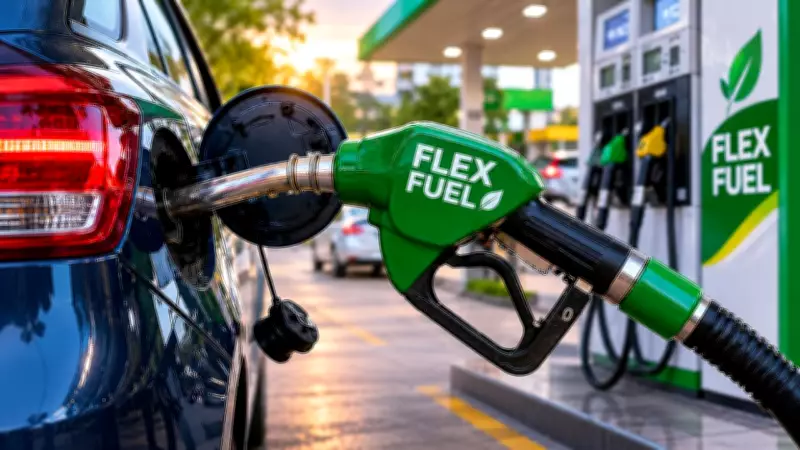
With Maruti Suzuki preparing to introduce India’s first flex-fuel passenger vehicle, ethanol-based mobility has returned to the spotlight. While electric vehicles (EVs), hybrids, and CNG vehicles continue to play a major role in the country’s transition toward cleaner transportation, flex-fuel technology is emerging as another alternative aimed at reducing emissions and lowering dependence on imported crude oil.
What Are Flex-Fuel Vehicles?
Flex-fuel vehicles, or FFVs, are designed to run on petrol as well as ethanol-blended fuels. Unlike conventional petrol cars that can only support limited ethanol content, FFVs can operate on blends ranging from E20 to E85 and, in some cases, E100. The vehicle’s engine management system automatically identifies the ethanol concentration and adjusts engine parameters to maintain performance. Ethanol is a renewable fuel produced from agricultural feedstocks such as sugarcane, corn, and biomass. In India, sugarcane is the primary source of ethanol production. Increased use of ethanol can help reduce fuel imports while supporting domestic agriculture.
Specialized Components for Higher Ethanol Content
Although they resemble conventional petrol cars, flex-fuel vehicles use specialized components to handle higher ethanol content. These include ethanol-compatible fuel systems, corrosion-resistant engine parts, fuel composition sensors, and software calibrated for multiple fuel blends. This allows the vehicle to adapt automatically to different fuel mixtures without driver intervention.

Understanding Ethanol Blends
The ethanol content in fuel is indicated by the letter “E.” E20 contains 20 percent ethanol and 80 percent petrol, E85 consists of 85 percent ethanol and 15 percent petrol, while E100 is pure ethanol. India has already begun introducing E20 fuel and is working toward wider availability of higher ethanol blends.
Advantages of Flex-Fuel Technology
One of the key advantages of flex-fuel vehicles is their potential to reduce India’s dependence on imported crude oil. Ethanol also burns cleaner than petrol, which can help lower certain vehicle emissions. Increased ethanol production can create additional demand for agricultural products, benefiting farmers and the rural economy. In addition, drivers have the flexibility to use different ethanol-petrol blends depending on fuel availability.
Challenges and Limitations
However, flex-fuel technology also faces some challenges. Ethanol contains less energy than petrol, which can result in lower fuel efficiency when higher ethanol blends are used. Infrastructure remains another hurdle. While the government plans to establish 5,000 E100 fuel stations across India over the next two years, the network is still at an early stage. Passenger vehicle choices are also limited, although more models are expected in the future.
Government and Industry Perspective
The government views flex-fuel vehicles as a complementary solution alongside EVs, hybrids, and CNG-powered vehicles. The technology can help reduce crude oil imports, increase the use of domestically produced fuel, and lower emissions without requiring major changes in vehicle usage patterns. Automakers including Maruti Suzuki, Toyota, and Honda have already showcased flex-fuel models and prototypes for the Indian market.
Consumer Considerations
For consumers, flex-fuel vehicles could provide another option alongside petrol, diesel, CNG, and electric cars. The ability to run on multiple fuel blends may offer greater flexibility and potentially lower running costs, depending on ethanol pricing. However, widespread adoption will depend on fuel availability, infrastructure expansion, and overall operating economics.
Future Outlook
Flex-fuel vehicles are unlikely to replace EVs or hybrids in the near term, but they could become an important part of India’s broader multi-fuel mobility strategy. As more vehicles reach the market and ethanol infrastructure expands, the technology could emerge as a practical alternative to conventional petrol-powered cars.