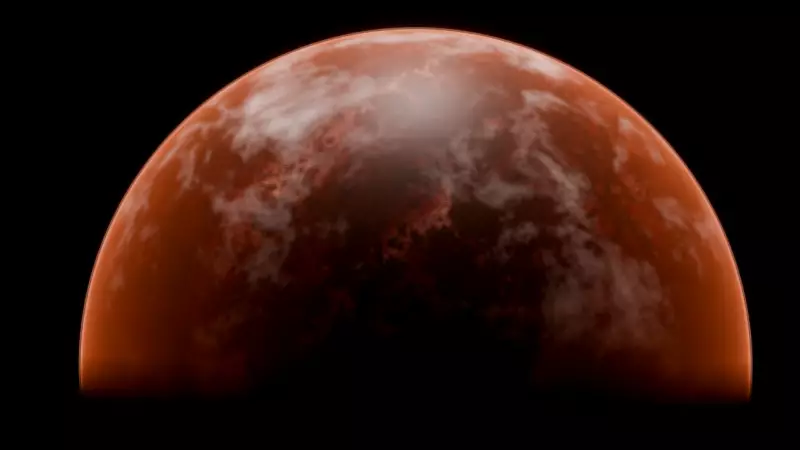
Mars Shockwaves & Toxic Soil: Lab Experiments Reveal Surprising Microbe Survival
For decades, Mars has been viewed as a barren, inhospitable world, plagued by freezing temperatures and relentless cosmic radiation. Yet, groundbreaking laboratory studies are now challenging this long-held belief in remarkably unexpected ways. Researchers have successfully recreated Martian-like conditions, including extreme shockwaves and poisonous soil, discovering that certain microorganisms can endure far harsher environments than previously imagined. The implications are profound, suggesting that life on other planets might not only be possible but could exist in forms we are only beginning to understand.
Mars Simulation Experiments Reveal Surprising Cell Survival
According to recent research published in PNAS Nexus under the title 'Ribonucleoprotein (RNP) condensates modulate survival in response to Mars-like stress condition', scientists have replicated two of the most severe threats to life on Mars: the intense shock waves generated by meteorite impacts and the presence of toxic perchlorate salts on the Martian surface. These simulations aimed to mimic the planet's harsh reality, where such events are frequent and the soil composition is notoriously hostile.
In a surprising twist, scientists found that simple yeast cells managed to survive both of these simulated Martian environments. The study explicitly notes that "yeast cells survived simulated Martian shock waves and toxic perchlorate salts," a result that defied expectations and opened new avenues for astrobiological inquiry. The experiments involved meticulously reproducing the conditions of meteorite impacts and the chemical makeup of Mars' surface, providing a controlled yet realistic test of microbial resilience.

How Microorganisms Survive Extreme Martian Conditions
How did these tiny organisms manage to stay alive under such extreme duress? The answer lies in the remarkable adaptability of biology itself. Research indicates that the organisms formed molecular shields, which acted as protective barriers for essential cellular functions. These shields, as described in the study, "protect crucial cellular functions in response to stress," ensuring survival in scenarios where viability would otherwise plummet to near-zero levels.
This phenomenon is not entirely unprecedented. Previous studies have demonstrated that bacteria can endure the harsh conditions of Mars, including high radiation levels, frigid temperatures, and oxygen deprivation. Experiments have shown that bacteria can persist in "cold temperatures, an oxygen-free environment, and radiation," with some even adapting by altering their physical structures or entering a dormant state, effectively playing dead until conditions improve. This resilience underscores the tenacity of life in the face of adversity.
What It Means for Life on Mars and Beyond
The findings carry significant weight for astrobiology and the ongoing search for extraterrestrial life. If simple cells can withstand such inhospitable conditions in laboratory settings, it raises the tantalizing possibility that microbial life exists or may have existed at some point in Mars' history. While it is well-established that terrestrial life can thrive under extreme circumstances, the parallels between Earth's environments and those on Mars are becoming increasingly apparent. These experiments highlight that life does not necessarily require comfort but rather flexibility and adaptability.
However, scientists caution that survival does not equate to flourishing. Life may not be able to thrive on Mars in its current state, but the ability to endure harsh conditions is a critical first step. The lesson here is clear: life is far more resilient than we ever believed. Each subsequent experiment expands our understanding of the habitable zone, and every discovery brings us closer to accepting the potential presence of life elsewhere in the universe. As research progresses, our perception of what constitutes a livable world continues to evolve, driven by these astonishing revelations from the lab.