The Longest Solar Eclipse in a Century Approaches
Picture this: a bright afternoon sky suddenly turns dark. The Moon's shadow sweeps across the Sun at midday. An eerie twilight envelops the world for precious seconds. Stars twinkle into view. Shadows disappear completely.
This magical phenomenon has captivated humanity for centuries. Solar eclipses transform ordinary days into extraordinary events. They spark wonder and drive scientific curiosity.
While Earth has seen countless eclipses, one record-breaking event is still on the horizon. Enthusiasts worldwide are waiting with bated breath.

A Historic Celestial Event
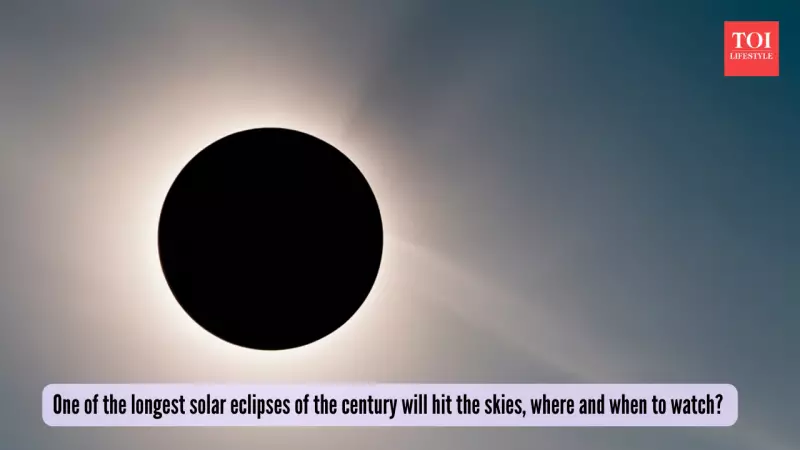
Mark your calendars for August 2, 2027. On that day, Earth will experience the longest total solar eclipse in over one hundred years. This event promises several minutes of complete darkness across vast stretches of land.
Such moments remind us of our planet's small place in the vast cosmos. They draw millions of people to chase shadows and contemplate the heavens. Whether you are an avid stargazer or simply enjoy a dramatic daytime spectacle, this eclipse belongs on your bucket list.
What Makes This Eclipse So Special?
A total solar eclipse occurs when the Moon completely blocks the Sun. Viewers along the path of totality experience a brief period of darkness—a sudden, temporary night.
The 2027 eclipse will offer up to 6 minutes and 23 seconds of totality. This makes it one of the longest land-based eclipses in more than a century. Most total solar eclipses last less than five minutes due to orbital speeds, making this event particularly rare.
Why Will It Last So Long?
Several factors combine to create this extended duration. First, the Moon will be at perigee, its closest point to Earth. This makes the Moon appear larger in the sky.
Meanwhile, the Sun will be at aphelion, its farthest point from Earth. This makes the Sun appear smaller. The larger apparent size of the Moon and smaller apparent size of the Sun allow for longer coverage.
Additionally, the eclipse path nears the equator. This slows the Moon's shadow as it travels across the ground. NASA notes these conditions are ideal for studying the Sun's corona, according to astronomical data.
Where to Witness Totality
The Moon's shadow will first touch the Atlantic Ocean. It will then move across southern Spain, including Cadiz and Gibraltar. The path continues over Morocco, Algeria, Tunisia, and Libya.
In Egypt, viewers near Luxor will experience the maximum duration of totality. The shadow then travels through Sudan, Saudi Arabia (including Jeddah), Yemen, and Somalia. It finally ends in the Indian Ocean near the Chagos Archipelago, as reported by Space.com.
The path of totality will be about 258 kilometers wide. This broad corridor is expected to attract many tourists. Clear skies are most likely in Egypt and Libya, offering excellent viewing conditions.
Will India See the Eclipse?
Skywatchers across India will not see a total eclipse. However, they can observe a partial solar eclipse near sunset.
From Delhi and Mumbai in the north and west to Chennai and Kolkata in the south and east, people will see the Sun partially obscured. The event will start around 3:34 PM IST. It will peak at approximately 4:30 PM IST.
In places like New Delhi, up to 17% of the Sun will be covered. The eclipse will conclude by 5:53 PM IST. The Sun will look like a cookie with a bite taken out, but it will never fully disappear from view.
Safety First: How to View the Eclipse
Never look directly at the Sun without proper protection. Use only eclipse glasses that meet the ISO 12312-2 safety standard. Regular sunglasses or homemade filters are not safe and can cause serious eye damage.
If you do not have certified eclipse glasses, try a simple pinhole projector. Poke a tiny hole in a piece of cardboard. Let sunlight pass through the hole onto another sheet of paper or cardboard below. This projects an image of the eclipsed Sun and provides a safe, fun way to observe the event.
This upcoming eclipse offers a rare opportunity to witness one of nature's most awe-inspiring displays. Plan ahead, stay safe, and enjoy the show.