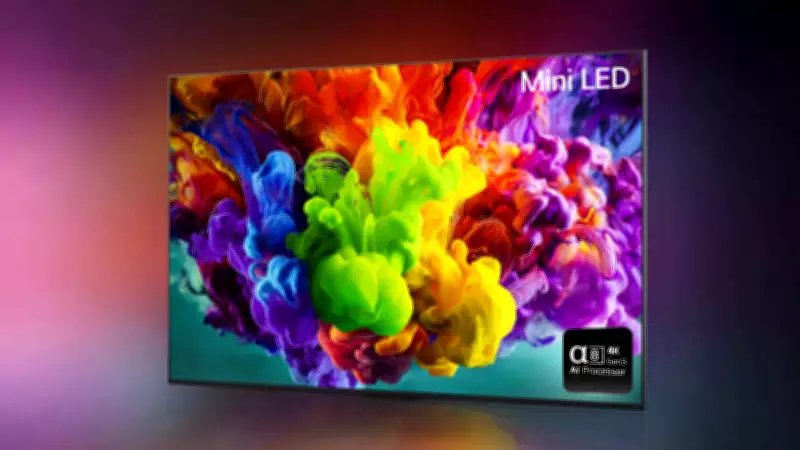
The modern Indian living room is increasingly designed around open spaces and large windows that welcome natural light, but this very layout presents a massive challenge for home entertainment. Televisions are typically engineered and tested in pitch-black laboratory conditions, yet they are predominantly watched in sun-drenched rooms or alongside bright artificial lighting. For years, consumers have been forced into a frustrating compromise. You could either buy a screen bright enough to cut through afternoon glare but suffer from washed-out grey tones during dark movie scenes, or prioritise deep cinematic contrast but be forced to draw the curtains every time you wanted to watch a daytime cricket match. Bridging this gap requires more than just software tweaks. It demands a fundamental rethinking of how a screen generates and controls light. Rather than relying on the standard, flat backlighting solutions that have dominated the market, the LG QNED Mini LED TV takes a highly engineered approach to display physics, effectively solving the environmental challenges of the modern home.
The Physics of Light Control and the Mini LED Solution
To understand the leap in visual quality, one must first look at the inherent optical flaw of traditional LED televisions. Standard LED panels rely on a relatively small number of large backlights. When an image requires a bright object to appear next to a dark shadow, these large lights cannot isolate their illumination. The light bleeds over, causing black areas to look cloudy and creating a distracting halo effect around bright objects.
The mini LED foundation resolves this structural limitation. By utilising diodes that are significantly smaller than conventional LEDs, the television can pack thousands of these microscopic light sources directly behind the screen. This high-density array allows the screen to be divided into numerous, highly specific dimming zones. The resulting precision dimming technology means the television can physically turn off the backlight in dark areas of the picture while simultaneously driving maximum brightness to adjacent illuminated areas. This precise level of light management represents the pinnacle of modern display contrast. When watching a space documentary or a dark thriller, the pinpoint accuracy of mini LEDs prevent light bleed entirely, delivering sharper contrast and finer picture detail that standard screens simply cannot replicate.

Resolving the Peak Brightness and Colour Saturation Compromise
While controlling light is half the battle, maintaining colour integrity is the other. A persistent engineering compromise in the display industry is the inverse relationship between luminance and saturation. In traditional panels, pushing a screen to its peak brightness to combat afternoon glare typically causes the colours to wash out, as the white subpixels overpower the colour filters.
This is where the QNED colour layer proves its worth. Once the mini LED backlight establishes a high-contrast foundation, the Dynamic QNED Color Pro system takes over. It utilises a wider colour gamut technology to express a vast array of vibrant, dynamic shades. Crucially, it achieves what is known as 100% Color Volume. In analytical terms, this means that the spectrum of colours does not degrade, dilute, or lose saturation regardless of how aggressively the screen pushes its peak brightness to combat room glare.
This specific performance metric is not merely a subjective marketing claim. It has been independently tested and verified by Intertek1, a globally recognised quality assurance and certification body. This independent validation confirms that the television meets rigorous optical performance standards. When you are watching a midday broadcast in a brightly lit living room, this certification guarantees that the display will maintain its vividness and colour accuracy throughout the day, ensuring the picture remains true to life without requiring you to block out the sun.

Intelligent Adaptation for Live Sports and Cinematic Formats
The final piece of the premium viewing puzzle involves how the television processes different types of content. Broadcasting a live cricket match presents unique visual hurdles, such as fast panning cameras, small moving objects, and large uniform areas of green pitch that can easily suffer from motion blur or colour banding on lesser displays.
The television caters to this by scaling up to ultra-large dimensions, with models reaching an immersive 115 inches, ensuring a stadium-like feel. Beyond hardware size, the built-in Sports Portal acts as a centralised home for your favourite sports, gathering live games, match highlights, and league tables into one intuitive interface. More importantly, the built-in Cricket Mode actively analyses the broadcast feed. This intuitive feature automatically optimises both the picture and sound settings specifically tuned for the unique visual demands of cricket viewing, ensuring the fast-moving ball remains crisp and the roar of the stadium crowd is enhanced.
As the sports action concludes and movie night begins, the viewing requirements shift dramatically towards nuanced shadows and complex, layered soundscapes. Dolby Vision technology preserves these intricate visual details, ensuring the picture remains as close as possible to the director's original colour grade. Simultaneously, Dolby Atmos abandons standard channel-based audio, instead rendering sound as 360-degree spatial audio objects, creating an immersive environment where detail and depth stay true to the scene.
Furthermore, the television features FILMMAKER Ambient MODE. This is an intelligent setting that actively monitors the room using a built-in light sensor. Because living room lighting often changes dynamically during a film, this mode compensates for ambient light fluctuations in real time. It ensures that dark, moody scenes remain perfectly visible even if someone switches on a reading lamp nearby, completely removing the need to manually tweak brightness settings.
Crucially, all this advanced technology is housed within a slim silhouette. The minimalist lines and refined details are deliberately crafted to blend into a modern interior. Ultimately, upgrading a home entertainment setup is no longer just about purchasing a larger panel. By combining the precise light control of mini LED with the independently verified colour accuracy of QNED, this technology adapts effortlessly to the architectural realities of modern homes and the diverse ways we consume content today.