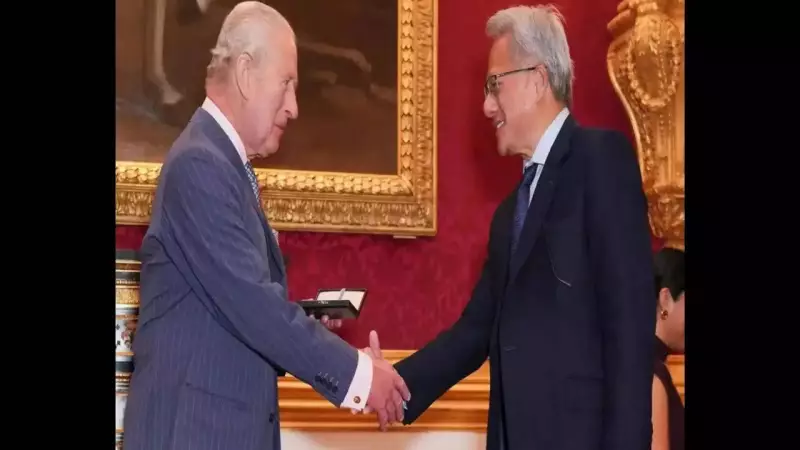
In a significant moment bridging royalty and technology, King Charles III personally delivered a sealed letter on artificial intelligence safety to Jensen Huang, the co-founder and CEO of the global tech giant Nvidia. The exchange occurred during the prestigious Queen Elizabeth Prize for Engineering award ceremony, held at the historic St James’s Palace in London.
A Royal Handover and its Significance
As the monarch honoured seven engineers for their pioneering work in artificial intelligence and machine learning, he took a specific moment to engage with Huang. According to reports, King Charles approached the Nvidia chief, handed him the letter, and was heard saying, "I need to talk to you." This direct interaction underscored the urgency the King places on the global conversation surrounding AI.
Huang later confirmed to reporters that he intended to read the letter carefully. He noted that the gesture demonstrated the King "obviously cares very deeply about AI safety" and is committed to ensuring the powerful technology is developed for the benefit of society, not to its detriment.

The Contents of the King's Message
While the specific contents of the letter remain private, the BBC reported that it referenced the monarch's earlier address at the 2023 AI Safety Summit held at Bletchley Park. In that landmark speech, King Charles had warned the world about the dual nature of AI, highlighting its "extraordinary potential and profound risks." He had urged global leaders and technology firms to anchor AI development in core human values.
The letter handed to Huang is understood to be a reinforcement of these themes, encouraging developers and industry leaders to act with foresight, accountability, and a sharp awareness of the social implications of their creations. Huang described the royal message as a "meaningful reminder" that the immense power of AI must be guided by a strong ethical compass.
Broader Implications for AI Governance
King Charles's act symbolizes a growing convergence between technological innovation and high-level public advocacy. His comments during the ceremony highlighted that the pace of new technology is "astonishingly fast" and that society must collectively ensure AI "serves humanity rather than endangers it." His concerns reportedly extend to AI's potential impact on employment, the spread of misinformation, modern warfare, and overall social stability.
The Queen Elizabeth Prize for Engineering, which celebrates innovations that benefit humanity, found a perfect alignment with this year's AI laureates. Nvidia, whose advanced chips are the backbone of most modern AI systems, is now central to discussions about both the potential and the ethical responsibilities of the technology. By choosing to deliver the letter directly to its CEO, King Charles sent a clear signal that AI safety is now a mainstream leadership issue, moving beyond policy meetings and academic circles into the global spotlight.
The event has drawn significant attention from tech and policy communities, emphasizing the critical need for collaboration between innovators and regulators. This royal intervention, though ceremonial, signals a sustained and serious interest from the monarchy in the governance of transformative technologies like artificial intelligence.