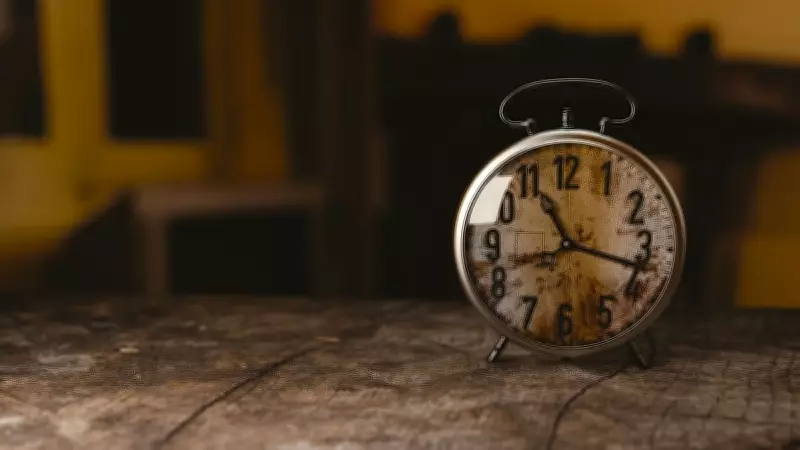
Time travel has long captured the human imagination, from H.G. Wells' "The Time Machine" to blockbuster movies like "Back to the Future." But beyond fiction, the question remains: is time travel a good idea? Physicists and philosophers alike have debated the feasibility and consequences of moving through time, with theories ranging from Einstein's relativity to quantum mechanics.
The Science Behind Time Travel
According to Einstein's theory of special relativity, time dilation occurs when an object moves at speeds close to the speed of light. This means that time passes slower for a fast-moving traveler relative to a stationary observer. While this allows for "forward" time travel, traveling backward in time remains highly speculative. Wormholes, cosmic strings, and closed timelike curves are among the theoretical constructs that might permit backward time travel, but they come with significant challenges, such as the need for exotic matter with negative energy.
Paradoxes and Problems
One of the most famous dilemmas is the grandfather paradox: if you travel back in time and prevent your grandparents from meeting, you would never be born, so how could you have traveled back? This paradox highlights the logical inconsistencies that arise when causality is violated. Some physicists, like Stephen Hawking, proposed the chronology protection conjecture, suggesting that the laws of physics prevent time travel to the past to avoid such paradoxes.

Ethical Considerations
Beyond physics, time travel raises profound ethical questions. If time travel were possible, should it be used? The potential for altering history could have catastrophic consequences, not just for individuals but for entire civilizations. The butterfly effect suggests that small changes could ripple into massive alterations, making it impossible to predict outcomes. Additionally, the ethical implications of observing historical events without interference, or the morality of changing the past for personal gain, are deeply troubling.
Cultural and Philosophical Impact
Time travel also challenges our understanding of free will and determinism. If the future can be changed, does that mean it is not predetermined? Or does the existence of time travel imply a multiverse where every possibility branches off into its own timeline? These questions have fascinated thinkers for decades and continue to inspire both scientific research and artistic expression.
While time travel remains firmly in the realm of science fiction for now, the exploration of its possibilities helps us understand the universe and our place in it. Whether it is a good idea or not may ultimately depend on our ability to handle the immense responsibility that comes with such power.