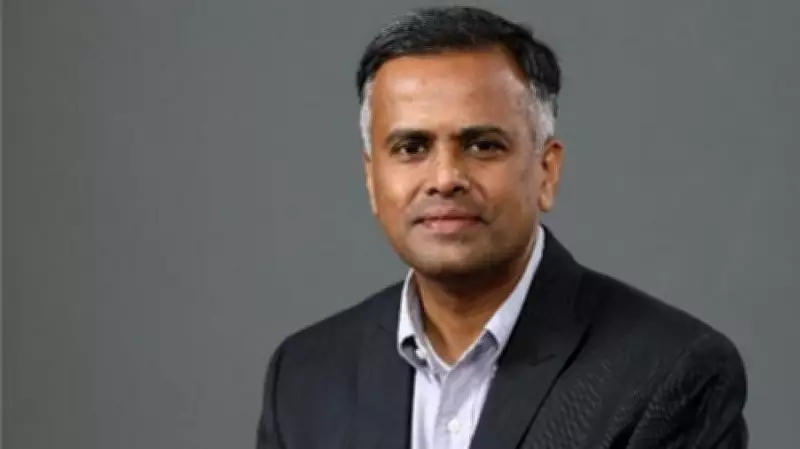
Infosys Leader Reimagines AI as Fundamental Cultural Evolution
In a significant redefinition of artificial intelligence's role in modern business, Satish H C, Executive Vice President at Infosys, has articulated that AI represents a profound culture and change transformation, extending far beyond a simple technology shift. This perspective challenges conventional views that often treat AI as merely another software tool or platform upgrade.
Wiring AI into Enterprise DNA
According to Satish H C, implementing AI effectively requires wiring it deeply into the enterprise fabric. This integration must enable systems to reason autonomously, learn continuously from data patterns, and adapt dynamically to evolving business environments. The goal is to create intelligent ecosystems that function with human-like cognitive capabilities while maintaining operational efficiency.
The critical distinction lies in approaching AI as an organizational mindset shift rather than a technical project. This means embedding AI principles into decision-making processes, workflow designs, and strategic planning across all departments. Companies must foster a culture where experimentation with AI is encouraged, and failure is viewed as a learning opportunity rather than a setback.

Preserving Deterministic Controls Amid Adaptation
A key challenge highlighted by the Infosys executive is balancing AI's adaptive nature with existing deterministic controls. Traditional business systems rely on predictable, rule-based operations that ensure consistency and compliance. Introducing AI's probabilistic reasoning and machine learning capabilities must not undermine these foundational controls.
"The enterprise must learn to harmonize AI's fluid intelligence with established governance frameworks," Satish H C emphasized. This involves developing hybrid models where AI enhances decision-making without compromising regulatory requirements, security protocols, or operational reliability. Organizations need to design AI implementations that augment human oversight rather than replace it entirely.
Practical Implications for Business Transformation
The cultural transformation perspective has several concrete implications:
- Leadership Mindset: Executives must champion AI as a strategic priority that permeates corporate culture, not just a technology department initiative.
- Workforce Development: Employees at all levels require training to collaborate effectively with AI systems, developing skills in data interpretation, algorithm management, and ethical AI usage.
- Process Redesign: Business workflows need restructuring to incorporate AI's learning capabilities, creating feedback loops that continuously improve performance.
- Governance Evolution: Compliance and risk management frameworks must evolve to address AI's unique characteristics, including transparency requirements and accountability mechanisms.
This holistic approach ensures that AI becomes an integral part of organizational identity rather than an external add-on. Companies that successfully navigate this cultural transformation will likely gain sustainable competitive advantages through enhanced innovation, agility, and customer responsiveness.
The insights from Satish H C underscore a growing recognition within the technology industry that AI's true potential can only be unlocked through comprehensive organizational change. As artificial intelligence continues to advance, enterprises must prioritize cultural adaptation alongside technological adoption to fully harness its transformative power.