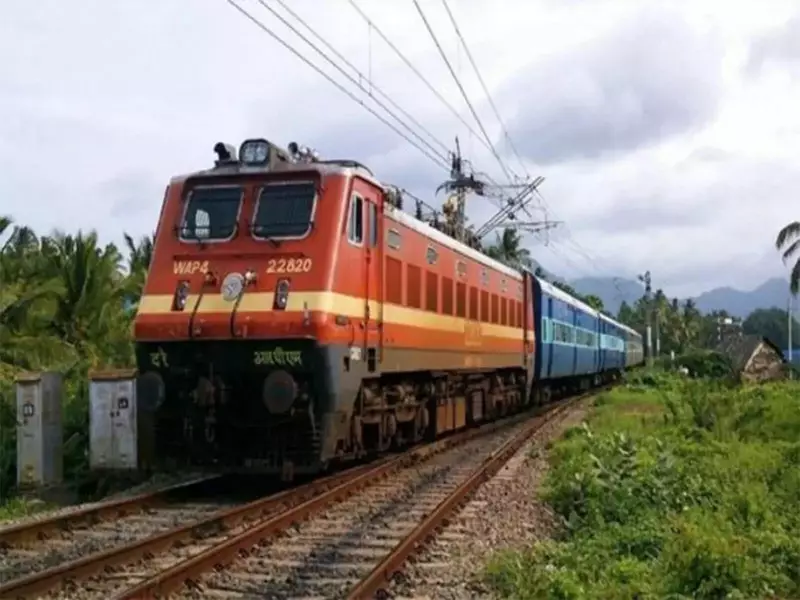
In a significant technological leap for both safety and conservation, Indian Railways has introduced an Artificial Intelligence (AI)-based Intrusion Detection System (IDS) designed to protect wildlife, including endangered species like elephants, lions, and tigers, from train collisions. This proactive initiative comes in the wake of a recent tragic accident that claimed the lives of seven elephants in Assam.
How the AI-Powered Lifesaver Works
The cutting-edge system utilizes a Distributed Acoustic Sensing (DAS) technology. This setup can detect the presence of large animals on or near railway tracks by analyzing vibrations and sounds. When an intrusion is identified, the AI generates real-time alerts that are sent to locomotive pilots, station masters, and control rooms up to half a kilometer in advance. This crucial early warning allows train operators to take swift preventive action, such as slowing down or stopping, potentially saving both animal and human lives.
Phased Rollout and Recent Tragedy
The system has already been successfully implemented on a 141 route-kilometer (Rkm) stretch on the Northeast Frontier Railway. Encouraged by its performance, the railways have awarded tenders to extend this AI shield across an additional 981 Rkm. Once completed, the total protected network will span 1,122 Rkm.

This expansion is timely, underscored by a devastating incident on Saturday in the Jamunamukh-Kampur section under the Lumding Division of N.F. Railway. The Sairang-New Delhi Rajdhani Express (Train no. 20507 DN) collided with a herd of elephants, leading to the derailment of the locomotive and five coaches. Tragically, seven elephants—three adults and four calves—were killed. Officials confirmed there were no passenger casualties or injuries.
Senior railway officials, including the General Manager of N.F. Railway, rushed to the site to oversee restoration. Authorities noted the accident site was approximately 126 km from Guwahati and not a designated elephant corridor. The loco pilot reportedly applied emergency brakes upon seeing the herd, but the collision could not be avoided.
Political Reaction and a Push for Accountability
The incident prompted immediate and serious responses from political leaders. Assam Chief Minister Himanta Biswa Sarma expressed deep sorrow and ordered a detailed probe by the state's Forest Department. He emphasized the need to "further secure our wildlife corridors, particularly during low visibility seasons."
Adding to the call for action, Rajya Sabha MP Sukhendu Sekhar Roy wrote to Railway Minister Ashwini Vaishnaw, highlighting that such tragedies are often not mere accidents but a result of human negligence. He pointedly noted that speeding trains in designated elephant corridors remain a recurring threat to wildlife.
The new AI system represents a concrete step towards addressing these critical concerns. By harnessing AI and acoustic sensing, Indian Railways aims to set a new benchmark in harmonizing large-scale transport operations with the urgent imperative of wildlife conservation, ensuring a safer passage for India's majestic animals.