The Indian government has proposed the introduction of higher ethanol-blended fuels, including E85 and E100, through a draft notification issued by the Ministry of Road Transport and Highways on April 27, 2026. This draft suggests amendments to the Central Motor Vehicles Rules, 1989, aiming to expand the country's fuel framework.
Details of the Proposal
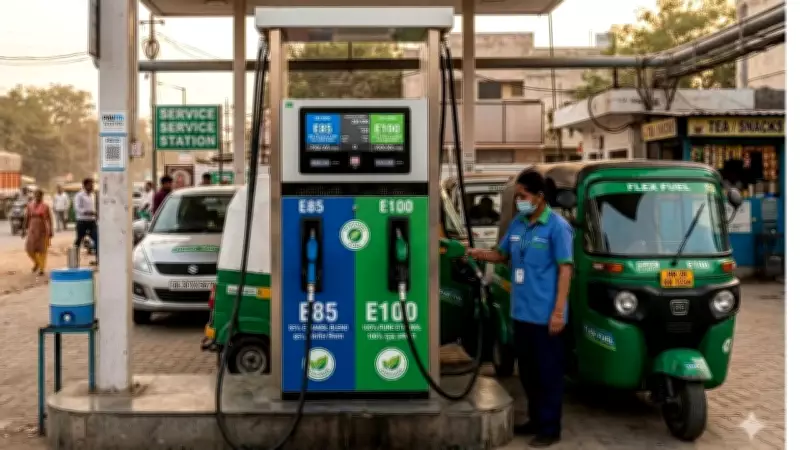
Under the proposal, E85 fuel, which contains 85 percent ethanol mixed with petrol, and E100, essentially near-pure ethanol, could soon be formally included in India's fuel options. The draft has been opened for public comments, after which a final decision will be taken. This development builds on India's recent milestone of achieving 20 percent ethanol blending (E20) in petrol in 2025. With E20 now widely available, the government is looking to push ethanol usage further to reduce reliance on crude oil imports, a key concern amid ongoing geopolitical tensions, especially in West Asia.
Fuel Classification Updates
Alongside introducing higher ethanol blends, the draft also proposes changes in fuel classification. Petrol labelling could be updated from E10/E to E10/E20, while new categories like E85 and E100 would be officially recognized. Similar updates have been suggested for diesel, where biodiesel blending references could go up from B10 to B100, indicating the possibility of fully bio-based diesel in the future.

Technical Amendments
The notification also includes a few technical updates beyond fuels. For instance, the terminology for hydrogen fuel has been revised from 'Hydrogen+CN' to 'Hydrogen+CNG.' Additionally, in certain emission regulation categories, the gross vehicle weight limit is proposed to be increased from 3,000 kg to 3,500 kg.
These measures are part of India's broader strategy to enhance energy security and promote renewable energy sources. The government encourages stakeholders to provide feedback on the draft before finalization.