

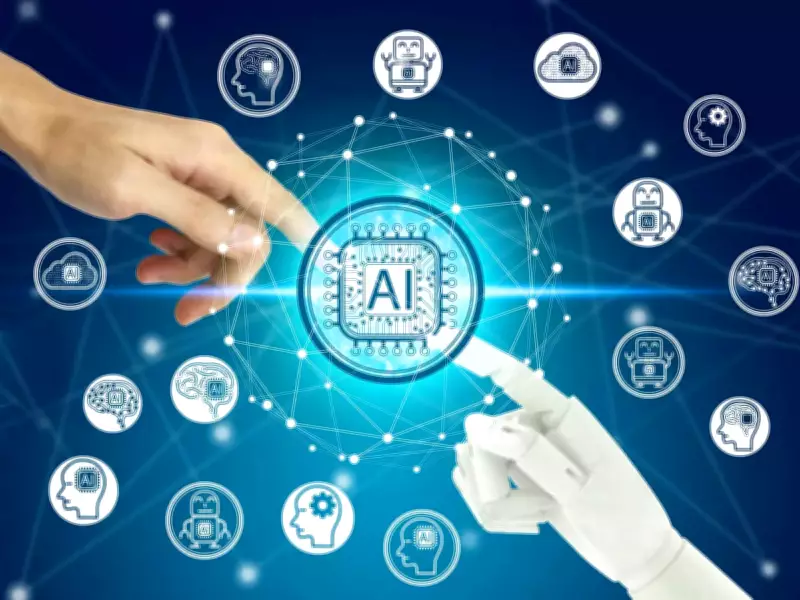
India should leverage Artificial Intelligence (AI) to enhance human productivity rather than replace workers, according to former NITI Aayog member Arvind Virmani. Speaking on Sunday, he argued that the country's strength lies in combining AI with its large workforce, instead of aggressively pursuing robotics-led automation.
In an interview with ANI, Virmani stated that India's AI strategy should prioritize practical applications and productivity improvements across sectors such as healthcare, education, agriculture, and small businesses. He emphasized, "For us, AI has to be a complement... it has to be to help improve the quality of the profession."
Virmani contrasted India's demographic situation with that of China and many developed economies, which are increasingly focusing on robotics due to shrinking labor forces. "China, for example, will not have any people to work, so they are emphasising robots; we should not emphasise robots," he said.

According to Virmani, India should instead focus on improving worker productivity and skill development through AI tools. He remarked, "When I hear why isn't India building robots, I say that's not what you want to do, you want to use the people, you want to give job skills to the people."
Virmani also stressed the importance of integrating AI education into the school system from an early stage. He stated, "If AI is going to become pervasive, we must teach our students at every level... starting from secondary school, they must be able to use AI."
He highlighted the potential of AI to support self-employed workers and small businesses, particularly women-led enterprises and family-run operations. Virmani cited examples where AI systems could help manage small enterprises, improve food processing efficiency, and support rural productivity.
Addressing concerns about a possible AI investment bubble, Virmani noted that rising global uncertainty and tariff-related risks have made traditional investments more risky, leading investors to shift more capital towards AI. He said, "In that sense, there is a bubble, but this bubble will come down as soon as the risk of these other things comes back to more normal levels."
Virmani argued that India's AI investment story is often misunderstood, pointing out that the government is already supporting AI research and development through funding initiatives and technology programmes. "The government is spending a lot of money on AI," he said, adding that support is being extended to universities, startups, and companies developing large language models (LLMs).
He mentioned that companies like Sarvam AI and three other firms have received government backing to develop foundational AI models in India. Virmani also called for stronger incentives to boost private-sector research and development in emerging technologies such as AI, semiconductors, and quantum computing. "We should restore the double deduction on R&D expenditure," he said, suggesting that tax incentives should be targeted towards strategic sectors critical for future growth.
According to Virmani, India's biggest AI opportunity lies in building real-world applications that improve productivity and service delivery across sectors, rather than merely replicating the strategies of developed economies.






