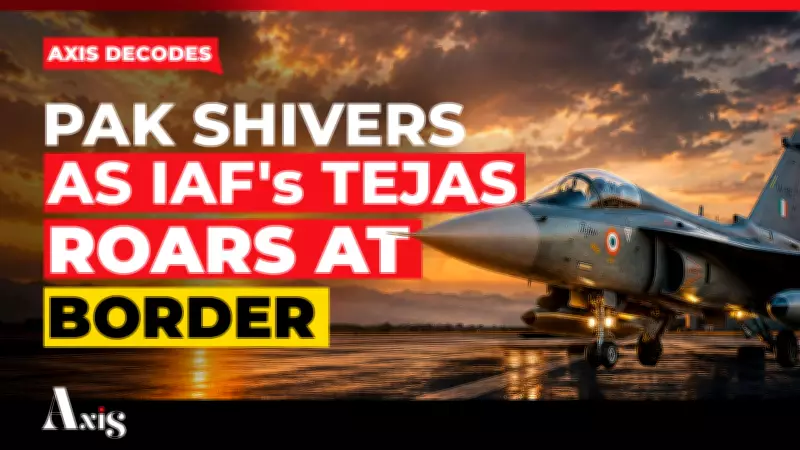
The Indian Air Force (IAF) is deploying its most advanced indigenous fighter, the Tejas Mk1A, at forward bases in Rajasthan, along the Pakistan border. This move comes months after the tragic Dubai Airshow crash that triggered a wave of propaganda, and it represents a powerful response from India.
Strategic Shift from MiG-21s
This deployment is not just routine. It marks a strategic shift from ageing MiG-21s to a new generation of homegrown combat capability. The Tejas Mk1A is equipped with AESA radar, electronic warfare systems, and beyond-visual-range missiles, significantly boosting India's surveillance, interception, and strike readiness in the western sector.
Enhanced Capabilities
With faster response times and lower operational costs, the Tejas Mk1A is designed exactly for this theatre. The aircraft's advanced systems allow for quicker reaction to threats and more efficient maintenance, making it ideal for frontline deployment.

Defence Self-Reliance
The move also highlights India's push for defence self-reliance, even as it navigates challenges like engine supply delays. By deploying the Tejas Mk1A, India is demonstrating its commitment to indigenous defence production and reducing dependence on foreign suppliers.
Rewriting the Narrative
From propaganda to power projection, India is rewriting the narrative in the skies. The deployment sends a clear message to Pakistan and underscores India's growing aerospace capabilities. The IAF's decision to place the Tejas Mk1A on the frontline is a testament to the aircraft's maturity and the nation's resolve to protect its borders with homegrown technology.