International Research Team Develops High-Accuracy AI Model for Liver Disease Detection
In a significant breakthrough for medical diagnostics, researchers from Odisha University of Technology and Research (OUTR) in Bhubaneswar and Prince Sattam bin Abdulaziz University in Saudi Arabia have developed a novel hybrid artificial intelligence model that demonstrates exceptional accuracy in predicting liver disease. The innovative system has achieved a remarkable success rate of 95.49%, offering promising potential for transforming early detection of this serious health condition.
Revolutionary Hybrid Approach Combines Deep Learning and Boosting Techniques
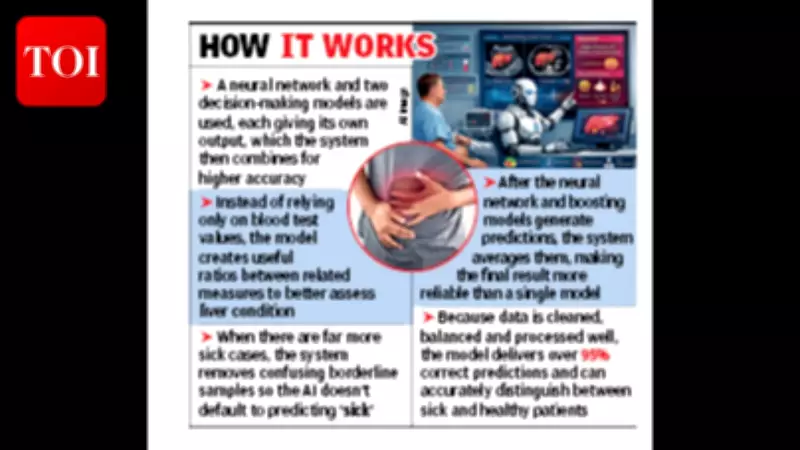
The groundbreaking model represents a sophisticated fusion of two powerful artificial intelligence methodologies—deep learning and boosting techniques. This hybrid approach enables the system to process complex medical data with unprecedented precision, significantly enhancing the reliability of diagnostic predictions. The research, detailed in the study titled 'Liver Disease Prediction Using a Hybrid Machine Learning Approach', was published in the February issue of the prestigious journal Engineering, Technology & Applied Science Research.
According to the research team, this technological advancement could revolutionize liver disease screening by making early detection substantially faster, more affordable, and more accessible. This is particularly crucial for regions experiencing shortages of specialized liver specialists and limited diagnostic facilities.

Addressing a Critical Global Health Challenge
Liver disease represents a major global health concern that frequently goes undetected until advanced stages, complicating treatment and reducing patient outcomes. Traditional diagnostic methods such as biopsies and advanced imaging scans present multiple challenges—they are often expensive, invasive procedures that require specialized medical expertise and equipment.
Sanjit Kumar Dash, an author of the study and faculty member at OUTR, emphasized the critical importance of early diagnosis. "Many liver diseases remain asymptomatic until they reach severe stages," Dash explained. "Our model aims to support early detection, which can dramatically improve treatment outcomes while simultaneously reducing pressure on healthcare systems."
Sophisticated Training Methodology and Dataset Enhancement
The research team trained their model using the comprehensive Indian Liver Patient Dataset (ILPD), which contains 583 patient records featuring essential health parameters including age, bilirubin levels, proteins, and liver enzymes. To enhance the system's diagnostic capabilities, researchers derived additional features such as direct-to-total bilirubin ratios, enabling the AI to detect subtle changes closely associated with liver health.
Recognizing that the original dataset contained more liver disease cases than healthy ones, the researchers implemented the SMOTE-Tomek technique to balance the data. This methodological refinement improved the model's learning process and reduced errors in identifying both healthy and diseased cases, resulting in more reliable predictions.
Exceptional Performance Metrics and Practical Applications
The study reports that the hybrid AI model demonstrates strong discrimination between healthy individuals and those with liver disease. The system achieved an impressive precision rate of 98.4% and specificity of 98.50%, indicating minimal false positives and high accuracy in correctly identifying individuals without the disease.
Mohammed Altaf Ahmed, corresponding author from Prince Sattam bin Abdulaziz University, highlighted the model's practical advantages. "Our hybrid approach enables the model to capture complex medical patterns while maintaining computational efficiency," Ahmed stated. "This makes it suitable as a decision-support tool in settings with limited diagnostic facilities, including government hospitals, small clinics, and telemedicine setups."
Researchers emphasized that the model can operate effectively on standard computer systems, eliminating the need for specialized hardware and making it accessible to a wide range of healthcare providers.

Cautious Optimism and Future Research Directions
While the results are highly promising, the authors have adopted a measured approach regarding clinical implementation. They cautioned that the reported 95.49% accuracy was achieved under controlled experimental conditions using the ILPD dataset, and real-world performance might vary due to differences in patient populations, laboratory conditions, and medical practices.
The research team stressed that further validation using larger, multi-hospital datasets is essential before considering wider clinical adoption. "Collaboration between computer scientists, clinicians, and policymakers is absolutely essential to build reliable AI tools that genuinely improve early diagnosis and patient outcomes," Dash emphasized, outlining the interdisciplinary approach needed for successful implementation.
This international research collaboration represents a significant step forward in applying artificial intelligence to address pressing healthcare challenges, potentially paving the way for more accessible and effective diagnostic solutions for liver disease worldwide.