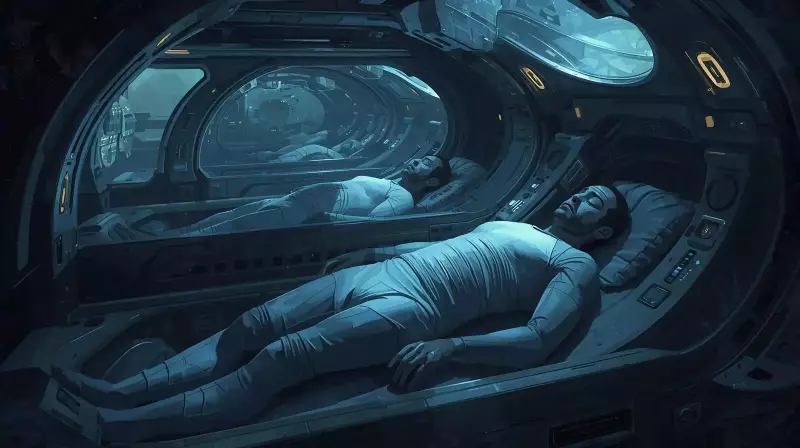
For decades, the concept of human hibernation remained confined to the pages of science fiction and speculative literature. However, this longstanding perception is now undergoing a significant transformation as researchers across multiple disciplines begin to seriously investigate whether humans could achieve a controlled state resembling animal torpor.
The Science of Torpor: A Regulated Biological State
Torpor represents a carefully regulated biological condition rather than a simple passive shutdown of bodily functions. During this state, metabolism slows dramatically, heart rate and breathing decrease substantially, and body temperature drops significantly—sometimes by many degrees. The entire physiological system operates at a markedly reduced setting, with energy consumption shifting primarily to fat reserves.
Animals employ torpor in diverse ways across species. Some creatures, including certain mice and birds, enter torpor for brief periods of several hours. Others maintain this state for months during winter hibernation cycles. While bears serve as the most familiar example, their body temperature reduction proves less dramatic than in smaller mammals. Crucially, hibernation capability extends beyond small animals, with primates like the fat-tailed dwarf lemur demonstrating that neither size nor brain complexity presents absolute barriers to this biological phenomenon.

Why Space Agencies Are Investing in Hibernation Research
The growing interest in human torpor coincides with ambitious plans for deep space exploration. A mission to Mars would require approximately eight months of travel in one direction alone, with journeys to more distant destinations spanning multiple years. Maintaining astronauts in an awake, fed, and psychologically stable condition throughout such extended durations presents formidable challenges.
If humans could achieve long-term torpor states, resource consumption would decrease substantially. Requirements for food and oxygen would diminish, and time perception would accelerate for crew members. While this approach would not eliminate all space travel hazards—such as radiation exposure—it could significantly mitigate numerous risks. These potential benefits have prompted organizations including the European Space Agency to actively support research into human stasis technologies.
Medical Parallels: Existing Metabolic Suppression Techniques
Medical practice already incorporates techniques that resemble aspects of natural torpor. Controlled therapeutic hypothermia serves as a standard procedure during cardiac surgeries and following strokes or cardiac arrest events. By deliberately lowering body temperature and reducing metabolic rates, medical professionals can help cells survive longer with diminished oxygen availability.
These clinical practices demonstrate several torpor-like characteristics: slowed heart rates, shallow breathing patterns, and decreased energy utilization. The fundamental distinction lies in the fact that humans do not enter this state naturally—it requires pharmaceutical intervention, mechanical support, and continuous medical supervision. The human body actively resists cooling through normal thermoregulatory mechanisms that must be deliberately overridden.
Scientific Challenges: Unlocking the Torpor Trigger
One of the most significant mysteries surrounding torpor involves understanding how animals initiate this state. Researchers remain uncertain whether the process begins at the cellular level or originates in the brain through hormonal and neural signaling pathways—or perhaps involves both mechanisms simultaneously.
Without comprehending this fundamental trigger, attempts to replicate torpor in humans remain relatively crude. Simply lowering body temperature fails to recreate the complete biological state observed in animals. Natural hibernators appear to possess inherent knowledge of how to safely enter and exit torpor—a capability humans currently lack.

The Brain: The Primary Obstacle to Human Hibernation
The human brain presents perhaps the greatest challenge to achieving safe torpor states. This organ demonstrates exceptional sensitivity to oxygen deprivation and nutrient reduction. While hibernating animals possess protective mechanisms for their neural tissues during torpor, the precise biological processes involved remain poorly understood.
Hibernating species typically awaken periodically throughout their dormant periods, often experiencing deep sleep phases before returning to torpor. This pattern suggests that torpor disrupts normal sleep processes, with brain activity during recovery periods resembling patterns observed following sleep deprivation.
Memory preservation represents another critical concern. Research involving bats indicates that most memories survive extended torpor periods, though some types demonstrate better preservation than others. For potential human applications—particularly for astronauts or medical patients—any risk to memory or cognitive function would prove unacceptable.
Current Research Directions and Future Prospects
Contemporary scientific investigations focus on several key areas: sleep regulation circuits, metabolic control mechanisms, and molecular pathways associated with torpor states. Advances in genetic engineering and pharmacological tools have significantly enhanced researchers' ability to study these complex biological systems.
Progress continues steadily though cautiously, with scientists emphasizing that even if human torpor becomes feasible, initial applications would likely involve brief, tightly controlled periods rather than extended hibernation. Long-term human hibernation remains a distant prospect, with the concept currently positioned between established medical practice and future scientific ambition.
This analysis draws substantially from the research and expertise of Vladyslav Vyazovskiy, Associate Professor of Neuroscience at the University of Oxford, whose work has significantly advanced understanding of sleep and hibernation mechanisms.