In 1926, chemist Waldo Semon was working at B.F. Goodrich in Akron, Ohio. Semon had a clear objective: he needed to find a better way to attach rubber to metal. Little did he know that his discovery would change the future of one of the world's most widely used plastics.
It might seem like an accidental discovery. In reality, however, the development of commercially viable PVC was far from accidental. It was driven by perseverance, close observation, and a good sense of valuing what was previously considered worthless.
Today, PVC is used in countless products, including electrical cables, raincoats, plumbing pipes, and window frames. Back then, however, it was hardly considered valuable and had little commercial use.

A Plastic Nobody Wanted
History shows that PVC predates Semon's discovery. French chemist Henri Victor Regnault first observed it in 1835, while German chemist Eugen Baumann independently produced it in 1872. By the turn of the twentieth century, scientists had already figured out ways to synthesize PVC; however, there were no applications for this substance.
The main problem with PVC was its rigidity and inability to be processed into usable materials without significant degradation. Commercial interest in PVC remained limited because of this rigidity. Despite several attempts to bring the polymer into industry, it remained largely a laboratory curiosity for decades.
The Experiment That Went Wrong
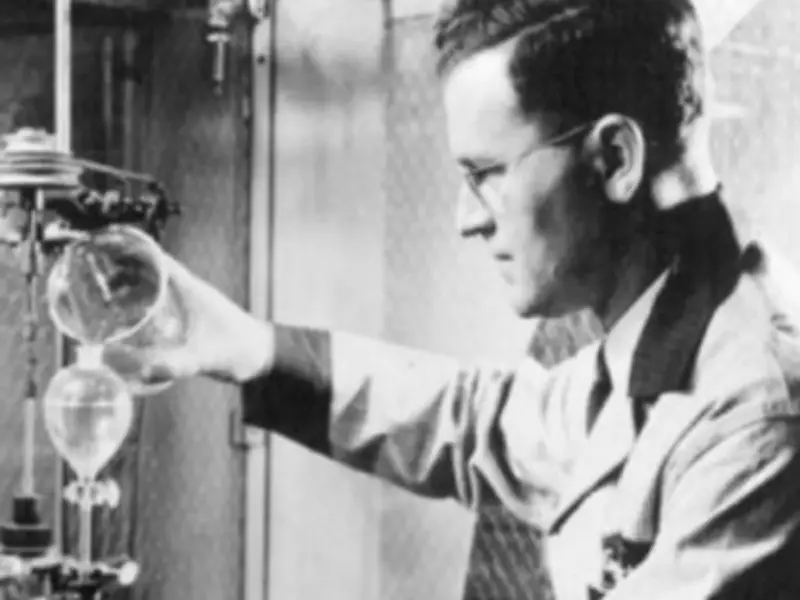
In 1926, Semon went to work at B.F. Goodrich during a time of intense interest from firms in finding ways to make products using substances other than natural rubber. According to the Lemelson-MIT program, Semon's task was to develop materials that could improve rubber products. Facing the problem of rubber scarcity, Semon started testing different synthetic polymers such as PVC. At the time, PVC was widely regarded as having limited commercial value. His aim was to create an adhesive suitable for joining rubber to metal. The experiment failed.
Nonetheless, when heating PVC in a high-boiling solvent, Semon made a jelly-like substance that showed unusual behavior after cooling: it became flexible. Although this was not the adhesive he sought, Semon learned one important thing about PVC: this substance could be turned into a usable material.
Semon did not give up and continued experimenting. He eventually succeeded in creating plasticized PVC, which proved to be flexible, durable, and easy to manufacture.
Turning Chemistry into Industry
The importance of the discovery lay not in creating a new plastic, but in making an existing one commercially useful. According to a historical overview published in the Journal of Macromolecular Science, Semon's work effectively opened the door to PVC's commercialization. By enabling the material to be processed without severe degradation, he transformed a difficult polymer into an industrial success.
Scientists from Texas A&M University mention the role of plasticizers in making PVC commercially successful. With the addition of plasticizers, it became possible to melt the substance and process it in large volumes while retaining all of its qualities.
This had immediate results: using the trade name Koroseal, B.F. Goodrich developed coated materials, insulating products, and covers.
From Raincoats to Infrastructure
One factor in PVC's rapid spread was its versatility. Early industrial publications list uses such as rainwear, footwear parts, shower curtains, and wire insulators. Uniquely among specialized materials, PVC could be adapted for numerous applications without raising production costs significantly.
Its characteristics of toughness, waterproofing, and malleability allowed it to compete against older materials like rubber. Eventually, it even replaced them in certain fields. By the mid-twentieth century, PVC became an essential component of modern industrial processes. To this day, PVC remains one of the world's most widely produced plastics.
A Lesson in Scientific Discovery
Almost a hundred years on, Semon's discovery is still considered a prime example of innovation stemming from unintended consequences. While his adhesive experiment failed to deliver what he was searching for, it led him to discover a previously unnoticed opportunity in a substance that many had long discarded.

Science has always been fascinated by groundbreaking inventions. However, history proves that sometimes a great discovery is about recognizing possibilities that have been present from the start. The story of PVC illustrates this principle. What began as an unsuccessful attempt to improve rubber products in an Akron laboratory ultimately helped transform a neglected polymer into one of the world's most widely used plastics. The laboratory accident turned out to be the turning point for a neglected polymer.