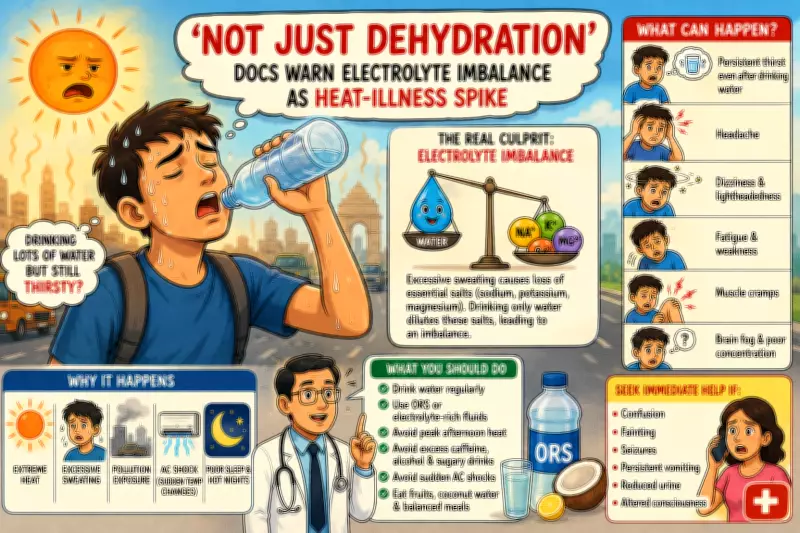
Noida: As relentless heatwave conditions grip the National Capital Region (NCR), hospitals have witnessed a surge in patients complaining of headaches, excessive thirst, dizziness, fatigue, and brain fog, even among those who consume adequate water. Neurologists have warned that extreme heat, electrolyte imbalance, poor sleep, pollution, and repeated transitions between outdoor heat and freezing air-conditioning—often termed 'AC shock'—are placing severe stress on the nervous system.
Beyond Dehydration: The Electrolyte Crisis
Doctors emphasize that the problem extends beyond simple dehydration. Prolonged heat exposure leads to excessive sweating, causing a dangerous depletion of essential salts like sodium and potassium. Office-goers, commuters, delivery workers, and the elderly are particularly vulnerable.
Dr. Manish Gupta, Director of Neurology at Max Super Speciality Hospital, Noida, explained, "Your brain cells rely on electrolytes like sodium and potassium to function properly. During continuous sweating, these salts are lost rapidly. If someone keeps drinking only plain water without replacing electrolytes, sodium levels in the blood can become diluted, which may cause mild swelling in brain cells and trigger throbbing headaches, dizziness, and fatigue." He added that electrolytes are crucial during heatwaves as they maintain the fluid balance around the brain.

Heat Exposure and Brain Circulation
Extreme heat forces the body to divert more blood to the skin surface for cooling, reducing cerebral blood flow. This triggers headaches, fatigue, and concentration difficulties. Dr. Neha Pandita, Senior Neurology Consultant at Fortis Noida, noted, "The problem is intensified by poor-quality sleep because night temperatures remain high. There is no scope for proper cooling. Migraine sufferers are especially vulnerable during these conditions."
Compounding Factors: Pollution and Dust
Doctors highlighted that NCR's heat is more hazardous due to concurrent pollution and dust exposure. Dr. Gupta stated, "Fine dust particles and pollutants can irritate nerves directly and trigger neuroinflammation. Pollution exposure also reduces oxygen delivery to the brain. When combined with glare, heat stress, and long commuting hours, the nervous system remains under constant stress, increasing fatigue, headaches, and concentration problems."
Warning Signs and Daily Habits
Experts caution that certain daily habits unknowingly worsen the condition. Dr. Aman Kumar, Consultant in Internal Medicine at Manipal Hospital, Ghaziabad, warned, "The warning signs that may indicate something more serious than a simple headache include confusion, fainting, seizures, reduced urine output, persistent vomiting, and altered consciousness. These symptoms can signal heat exhaustion or heat stroke and require urgent medical attention. Excessive intake of sugary drinks, caffeine, or alcohol can aggravate dehydration."
He recommended regular intake of water along with oral rehydration solution (ORS) or electrolyte-rich fluids to maintain hydration and reduce the risk of heat-related disorders.
Recommended Dietary Adjustments
Doctors advise residents to switch to ORS to quickly restore lost electrolytes. Natural alternatives include homemade lemonade with a pinch of salt and sugar, coconut water, lightly salted soups, and buttermilk. Consuming curd, bananas, watermelon, muskmelon, and oranges can help restore electrolyte balance. Light home-cooked meals such as dal, curd-rice, seasonal fruits, and vegetables are easier on the body and prevent fatigue.