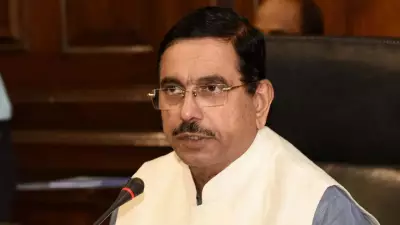
On January 11, 2026, Arpit Bhayani made a difficult decision. He resigned from his position at Google. The Bengaluru-based engineer did not plan this move. No restlessness drove him. No quiet quitting occurred. No better offer waited for him.
A Bitter Departure from Google
Bhayani specialized in in-memory databases. He loved his work. Yet two parts of his life could no longer coexist. He explained the conflict on social media platform X.
"Yesterday was my last day at Google. It is not bittersweet but a purely bitter moment," Bhayani wrote. "I had no plans of leaving, but I had no choice left."

The problem centered on his work outside Google. Bhayani ran an educational YouTube channel and online courses. He started by sharing knowledge. The situation escalated into a legal matter. Google's legal team got involved. The door closed quickly after that.
"I am bummed," Bhayani admitted. He felt bummed about leaving a domain he loved. He felt bummed about walking away from respected engineers. He felt bummed because, in his words, "there was so much good stuff left to build."
The Surprise of a Firm Line
His post spread rapidly across tech circles. The surprise was not just about his exit. People wondered where it happened. Google once celebrated side projects. The company encouraged them. Now Google drew a firm line. Bhayani crossed that line.
But his story speaks to a larger trend. It is less about one company. It is more about a workforce quietly outgrowing old rules.
Freelancing Becomes the Main Road in India's Tech Sector
Work is changing shape across India's technology sector. Companies no longer wait patiently for full-time hires. Lengthy hiring pipelines take months. Businesses move faster now. They lean heavily on freelance professionals to get work done.
Data shows this shift is permanent. Flexing It reports a 40% rise in tech project engagements year on year. TeamLease Digital recorded a 25–30% jump in freelance and gig hiring during 2024-25.
These roles are not peripheral anymore. They are central to key operations. Freelancers drive AI deployments. They handle cloud migrations. They manage cybersecurity responses. They execute urgent product rebuilds.
The logic is straightforward. Permanent hiring takes time. Projects do not wait. Freelancers arrive with ready-made expertise. No long onboarding occurs. No uncertainty lingers. Just execution happens.
The Strong Pull for Professionals
For professionals, the attraction is equally strong. Seasoned engineers see freelancing as freedom. They gain control over their time. They control their pay. They choose the kind of work they take on.
Mid-career technologists pick autonomy over hierarchy. Younger professionals use freelance projects differently. They see real problems years before traditional roles would show them.
This is no longer fringe work. It is a parallel workforce. Companies trust it. Workers depend on it. The system expands quietly but steadily.
Moonlighting Backlash Intensifies as Flexibility Spreads
Yet anxiety grows alongside flexibility. Companies worry more about activities beyond the payroll. The moonlighting backlash has already begun.
Background verification firm OnGrid processed 23,000 employment verifications in just six months of 2025. That number nearly matched the total for all of 2024. Employment history checks alone flagged 2,900 cases of overlapping roles in 2025. The figure stood at 2,201 cases in 2024.
The verification tools are precise. They use Universal Account Numbers. They examine employment timelines. They scrutinize PF records. Any overlap gets flagged. It escalates quickly.
Layered Reasons for Dual Employment
Manav Jain serves as chief business officer at OnGrid. He explained the layered reasons to TNN. Post-pandemic work models made secondary jobs easier. Economic uncertainty made them tempting. For some people, a temporary safety net turned into a habit.
AuthBridge's data reinforces this trend. Five out of every 100 candidates engage in dual employment. Nearly 90% of cases come from IT services. Telangana, Karnataka, and Tamil Nadu see high numbers. Some cases stretch credibility. Developers work simultaneously at multiple companies. Sometimes they work for competitors.

The consequences can be severe. In 2022, Wipro chairman Rishad Premji confirmed a tough action. The company fired 300 employees. They worked with rival firms while still on Wipro's rolls. This backdrop sets the stage for stories like Bhayani's.
A Workforce That Has Moved Forward
Bhayani ended his post with gratitude, not anger. He thanked Google for two fulfilling stints. He rooted for his team. He expressed excitement about the future.
That calm tone is telling. India's tech workforce has already moved forward. People embrace freelancing. They teach. They build parallel careers. They adopt flexible identities. Corporate systems are still catching up to this reality.
Bhayani's exit shows misalignment, not defiance. A gap exists between how people work now and how work gets regulated. Freelancing expands. Moonlighting checks tighten. More professionals will stand where Bhayani stood. They will face a forced choice. They must pick between a job they love and a version of themselves they refuse to silence.
That choice, for many, will never feel sweet.