

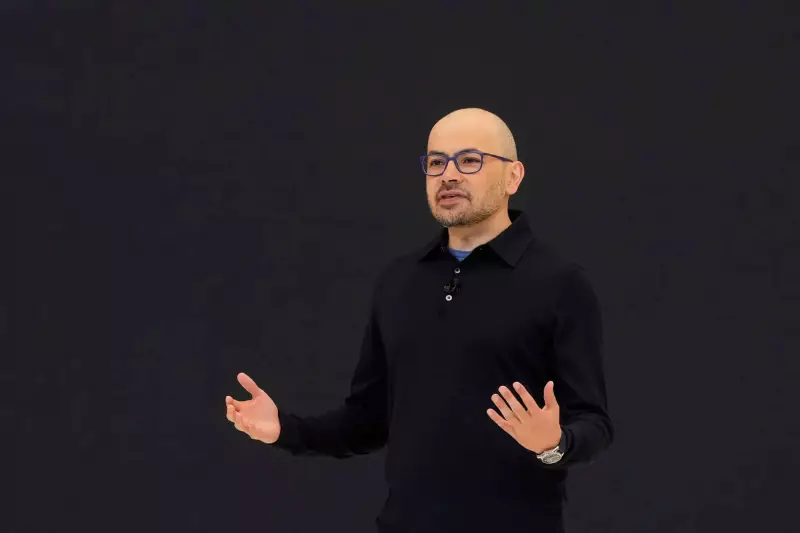
Demis Hassabis just delivered a bold challenge to the artificial intelligence community. The Google DeepMind CEO directly questioned whether ChatGPT's approach can ever achieve true superintelligence. During a recent CNBC "The Tech Download" podcast appearance, Hassabis presented a compelling argument against the current direction of large language model development.
The Fundamental Limitation of Today's AI
Hassabis explained that today's large language models face a critical limitation. These systems, which power OpenAI's flagship products, excel at pattern recognition. They can predict what words typically follow each other with remarkable accuracy. However, they lack what he calls "a world model" - an internal understanding of how reality actually functions.
"Today's large language models are phenomenal at pattern recognition," Hassabis stated clearly during the podcast interview. "But they don't truly understand causality. They don't really know why A leads to B. They just predict the next token based on statistical correlations."

What's Missing for Real Scientific Breakthroughs
According to the DeepMind CEO, genuine scientific invention requires capabilities that current LLMs simply don't possess. True breakthroughs demand the ability to run thought experiments, simulate physics accurately, and reason from first principles. These functions need that foundational world model - an internal simulation engine that comprehends how reality operates beyond just statistical word patterns.
This represents a direct challenge to Sam Altman's scaling strategy at OpenAI. While Altman's company has invested billions in making language models larger and faster, Hassabis believes this approach eventually hits a fundamental wall. The Google executive suggests that simply scaling up existing architectures won't overcome this core limitation.
Google's Alternative Approach
DeepMind isn't just criticizing current methods - they're actively building alternatives. Their Genie 3 system, released last August, demonstrates their different direction. This technology generates interactive 3D environments directly from text descriptions. Meanwhile, their SIMA 2 project trains AI agents within these simulated worlds.
Early research results show promising advantages. These hybrid approaches reportedly outperform pure language models by significant margins - between 20% and 30% on complex reasoning tasks. Perhaps more importantly, these systems demonstrate better grounding in reality. They don't hallucinate basic physics in the way that ChatGPT sometimes does when pushed beyond its training data.
Why This Challenge Matters Now
The timing of Hassabis's comments adds significant weight to his argument. Google's Gemini 3.0 launch in November created what Sam Altman reportedly called a "Code Red" situation inside OpenAI. This emergency refocus came as ChatGPT began losing ground in the competitive AI landscape. Hassabis essentially confirmed in January that Google's advances forced this strategic panic at their rival company.
Recent industry developments further highlight the shifting landscape. Meta's Llama 4 release in April faced criticism for allegedly gaming benchmarks rather than delivering genuine improvements. Meanwhile, OpenAI hasn't announced a major model breakthrough since GPT-4. The industry narrative appears to be changing from "scale solves everything" to serious questions about whether entirely different architectures might be necessary.
The Road to Artificial General Intelligence
Hassabis offered his timeline for achieving artificial general intelligence. He estimates AGI remains five to ten years away, requiring what he describes as "two AlphaGo-scale breakthroughs." One of these essential advances, he makes clear, won't come from simply creating bigger language models. Instead, it requires teaching AI systems how the world actually functions - something that OpenAI's current playbook doesn't adequately address.
Whether world models will ultimately deliver on their promise remains unproven. The technology still needs extensive development and validation. However, Hassabis has made his strategic bet public and transparent. He's positioning Google as the company that recognized these limitations first and is pursuing what he believes represents a more promising path forward.

The debate between scaling existing architectures versus developing fundamentally new approaches will likely define the next phase of AI development. As companies invest billions in artificial intelligence research, these competing visions could determine which organizations lead the field toward genuine superintelligence.





