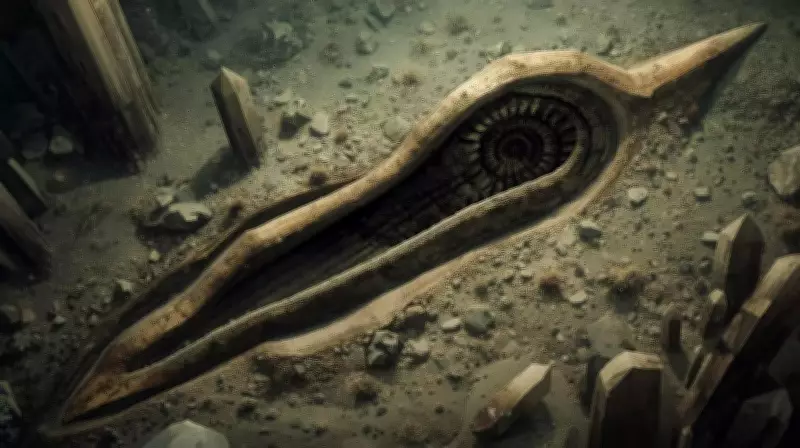
Giant Magnetofossils: Ancient Marine Organisms' Biological Compasses Uncovered
Marine sediments across the globe have been revealing something extraordinary for decades – unusual magnetic crystals that defy geological explanation. These are not ordinary mineral formations but biological creations preserved for tens of millions of years, telling a story of ancient life that scientists are only beginning to understand.
The Mystery of Giant Magnetofossils
Known as giant magnetofossils, these magnetic crystals are significantly larger than the magnetic particles produced by modern bacteria, often reaching several microns in size. What makes them particularly fascinating is their precise, repeated shapes that appear in rocks dating back at least 97 million years, across different climates and ocean environments worldwide.
These formations come in several distinct shapes that researchers have carefully documented:

- Needle-like structures
- Bullet-shaped formations
- Spindle configurations
- Spearhead designs
All these shapes are composed of nearly pure magnetite, with their consistent chemistry, crystal structure, and proportions strongly suggesting controlled growth within living organisms. Because they are substantially larger than bacterial magnetite particles, scientists generally believe they were created by eukaryotes – possibly single-celled organisms or simple marine animals.
From Defensive Spines to Magnetic Sensors
For years, researchers assumed these crystals served primarily as physical protection. The sharp, spearhead-like formations clustered together were interpreted as defensive spines for soft-bodied creatures living in muddy ocean floors. This theory aligned with known mineral structures in modern animals, such as iron-rich spicules or hardened teeth.
However, this explanation faced challenges. Clusters of giant magnetofossils are rarely found, and many of the shapes don't clearly fit a protective role. The mystery deepened until recent technological advances allowed scientists to look inside these ancient crystals in unprecedented detail.
Revolutionary Magnetic Imaging Reveals True Purpose
A groundbreaking study titled "Magnetic vector tomography reveals giant magnetofossils are optimised for magnetointensity reception" has transformed our understanding of these ancient formations. Using advanced soft X-ray magnetic vector tomography, researchers examined a single giant spearhead magnetofossil from sediments approximately 56 million years old.
The technique enabled three-dimensional mapping of magnetisation without physically cutting the sample, revealing something remarkable. Instead of behaving like a uniform bar magnet, the crystal contains a single swirling magnetic pattern – a magnetic whirl that runs through the entire length of the fossil. This orderly, stable pattern contrasts sharply with what typically occurs in large magnetic crystals, which usually break into multiple competing magnetic regions.
Computer modeling confirmed this structure wasn't accidental or the result of geological damage. The magnetic direction remains mostly aligned with the crystal's long shape, suggesting intentional biological design for specific functionality.
Biological Optimization Through Size Control
When scientists examined numerous other giant magnetofossils, they discovered a fascinating pattern. Most specimens fall within a narrow size range where magnetic sensitivity is maximized while stability is maintained.
This size optimization reveals crucial biological intelligence:
- If the crystals grew larger, their magnetic structure would become complicated and unreliable
- If they were smaller, they would lose magnetic sensitivity
- The "sweet spot" size suggests evolutionary selection rather than random growth
This explains why giant magnetofossils rarely exceed a few microns in size. Their dimensions appear evolutionarily tuned to maintain simple, stable magnetic patterns optimized for sensing Earth's magnetic field.

Rewriting the Timeline of Animal Navigation
The discovery has profound implications for understanding the evolution of biological navigation. If these crystals indeed functioned as magnetic field sensors, they push back the timeline for this ability by tens of millions of years earlier than previously confirmed.
Ancient marine animals may have possessed sophisticated magnetic sensing capabilities long before such features appeared in the fossil record of more complex organisms. This suggests that navigation using Earth's magnetic field evolved much earlier in Earth's history than scientists previously believed.
Broader Scientific Implications
Beyond rewriting biological history, this discovery has significant implications for astrobiology and the search for extraterrestrial life. Magnetite is one of the key minerals scientists examine when searching for signs of ancient life on Mars and other planetary bodies.
Understanding how living organisms shape magnetic minerals – both externally and internally – provides crucial knowledge for distinguishing biological signals from purely geological formations. These fossils demonstrate that biological processes can create distinctive magnetic signatures that persist for tens of millions of years.
The rock record continues to hold quiet clues about ancient sensory capabilities that modern animals now take for granted. As research techniques advance, scientists anticipate discovering more such biological innovations preserved in Earth's geological archives, each revealing another chapter in the complex story of life's evolution on our planet.