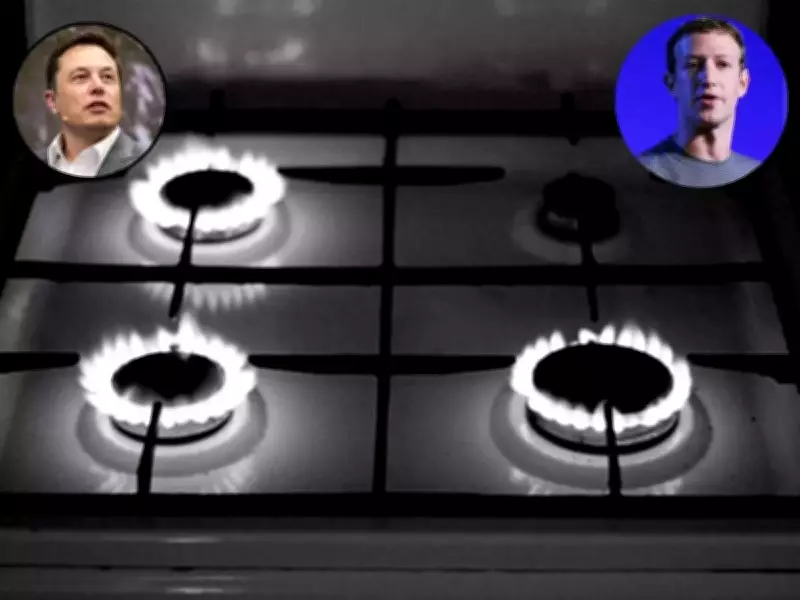
The Four Burner Theory: A Viral Framework for Success and Sacrifice
An age-old productivity concept has resurfaced across digital platforms, now being reinterpreted through the lens of technology's most influential billionaires. Known as the Four Burner Theory, this idea visualizes life as a stove equipped with four distinct burners, each symbolizing a core aspect of existence: family, work, health, and friends. The central premise is straightforward yet profound: it is impossible to maintain all four burners at maximum intensity simultaneously. A recent viral thread on X has propelled this theory back into the spotlight, contending that extraordinary achievement frequently necessitates extinguishing one or even two of these flames. By referencing high-profile tech magnates, the discussion underscores how professional supremacy might entail significant personal compromises, sparking widespread debate on ambition, equilibrium, and sacrifice in an era dominated by public visibility and performance metrics.
Reframing Success as Inevitable Sacrifice
The Four Burner Theory posits that to attain remarkable success, certain areas of life must inevitably be deprioritized. Achieving high levels of accomplishment often demands reducing focus on more than one domain, though this is not presented as an immutable scientific law. Instead, it functions as a reflective framework that many individuals recognize in hindsight. As work responsibilities expand, time remains a finite resource, and energy tends to narrow under mounting pressures. The thread reigniting interest in this theory asserts it elucidates why certain tech billionaires appear unstoppable in their careers yet grapple with personal complexities. It cites figures such as Elon Musk, Jeff Bezos, and Mark Zuckerberg to illustrate this dynamic, offering a blunt perspective: large-scale achievement typically involves trade-offs. The post explicitly states, "It destroyed Elon Musk's first marriage. It explains why Bezos is jacked but divorced. And why Zuckerberg has no real friends."
Family: The First Casualty of Ambition
In the Four Burner Theory, family represents connection and presence, encompassing marriage, children, shared moments, and everyday interactions. The thread argues that this aspect of life does not scale with heightened ambition. Conversations with partners cannot be automated, and attendance at school events cannot be outsourced. For high achievers, the erosion of family time often occurs gradually—work encroaches by an hour, then another, travel increases, and messages go unanswered. Initially, nothing dramatic happens; the reduction is subtle and quiet. Over time, however, the gap widens more than anticipated, leading to significant personal costs.

Work: When Career Becomes Identity
Work is typically the most challenging burden to diminish, as it provides income, recognition, and structure. In contemporary hustle culture, particularly within start-up and tech environments, work is frequently framed as a core purpose. When this burner is kept at full flame, it consumes disproportionate attention. The theory suggests this is rarely a conscious choice but feels necessary due to deadlines, targets, and competition. As work occupies more space, less room remains for other burners. This imbalance may not be immediately visible but eventually becomes entrenched, reshaping one's identity around professional pursuits.
Health: A Slow Decline Before Crisis
Health tends to issue warnings in incremental ways—reduced sleep, skipped exercise, meals replaced by caffeine and convenience foods. None of these signs appear urgent in the moment. The thread describes health as the burner that whispers before it screams, allowing it to be ignored temporarily while productivity may even remain steady. However, the eventual cost becomes harder to dismiss as fatigue accumulates and stress manifests physically. At this point, recovery demands far more effort than preventive maintenance ever would, highlighting the long-term repercussions of neglect.

Friends: The Quiet Fade Without Conflict
Friendship often becomes the quietest casualty, with no clear break but a gradual decline. Calls become less frequent, plans are repeatedly postponed, and distance grows through routine. Social media can create an illusion of connection through exchanged messages and liked posts, but offline contact diminishes substantially. The theory indicates that friendships require time that may seem unproductive by career standards. When this time vanishes, so does the depth of these relationships, leaving a void that is often overlooked until it is too late.
Rotating Priorities as an Alternative to Balance
The thread concludes with a more flexible suggestion: if all four burners cannot remain at high intensity, they can be rotated. Different life seasons allow for varying emphases—health can be rebuilt, work can slow down, and friendships can be renewed. The key argument centers on awareness: consciously choosing which area receives energy rather than drifting into imbalance. The Four Burner Theory does not promise harmony but offers a vocabulary for naming trade-offs that many already intuit. In a culture closely observing tech billionaires, this metaphor has found renewed relevance, prompting reflection on how we allocate our most precious resources: time and energy.