Generative AI Ushering in New Era for Design Profession, Says Flipkart Executive
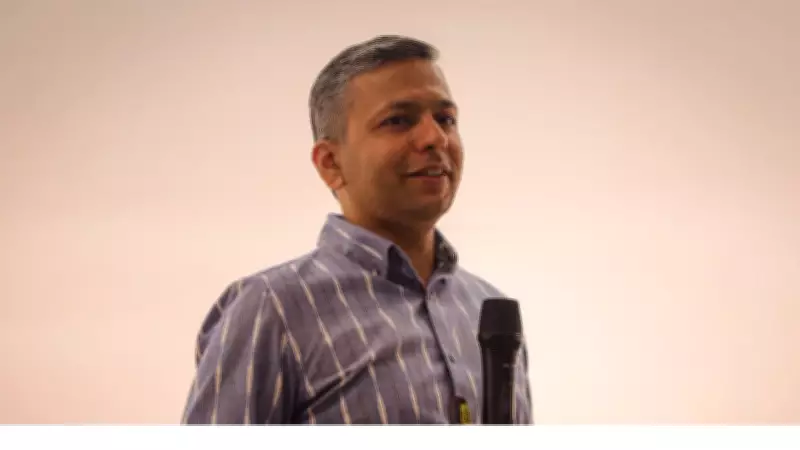
Generative artificial intelligence is fundamentally altering how design work is structured, who performs it, and which competencies will be crucial in the coming years, according to Gaurav Mathur, Vice President of Design at e-commerce giant Flipkart. Speaking during a keynote address at the Ahmedabad Design Week on Saturday, Mathur described this transformation as comparable to earlier platform shifts like the advent of smartphones and cloud computing.
From Smartphone Era to Generative Era
"We are coming out of the smartphone era," Mathur declared. "We are entering the generative era." He emphasized that the impact of generative AI on design would be determined less by technological novelty and more by accessibility. Unlike previous forms of computational or generative design that demanded specialized tools and expertise, today's AI systems are widely available through simple browser interfaces.
"All of you have access to generative AI today inside your browser," Mathur told the audience, highlighting the democratization of creative tools. He pointed to the dramatically reduced cost of creation as a key driver of this shift, noting that generating an image with AI now costs less than one rupee.

Blurring Traditional Role Boundaries
Mathur described this development as "a huge disruption" to established creative workflows and production models. Rather than positioning AI as a replacement for human designers, he explained that the technology is changing how work is distributed and executed.
"What is happening today is that we are co-creating with machines," Mathur said. "There is human creativity and machine intelligence coming together."
From his perspective within large technology organizations, this shift is already visible. Traditional product development teams with clearly defined roles for designers, engineers, and product managers are seeing those boundaries blur as generative AI enables cross-functional capabilities.
"A product manager can also design. A designer can also write code. An engineer can also design," Mathur observed. While acknowledging that AI-generated outputs may not always be perfect, he stressed that the direction of change is unmistakable.
Rise of the 'Makers' and Automation of Routine Tasks
As a consequence of these changes, Mathur predicted that future workplaces would rely less on rigid job titles and more on individuals who can operate across multiple disciplines. "You will have makers, essentially," he said, using the term to describe professionals with deep expertise in one area combined with working fluency in others, capable of advancing ideas without repeated handovers between specialized teams.
Simultaneously, Mathur acknowledged that automation would significantly reduce the amount of routine design work performed by humans. "Creating layouts, creating icons, interfaces, GUI, prototypes — all of that creation activity is going to get automated," he stated frankly.
Human Judgment Becomes the Differentiator
The employment implications, according to Mathur, lie in areas where human judgment remains indispensable. As AI systems generate multiple design options rapidly, designers will increasingly focus on selection, evaluation, and refinement tasks.
"How do you pick one? How do you spot flaws? How do you spot patterns?" Mathur posed these questions as examples of decisions that depend on skills AI currently lacks. He identified critical thinking, cultural sensitivity, empathy, and understanding of human behavior as domains where designers will continue to play central roles.
Beyond Technical Skills: The Need for Business Acumen
Mathur cautioned that technical fluency alone would be insufficient for students aspiring to enter the design field. He asserted that designers must also comprehend how products are built, marketed, and sustained in the marketplace.
"As designers, we don't spend enough time understanding business," Mathur reflected. "If you want to build something ground up, you have to understand this."

The Ahmedabad Design Week, organized at Karnavati University from January 30 to February 1, brought together designers, industry leaders, and academics to explore the intersection of design and artificial intelligence across various sectors.