Chinese Startup Droidup Unveils World's First Biomimetic AI Robot Moya
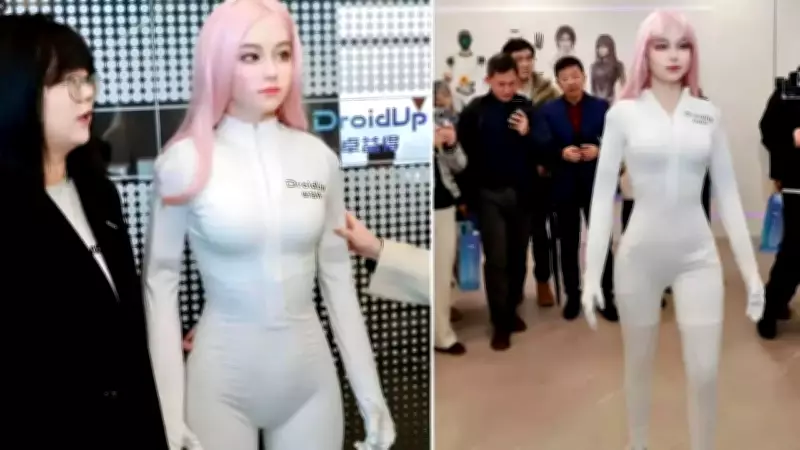
In a groundbreaking development in robotics, Shanghai-based startup Droidup has revealed Moya, the world's first "biomimetic AI robot." This humanoid machine represents a significant leap beyond traditional robotics, designed not only to look human but to feel human as well, featuring warm skin, natural walking patterns, and cameras positioned where eyes would typically be.
Moya's Human-Like Characteristics and Engineering
Moya stands out with several human-like attributes that challenge conventional robot design. Her skin maintains a body temperature between 32°C and 36°C, creating a warm touch unlike the cold, metallic feel of typical robots. According to Droidup founder Li Qingdu, robots intended for human service should not feel lifeless, aiming instead to foster emotional connections and familiarity.
Despite these advancements, Moya retains some robotic traits. The skin texture has a faint plastic sheen, and movements can appear slightly stiff, with eyes that don't always align perfectly. However, these imperfections contribute to what experts describe as an "uncanny valley" effect, where near-human robots evoke discomfort due to their almost-but-not-quite human appearance.

Technical Specifications and Capabilities
Underneath Moya's exterior lies advanced engineering. Her internal skeleton, known as Walker 3, builds on a proven platform; a previous version earned a bronze medal at the world's first robot half-marathon in Beijing in 2025. Droidup claims Moya achieves a 92% walking accuracy, though the methodology for this measurement remains unspecified.
The robot's AI system enables sophisticated interactions. Equipped with cameras and sensors, Moya can track faces, interpret movements, and respond with "micro expressions"—subtle facial cues designed to mimic human reactions. This integration of hardware and AI leads Droidup to label Moya as a "fully biomimetic embodied intelligent robot."
Launch Details and Intended Applications
Moya is scheduled for launch in late 2026, with a price tag of approximately ¥1.2 million (roughly £127,000). Droidup envisions deploying such robots in public service roles, including:
- Healthcare facilities for patient assistance
- Educational institutions for interactive learning
- Public spaces like train stations, banks, museums, and shopping centers
The company emphasizes that Moya is not intended to replace humans in domestic settings but rather to explore how comfortably people can coexist with machines that simulate life.
Public and Social Media Reactions
The unveiling has sparked mixed reactions online. Social media users have expressed both fascination and unease, with comments ranging from humorous predictions about "AI marriages" to concerns over encountering Moya in dark settings. This response aligns with the known psychological phenomenon where robots that closely resemble humans trigger discomfort due to their imperfect humanity.
As reported by the South China Morning Post, Moya's advanced AI allows her to perceive and act in the real world, marking a step toward more integrated robotic systems. While events like CES 2026 have highlighted the growing presence of humanoid robots, experts caution that widespread household adoption remains distant.
Moya's debut signals a shift from laboratory demonstrations to practical applications, testing societal readiness for robots that blur the line between machine and human. As biomimetic AI evolves, it prompts ongoing debates about ethics, design, and the future of human-robot interaction.