Inside Elon Musk's $1.25 Trillion AI and Space Megamerger
Elon Musk, the visionary entrepreneur, has orchestrated a groundbreaking $1.25 trillion merger between his space exploration company, SpaceX, and his artificial intelligence startup, xAI. This historic corporate tie-up, finalized in early February 2026, represents the largest merger by value in American history, driven by Musk's ambitious plan to combine AI technology with space-based infrastructure.
The Genesis of a Sci-Fi Vision
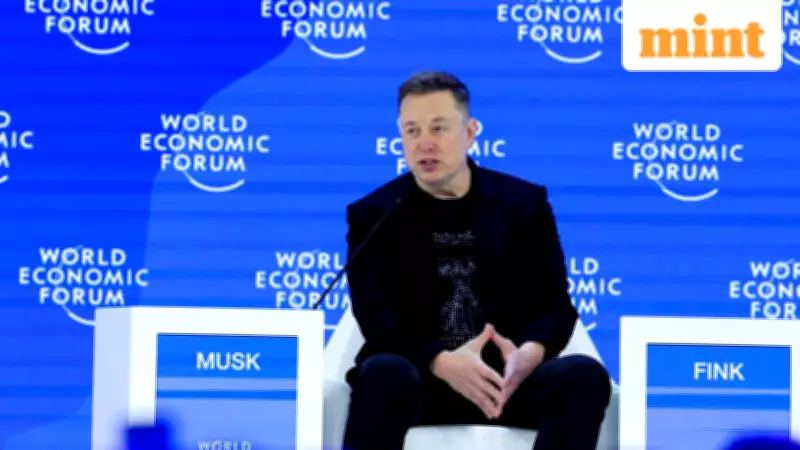
At the World Economic Forum in Davos, Switzerland, in January 2026, Musk publicly championed the concept of data centers orbiting Earth. "The lowest-cost place to put AI will be space," he declared, predicting this reality within two to three years. Behind the scenes, the groundwork for merging SpaceX and xAI was already in motion, with bankers from Morgan Stanley providing valuation estimates that set the stage for the deal.
According to investor disclosures and sources familiar with the matter, SpaceX's board valued the company at $1 trillion, while xAI's board set its worth at $250 billion. The merger agreement was signed on January 31, 2026, and closed just two days later, creating a combined entity valued at $1.25 trillion. This move follows a year of aggressive dealmaking for Musk, including the integration of his social media platform X with xAI and Tesla's $2 billion investment in the AI firm.

Strategic Rationale and Investor Implications
The merger is premised on leveraging SpaceX's satellite prowess to support xAI's technological ambitions. For xAI, which aims to make its Grok AI the world's most popular artificial intelligence, the tie-up provides enhanced financial muscle to compete with rivals like OpenAI and Anthropic. However, it also introduces risks, as longtime SpaceX investors must accommodate xAI shareholders, navigating what some perceive as an AI bubble reminiscent of the dot-com era.
In a memo to employees, Musk emphasized that launching AI satellites is the company's immediate focus. The $1.25 trillion valuation bets on the convergence of AI and space, relying on unproven technology deployed at a vast scale. SpaceX and xAI did not respond to requests for comment on the merger details.
Behind-the-Scenes Deal Dynamics
The merger gained momentum after Musk secured a key victory in November 2025, when Tesla investors endorsed his $1 trillion pay package. Members of his inner circle then targeted the SpaceX-xAI merger as a priority, given xAI's capital needs and SpaceX's upcoming initial public offering (IPO).
SpaceX executives began pitching the new focus on AI satellites to banks and large investors, highlighting the company's projected $16 billion in revenue and $8 billion in adjusted earnings for 2025. Morgan Stanley, Musk's preferred bank, worked on both sides of the deal—an unusual arrangement given Musk's control over both companies. The bank estimated SpaceX could be worth up to $1.26 trillion and xAI up to $294 billion, though it did not provide a fairness opinion on the valuations.
Corporate Synergies and Challenges
Musk has a history of intertwining his business ventures, as seen in last year's merger of X and xAI into a $113 billion entity. SpaceX was an early customer of xAI, using a tailored version of the Grok chatbot called Spok. The companies also collaborated on data-center projects, such as one near Memphis, Tennessee, though xAI faced executive departures due to management and financial concerns.
Behind the scenes, SpaceX had been researching orbital data centers, achieving a technical breakthrough in fall 2025. Musk frequently discussed harnessing solar energy for these centers, and in January 2026, SpaceX filed documents in Nevada to create entities under the name K2, referencing the Kardashev scale of civilization advancement.
Investor Reactions and Future Plans
The merger has sparked intense discussion among SpaceX stakeholders. While many support the new vision, expecting orbital data centers to launch via SpaceX's Starship rocket, some investors are wary of xAI shareholders gaining a 20% stake in the combined company. Steve Kaplan, a finance professor at the University of Chicago, compared the deal to the dot-com era AOL-Time Warner merger, noting valuation uncertainties in private company transactions.

On a call with investors, SpaceX CFO Bret Johnsen confirmed plans to take the company public in summer 2026. This IPO will further test market confidence in Musk's audacious bet on AI and space, setting the stage for a new era in technological innovation.