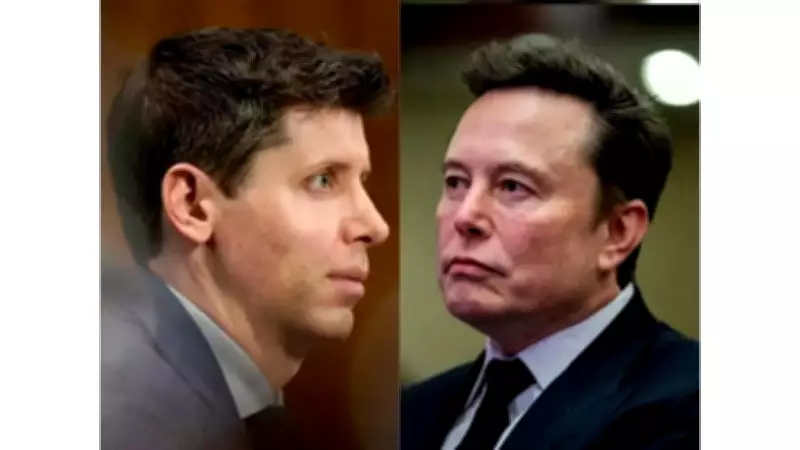
Elon Musk took the stand in a trial against ChatGPT-maker OpenAI and its CEO, Sam Altman. The lawsuit, originally filed in November 2024, accuses the AI company and its executives of reversing their promises to keep OpenAI a nonprofit. The trial began on April 27, with Sam Altman and Greg Brockman attending the first day. Elon Musk was present on the second day as the first witness called to testify.
Musk's Background and Role in OpenAI
In his testimony, Musk spoke about his upbringing, the companies he owns, his role in founding OpenAI, and his understanding of its structure. He opened by detailing his background, stating that after being raised in South Africa, he came to Canada for college with "$2,500 in Canadian travelers' checks and a bag of clothes and books." From there, he moved to the US, working from Zip2 to PayPal to the more familiar slate of companies he now runs.
OpenAI's Founding Mission
Musk argued that the reason he co-founded OpenAI was to keep AI away "from the bad guys." He said the AI company was founded as a nonprofit, open-source counterweight to Google, focused on AI safety. He claimed that the shift to a for-profit structure violated that mission. "It is not okay to steal a charity. If the defendants are found not guilty, this case will become caselaw. It'll give license to looting every charity in America. The consequences of this case go far beyond me or everyone here. The entire foundation of charitable giving in America will be destroyed," he said.

Concerns About AI and Larry Page
Musk revealed that his AI concerns date back to conversations with Google co-founder Larry Page, who he felt wasn't taking AI risk seriously. He pinned the entire story of OpenAI on a single insult when Page once called him a "specieist" for being "pro-humanity." Musk further revealed that Page refused to speak to him again after Musk recruited Ilya Sutskever to join OpenAI, whom Musk viewed as the "number one" most valuable member at Google.
Warning About AI Risks
Elon Musk said he tried to warn former President Barack Obama about AI, but Obama felt AI was not advanced enough to seem scary smart. "Here we are in 2026, AI is very smart," Musk noted. He believes AI could surpass human intelligence as soon as next year and poses existential risk in the hands of the wrong people: "If you have someone who's not very trustworthy in charge of AI, that's very dangerous for the whole world."
Broader Mission of Musk's Companies
Musk framed his companies—SpaceX, Neuralink, and xAI—as part of a broader mission to protect humanity's future. He said SpaceX was founded as "life insurance for life as we know it," and Tesla was started because continued reliance on fossil fuels "could be pretty bad for the environment and humanity as a whole."
Key Argument: Nonprofit Principles
Musk's main argument is that OpenAI abandoned its founding principles, and that precedent could reshape both AI governance and charitable trust. He emphasized OpenAI's original goal: AI for the good of humanity, not profit-driven control. In the early days, Musk thought OpenAI's corporate structure would be a nonprofit funded initially with donations, but there could potentially be a parallel for-profit owned by the nonprofit to fund it. "We (Sam Altman and Elon) were in agreement that OpenAI would be a 501(c)(3) charity," he said. He further revealed that he was not opposed to a small for-profit that provided funding to the nonprofit, as long as "the tail didn't wag the dog." He stated, "There are very few people who understand venture capital in Silicon Valley like I do."