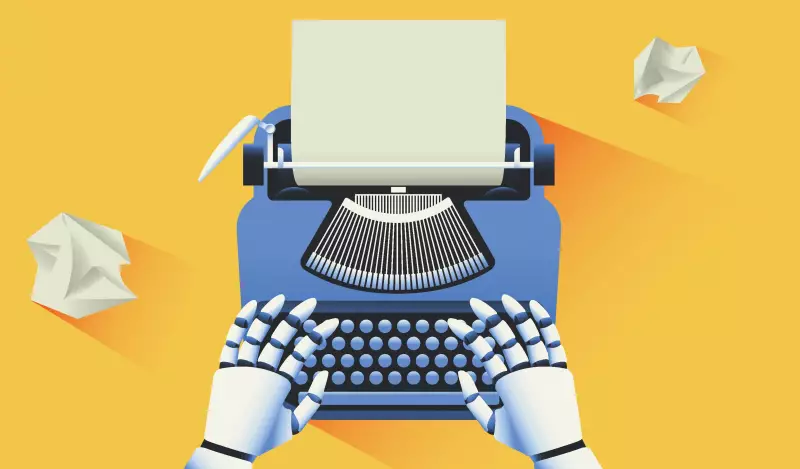
In a digital landscape increasingly dominated by artificial intelligence, a seasoned editor has made a surprising confession. He would rather grapple with what many might call 'bad writing' than consume the sterile, cookie-cutter prose churned out by AI models. This stance highlights a growing tension between efficiency and the irreplaceable value of a human voice.
The Editor's Dubious Pleasure: Crafting From Chaos
The editorial process, for some, involves a unique kind of satisfaction. It begins with confronting a hopelessly incoherent draft, complaining to a colleague, and procrastinating. The real work starts by tackling the text piece by piece—copying a paragraph, rewriting it, and appreciating a well-turned phrase. This labor-intensive act of creation is a thrill that AI now threatens to erase. Articles are now produced with assembly-line perfection, becoming the Ford Model Ts of writing—uniform and devoid of personality.
Writers who once had a distinct, if flawed, human touch are now generating robotically correct text. The prose lacks character, with repetitive syntactic structures replacing unique stylistic choices like the em dash. A 2024 study by Graphite, an AI firm, confirmed this shift, finding that AI-generated articles online surpassed those written by humans that year. From newspaper fiascos to social media, the evidence is pervasive.

The Human Voice vs. The Invisible Hand
The dispiriting analogy is that human writing is now a handcrafted product, while AI 'content' is mass-produced. The logic of capitalism suggests the latter will triumph. But does this logic hold for readers? Is this content genuinely demanded, or is it being forced upon the public by Big Tech, much like the removal of headphone jacks from phones? It remains a gamble.
Personally, the editor states he stops reading the moment he detects AI's imprint, finding it too inhuman. If this reaction is common, it defeats the article's purpose, even if the information is vital. Reader tolerance may vary by genre, with expectations higher for literature than op-eds. Yet, a 2024 study in Scientific Reports found AI-generated poetry was often indistinguishable from, and even preferred over, human-written verse.
Why 'Bad English' Has Its Place in India
This debate carries profound implications for a country like India. Even 'poor English' has immense value because it represents a person's authentic voice. Often, it is the voice of a marginalised individual or a field expert who lacked access to elite education. Today, such writers might use AI to 'polish' their work to avoid rejection, but the result can feel uncanny and lose its soul.
The editor argues it should be his job to work with these raw, human voices—to amplify them while preserving their unique quality, not reject them based on language alone. For writing not destined for formal publication, like a Reddit post, the question becomes stark: Do you really need AI to speak for you? The lethal blow would be to the inherent, humane, and artistic value found in all forms of writing, a value that exists beyond market forces.
Rohan Manoj, senior assistant editor at The Indian Express, shared these views in an opinion piece published on December 26, 2025. His argument is a poignant reminder in an age of automation that the imperfections of human expression are worth preserving.