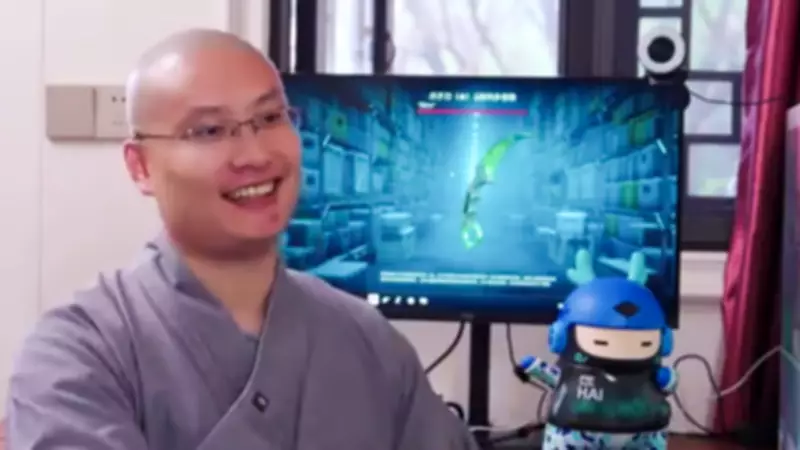
A Buddhist monk from China has recently gained attention for publicly defending his interest in video games, including the popular first-person shooter Counter-Strike. Venerable Huayan, who has practiced Buddhism for many years, has maintained a passion for gaming since childhood. His views on how gaming and religious practice share qualities such as focus and self-control have sparked extensive debate online. While some see this as unusual for a religious figure, others view it as an example of how spirituality and modern hobbies can coexist harmoniously.
From Spirituality to Lifelong Gaming Interest in Counter-Strike
According to reports, Venerable Huayan, based at Mingjiao Temple in Hefei, Anhui province, has been a monk since his teenage years. Born in Shanghai and raised by his mother, he developed an early interest in Buddhism through local religious discussions. At the same time, video games were already part of his life. He began playing in primary school during the early 2000s, and this interest continued alongside his religious studies after entering monastic life.
Huayan is known for playing Counter-Strike, a first-person shooter game played worldwide. Reports suggest he is a skilled player, although specific rankings are not consistently verified. His engagement goes beyond casual play and involves strategy and long-term practice. He has said that gaming helps with communication and teamwork, and that the conflict within such games resembles structured competition, similar to chess, rather than real-world violence.

Huayan’s View on Gaming, Discipline, and Limits
Huayan’s approach to gaming is guided by moderation. He has stated that avoiding addiction is essential and that gaming is acceptable as long as it does not interfere with responsibilities or discipline. Critics argue that violent games may conflict with religious values, but he rejects this view, emphasizing that virtual actions should not be equated with real-world behavior.
He draws parallels between gaming and spiritual practice, suggesting both require focus, patience, and mental control, while also encouraging cooperation and social interaction. This perspective has resonated with many who see no inherent conflict between modern entertainment and traditional spiritual life.
How Social Media Reacted to Huayan’s Gaming Story
The story has been widely discussed on Chinese social media, with mixed reactions. Much of the debate centers on how his views challenge traditional expectations of monastic life. For some, a monk engaging with a shooter game appears to conflict with ideals of detachment and non-violence. Others argue that modern religious life can accommodate everyday interests. The discussion has also raised concerns about gaming habits among young people. While Huayan emphasizes moderation, critics remain unconvinced, though many appreciate his balanced perspective.