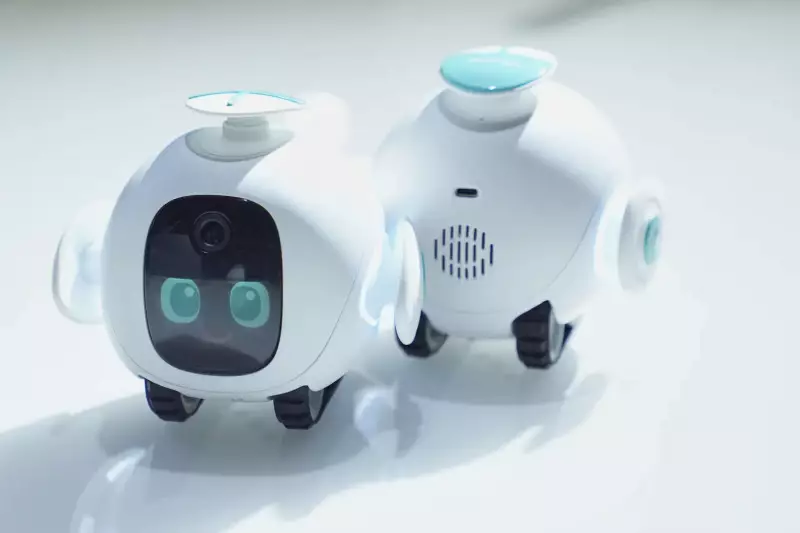
The Consumer Electronics Show (CES) 2025 in Las Vegas transformed into a stark visual proof of a growing technological rivalry. The exhibition floor was dominated by humanoid robots from China, performing tasks from Kung Fu to cleaning, directly illustrating the concerns voiced earlier by Tesla CEO Elon Musk about American competitiveness in this critical future sector.
Musk's Warning Comes to Life at CES
In April 2025, during a conference call, Elon Musk issued a clear warning. While confident that Tesla's Optimus robot leads in performance, he expressed worry that Chinese firms could occupy most of the top ranks. "I'm a little concerned that on the leaderboard, ranks 2 through 10 will be Chinese companies," Musk stated, as reported by Bloomberg. The scene at CES served as a powerful real-world echo of that apprehension, with numerous Chinese startups and established players displaying their advanced machines in America's premier tech showcase.
The Chinese Advantage: Scale, AI, and Cost
Chinese robotics firms are leveraging key advantages to capture the market. Research from Omdia indicates that Chinese manufacturers accounted for the vast majority of the roughly 13,000 humanoid robots shipped globally last year, significantly outpacing US efforts in volume.

Pricing is a major factor. Companies like Unitree offer an entry-level model for just $6,000, while Agibot has a scaled-down version for about $14,000. In contrast, Elon Musk has projected a price range of $20,000 to $30,000 for the Tesla Optimus, which is not yet in full-scale production.
These firms are also pushing innovation in AI-driven training. Tencent-backed Agibot, making its US debut, unveiled Genie Sim 3.0, a next-generation simulation platform built on Nvidia Isaac Sim. The company claims this system will drastically cut robot training time and cost, easing the transfer of skills from virtual simulation to the physical world.
Global Ambitions and a Multi-Billion Dollar Future
The ambition of Chinese robot makers extends far beyond their borders. An unnamed Agibot official told Bloomberg they plan to target markets like Japan (facing labor shortages) and the US, where robots could serve in promotional or entertainment roles. This aligns with a broader national strategy; the Chinese government has prioritized humanoid robots as "disruptive products," with the domestic market projected to reach $43 billion by 2035.
The global outlook for the sector is massive. Citigroup Inc. research projects the total number of robots could surge to 648 million by 2050. Omdia forecasts global humanoid robot shipments will grow to 2.6 million units in 2035, driven by advances in AI models, dexterous hands, and self-reinforcement learning, making them viable for industrial, service, and eventually household roles.
The display at CES 2025 was more than a product showcase; it was a clear signal in the ongoing tech race between the world's two largest economies. With advantages in scale, cost, and rapid innovation, Chinese companies are positioning themselves not just to compete, but to define the future of humanoid robotics.