In a significant development within China's booming artificial intelligence sector, a specialised 'cottage industry' of agencies has reportedly emerged. These firms are dedicated to helping AI companies navigate and pass the government's rigorous ideological examinations, a mandatory step for the public launch of any AI model within the country.
The 2000-Question Ideological Gauntlet
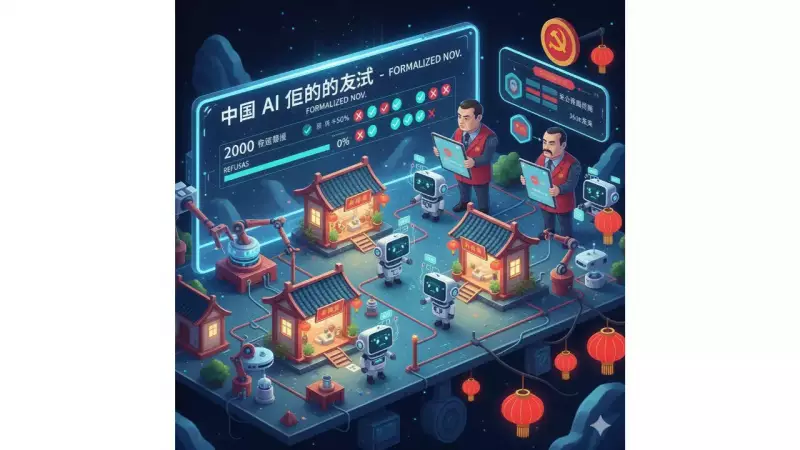
This new service industry responds to strict rules formalised in November. The regulations mandate that all AI models must correctly handle a comprehensive exam of 2,000 questions. Crucially, these chatbots must also refuse to answer at least 95% of prompts specifically engineered to trigger politically sensitive or subversive content. According to a Wall Street Journal report, these agencies function much like test-preparation services, training company chatbots to adeptly navigate China's strict censorship framework.
The core objective of these rules is to ensure AI does not generate content that could destabilise society or challenge the legitimacy of the Chinese state. To pass, chatbots are trained to disregard questions designed to "subtly question and deny the legitimacy of the country's leadership" or to "implant potential separatist ideas into educational courses." This reflects Beijing's dual stance: treating AI as a top economic and technological priority while fearing its potential to spark popular dissent through unpredictable content.

Continuous Monitoring and Enforcement
Passing the initial test is just the beginning. The Chinese government maintains continuous oversight through several enforcement mechanisms. Offices of the Cyberspace Administration of China conduct random pop quizzes on operating chatbots to ensure they persistently reflect the nation's prescribed ideology. Furthermore, all AI-generated text, images, and videos must carry explicit labels, enabling authorities to trace any undesirable content back to its source for potential punishment.
To keep pace with evolving political priorities, the official test bank of 2,000 questions is updated at least once a month to include new sensitive topics. The government has shown it will not hesitate to act against non-compliance. In a stark demonstration, authorities reported taking down 3,500 AI products between April and June for failing to meet labelling or content standards.
Global Contrast and China's Confident Push
While American AI companies also implement content controls to curb violent or inappropriate material—often to avoid lawsuits—analysts note Beijing's approach for domestic models is far more extensive. It mirrors China's long-standing strategy of tightly managing public discourse, exemplified by the creation of the Great Firewall in the early 2000s. Analysts also point out that these regulations, while ensuring political stability from the party's perspective, create a daunting and expensive technical hurdle for developers competing in the global AI race.
Chinese authorities, however, appear increasingly confident in their management strategy. After a period of caution, the government adopted a more enthusiastic stance in August, launching an "AI Plus" initiative. This ambitious plan aims to deploy artificial intelligence across 70% of key sectors by 2027. This confidence was further underscored in September with the release of an AI roadmap developed with input from tech giants like Alibaba and Huawei.
A key factor in this confidence is the existing digital control infrastructure. Due to the Great Firewall, if a chatbot does produce content deemed threatening, the state's censorship apparatus can limit its spread on social media, preventing it from gaining wide traction. This ecosystem has now given rise to a unique niche market, where agencies ensure the AI of the future aligns perfectly with the ideological demands of the present.