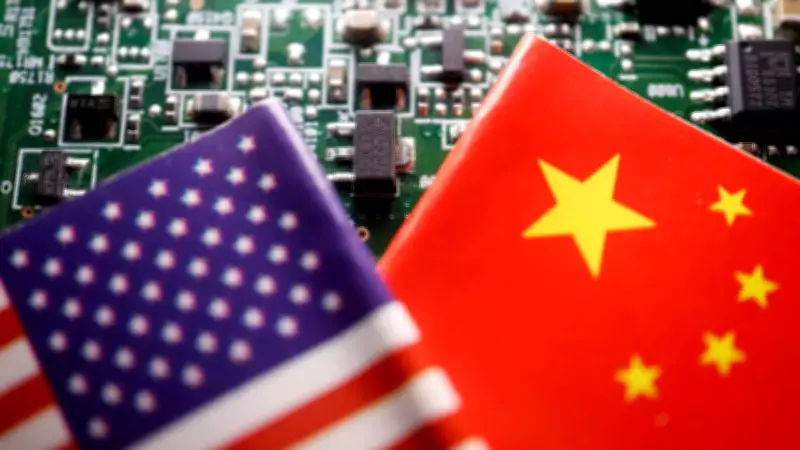
China has reportedly begun ordering its leading artificial intelligence (AI) companies to stop accepting American capital. This new 'state filter' on funding is part of a broader crackdown aimed at preventing sensitive AI breakthroughs from falling into US hands, according to a report by Bloomberg.
Regulatory Directive
The directive comes from China's agencies, including the National Development and Reform Commission (NDRC). Regulators have privately instructed several high-profile startups to reject U.S.-based investment unless it is explicitly approved by the government.
Major Companies Affected
The NDRC's new guidance has hit the biggest names in Chinese tech. Moonshot AI, one of China's 'stars,' currently seeking to raise $1 billion at an $18 billion valuation, has been told to steer clear of US funding. StepFun, another rising AI challenger, received similar instructions to reject Silicon Valley cash. Possibly the most significant is TikTok-parent ByteDance, for which regulators reportedly want the company to block secondary share sales to US investors without government sign-off to ensure its popular AI chatbot technology remains under domestic control.

Meta-Manus Deal: A Wake-Up Call for Beijing
The primary trigger for this stance was the $2 billion acquisition of the startup Manus by Meta, the parent company of Facebook, earlier this year. Manus was founded by Chinese talent but incorporated in Singapore. The company created a highly advanced AI agent capable of automating complex financial and business tasks. The deal sparked a firestorm in Beijing, with critics and academics calling out the loss of valuable technology to a geopolitical rival.
Shift in Funding Landscape
According to the Bloomberg report, for over two decades, the growth of the Chinese tech sector has been fueled by American pension funds and venture capital. However, Beijing is now prioritizing national security over easy cash. By restricting 'red chips'—Chinese companies incorporated overseas—from launching IPOs in Hong Kong and requiring a 'government green light' for funding rounds, Beijing is effectively dismantling the old playbook that helped its companies go global. Regulators are now deeply worried about 'technology leakage' as Chinese founders explore international markets.