It is easy to get the impression of permanent stillness among the snow-covered peaks of the Himalayas. These lands remain largely out of reach because of their remoteness and distance from the energy and urban life of contemporary society. Rivers flowing through these valleys have long followed the natural cycle without human intervention. People often see the water flows in such remote places as untouched by international energy politics or major engineering projects.
Yet a major engineering project is now underway in one of the most fragile environments on Earth. According to an extensive investigation by Live Science titled 'They are trying to tame nature', China is building the world's biggest dam in an earthquake-prone region of Tibet. A sprawling network of dams and deep underground tunnels is being developed along the upper stretches of the Yarlung Tsangpo River.
But as countries expand clean energy, the environmental risks can become harder to manage. In Tibet, the project has drawn global attention because of its potential impact on some of the region's most remote rivers.

The staggering mechanical ambition behind a record-breaking clean energy project
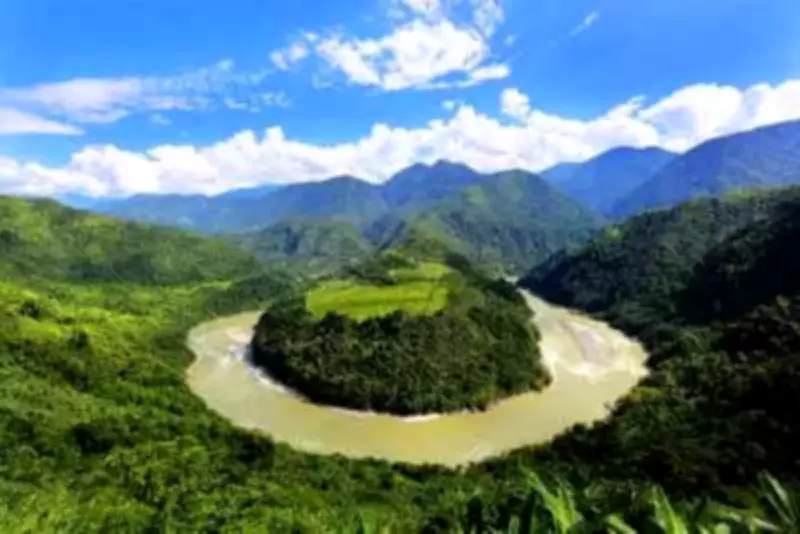
To grasp the sheer scale of this upcoming energy infrastructure, we have to look at the unique and dramatic geography of the Tibetan plateau. The sprawling project targets a region where the river flows through the deepest canyon on the planet before taking a sharp, horseshoe-shaped turn known as the Great Bend. By cutting massive tunnels through the solid rock of Mount Namcha Barwa, the project seeks to divert the rushing water and bypass the natural bend entirely.
The mechanical potential of this design is sending shockwaves through the global scientific community because of its unprecedented power generation capabilities. The investigative report by Live Science explains that as the diverted water plunges down an intense 6,500-foot drop within a relatively short stretch of tunnels, it will fuel a cascade of highly advanced power stations. When fully operational, the project is projected to generate more electricity than all U.S. hydropower facilities produce in an average year. It would be one of the largest clean energy projects ever attempted.
The project aims to generate immense power. However, it raises significant environmental and human risks in a seismically active zone. Neighbouring countries are reassessing water security plans due to potential flow alterations. Image Credits: Wikimedia Commons
The profound environmental and human risks of rewriting regional geography
The project also raises serious risks in an ecologically sensitive region. Live Science says the proposed site lies in a region that experiences regular, powerful earthquakes near one of the world's most tectonically active plate boundaries. Constructing a rigid network of giant concrete walls and tunnels on such a vulnerable site presents an inherent danger. According to environmentalists, any earthquake in this region can cause unpredictable landslides or even the collapse of the structure, thus posing great risks to life downriver.
The altered river system is forcing neighbouring countries to rethink their water-security plans. The reporting indicates that to keep the massive power stations running efficiently, huge reservoirs must be built upstream to store water during the wet season. During dry periods, water retention could reduce flow through the Great Bend, damaging the ecosystem and affecting downstream water supplies. The construction could create uncertainty for commercial fishermen, local farmers, and other people who rely on the river. In conclusion, the project highlights the trade-offs between clean energy development and environmental risk.

About the Author: TOI Science Desk. The TOI Science Desk stands as an inquisitive team of journalists, ceaselessly delving into the realms of discovery to curate a captivating collection of news, features, and articles from the vast and ever-evolving world of science for the readers of The Times of India. Consider us your scientific companion, delivering a daily dose of wonder and enlightenment. Whether it's the intricacies of genetic engineering, the marvels of space exploration, or the latest in artificial intelligence, the TOI Science Desk ensures you stay connected to the pulse of the scientific world. At the TOI Science Desk, we are not just reporters; we are storytellers of scientific narratives. We are committed to demystifying the intricacies of science, making it accessible and engaging for readers of all backgrounds. Join us as we craft knowledge with precision and passion, bringing you on a journey where the mysteries of the universe unfold with every word.